
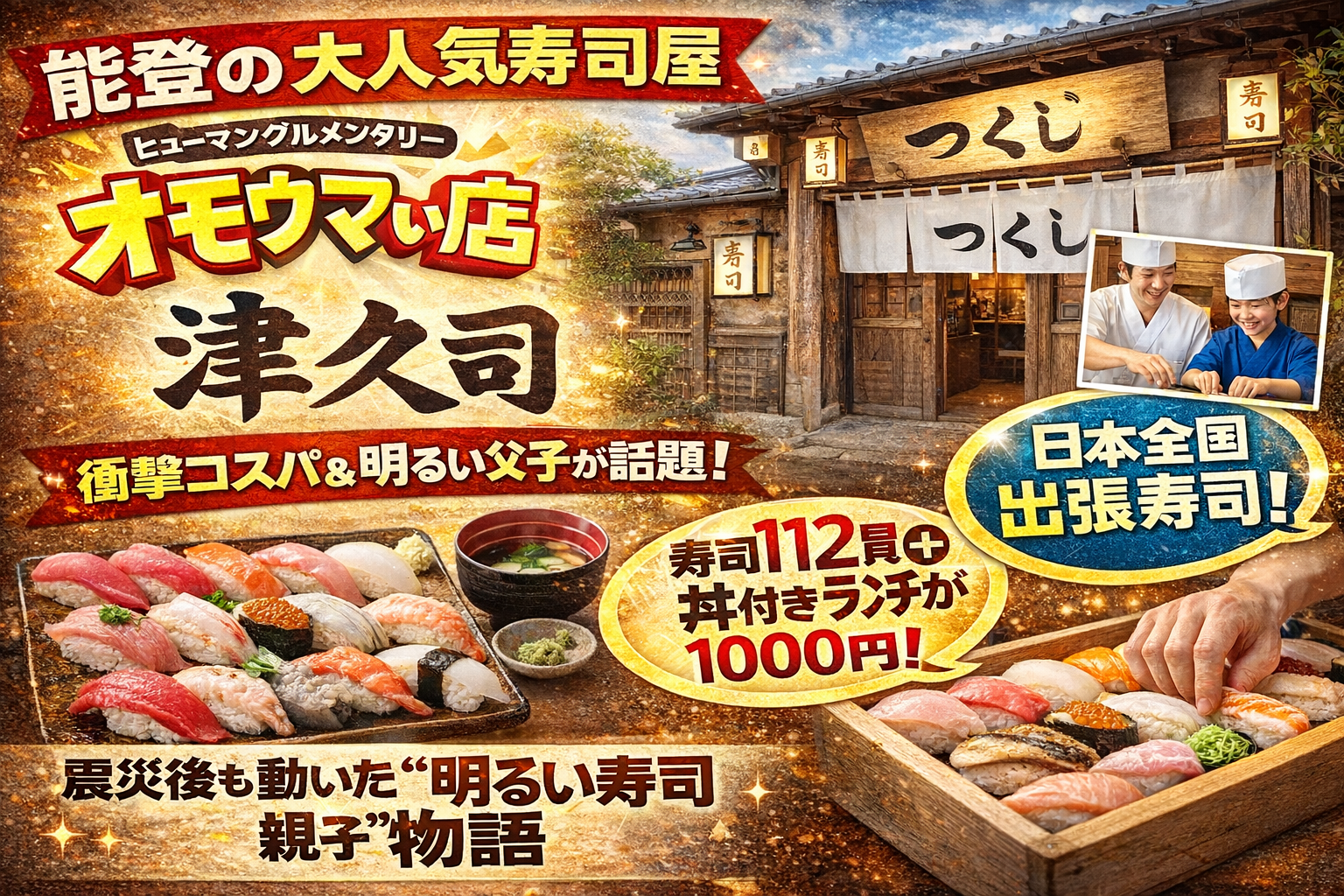
石川県・能登町の宇出津(うしつ)で「オモウマい店」として全国に知られるようになった寿司屋が 『津久司(つくし)』。テレビで見て印象に残るのは、まず店主の明るさとダジャレ連発。でも本当に驚くのは、その奥にある “寿司のうまさ”と“値段のバグり方”、そして能登の困難な状況の中でも前へ進む姿です。
この記事では、オモウマで話題になった名物ランチ、人気の理由、そして震災後の「出張寿司」という新しい挑戦まで、まとめて紹介します。
- まず結論:津久司は「安いのにうまい」だけじゃない
- オモウマで話題になった“破格ランチ”がすごい
- うまさの裏側:仕込み8時間、寝かせの技術
- “ずっと明るい寿司親子”という、店の空気
- 震災後:店は被害、そして「出張寿司」へ
- 店舗情報・行く前の注意
- まとめ:津久司は“能登の寿司の底力”を体験できる場所
- “Tsukushi” (つくし) — The Omouma Sushi Shop in Noto: Crazy-Value Lunch, a Bright Father-Son Duo, and “Traveling Sushi” After the Earthquake
- The quick takeaway: Tsukushi is not “cheap and fun” only — it’s genuinely skilled
- The famous “Omouma” lunch: value that makes people stare at the plate
- The craft behind the comedy: 8 hours of prep and the “aging” technique
- The heart of the shop: a bright “sushi father and son”
- After the 2024 earthquake: from a damaged shop to “traveling sushi”
- Practical info (check the latest before you go)
- Final takeaway: Tsukushi is “Noto’s seafood power” you can taste right now
まず結論:津久司は「安いのにうまい」だけじゃない
津久司が“強い”のは、次の3点が同時に成立しているからです。
- 地魚の握りが本気でうまい(能登の魚のポテンシャル+仕込みの技)
- ランチの価格設定が衝撃的(寿司+丼が当たり前に付く)
- 親子のストーリーと人柄が、店の空気をあたたかくしている
「面白い店」では終わらず、「また食べたい」「応援したい」に繋がるタイプのお店です。
オモウマで話題になった“破格ランチ”がすごい
津久司の名物として紹介されているのが、ランチのボリュームと価格。
- ミニ丼と寿司のランチ(1,500円):寿司10貫+海鮮丼付き。丼が“ミニ”に見えないボリュームと紹介されています。
- 大盛寿司ランチ(1,000円):クロダイやトビウオなど寿司12貫に、醤油漬けの切り身がたっぷり乗った“ミニミニ海鮮丼”がサービスで付く、とされています。
- 学割寿司ランチ(550円):学生向けでこの価格。スタジオ側も「安くしすぎ」と驚いたと紹介されています。
“安い”が先に立つけど、ここで重要なのは **「安いのに、魚がちゃんとうまい」**こと。常連の大学教授が「能登の魚のポテンシャルがまず高く、そこからの上積みだからスゴい」と評しているのが象徴的です。
うまさの裏側:仕込み8時間、寝かせの技術
津久司は“勢いの店”に見えて、実はかなり職人寄り。
記事では、店主が定休日に 8時間かけて丁寧に仕込みをし、下処理で血抜きを徹底することで アジを2〜3日寝かせられる、と紹介されています。さらに 3日寝かせたアジの握りが特においしいとも。
つまり、面白いキャラは入口で、本体は「ちゃんと仕事を積む寿司屋」。このギャップが、リピーターを作ります。
“ずっと明るい寿司親子”という、店の空気
オモウマ回では、春から4か月取材した“寿司親子”の姿が描かれています。息子さん(あおいくん)は数字の「8」が大好き、店主は明るい接客の一方で、31歳でがんを患った経験があり、「この子を育てたい」とシングルファザーとして歩んできた…という内容も紹介されています。
さらに、店主が「迷ったときは『これを自分の子どもに食べさせたいか』で考える」と語る場面も。ここが津久司の“芯”で、安さより先に 信頼感が来る理由だと思います。
震災後:店は被害、そして「出張寿司」へ
そして、津久司を語る上で避けられないのが、能登半島地震以降の状況です。
2025年3月11日放送回の紹介記事では、2024年1月1日の能登半島地震で店が大きな被害を受け、店前道路の破損と漏水で休業状態、復旧の目処が立たず、店主が週末に日本全国を回る出張寿司を開始した、と書かれています。
出張寿司は、**約15種類を食べ放題(1人前5,000円)**で提供しているとも紹介されています。
さらに、年末には道路復旧が進み、一年ぶりにお客さんを迎え入れられたこと、地元産の寒ブリ・サワラ・スズキなどが入った **「年末お持ち帰り50貫(10,000円)」**を提供したことも掲載されています。
“店があるから営業できる”ではなく、動ける形で寿司を届ける。その選択が、いまの津久司の強さです。
店舗情報・行く前の注意
食べログ掲載の基本情報は以下(※状況により変わる可能性があるので、最終確認推奨):
- 住所:石川県鳳珠郡能登町宇出津新97-1
- 電話:080-2402-3533
- 営業時間(掲載):火〜土 11:30–14:00/17:00–22:00、月・日 定休 など
- 公式SNS:Instagram(営業日など案内あり)
※震災後は出張寿司など運営形態が変動しやすいので、Instagramの告知確認→電話が一番確実です。
まとめ:津久司は“能登の寿司の底力”を体験できる場所
津久司は、
- 破格ランチ(1000円で寿司12貫+ミニミニ海鮮丼サービス等)
- 仕込み8時間・寝かせの技術で“うまさの上積み”
- 親子の物語が作るあたたかい空気
- 震災後も出張寿司で前へ進む行動力
この全部が重なって「オモウマ」になったお店です。
能登に行ける人は現地で、行けない人も出張寿司の機会で。“能登の魚のうまさ”を、いまの形で味わえる一軒として、知っておく価値があります。
“Tsukushi” (つくし) — The Omouma Sushi Shop in Noto: Crazy-Value Lunch, a Bright Father-Son Duo, and “Traveling Sushi” After the Earthquake
In Ushitsu (宇出津), Noto Town, Ishikawa, there’s a sushi place that became nationally famous after being featured on “Human Gourmet Documentary: Omouma-i Mise (オモウマい店)”. The name is Tsukushi (津久司 / つくし).
At first glance, what people remember is the owner’s nonstop jokes and upbeat energy. But the real reason Tsukushi sticks in your mind is deeper: seriously good local fish, pricing that feels almost unreal, and a story that makes you want to support the shop—not just visit it.
This article explains why Tsukushi is talked about as an “Omouma” restaurant, what the famous lunch sets look like, and how the shop adapted after the 2024 Noto Peninsula Earthquake.
The quick takeaway: Tsukushi is not “cheap and fun” only — it’s genuinely skilled
Tsukushi works because three things happen at the same time:
- Noto fish is naturally excellent, and Tsukushi lifts it even higher with skill
- The lunch pricing is shocking—sushi plus extra bowls and add-ons feel “too generous”
- The atmosphere is warm and human, driven by a memorable father-son relationship
A Japanese feature article summarizing the TV episode highlights exactly this combination: local seafood strength, extraordinary value, and the shop’s story.
The famous “Omouma” lunch: value that makes people stare at the plate
Tsukushi is widely discussed for lunch sets that look like they belong in a different price category.
Examples reported in coverage include:
- Mini-don + Sushi Lunch (1,500 yen): 10 pieces of sushi plus a seafood bowl—where the “mini” doesn’t look small at all
- Large Sushi Lunch (1,000 yen): 12 pieces of sushi, plus an extra “mini-mini seafood bowl” served as a bonus
- Student Discount Sushi Lunch (550 yen): a student set so cheap that even the studio reacted with “that’s too low!”
It’s easy to assume these are gimmicks, but the same reports emphasize something crucial: the fish quality is real. One local customer even explains it as “Noto’s seafood potential is high to begin with—and Tsukushi adds skill on top.”
That comment matters. “Cheap” can be forgotten, but “cheap and truly delicious” becomes a legend.
The craft behind the comedy: 8 hours of prep and the “aging” technique
Tsukushi’s owner might feel like an entertainer on camera, but reports describe him as surprisingly serious behind the scenes.
In the same feature coverage, the owner is said to spend eight hours on prep during his day off, focusing on careful handling and blood removal. That process allows fish like aji (horse mackerel) to be aged for two to three days, with the report noting that three-day-aged aji can be especially delicious.
This is the important “Omouma twist”:
the personality draws attention, but the technique is what keeps people coming back.
The heart of the shop: a bright “sushi father and son”
Omouma often finds restaurants where food and human story mix together—and Tsukushi is exactly that kind of place.
Coverage describes months of filming and shows the owner raising his son as a single father, including emotional details: the owner’s experience with illness, his motivation to keep going, and a guiding principle he shares—when he’s unsure, he asks himself:
“Would I want my child to eat this?”
That single line explains why customers trust him. It’s not only about price. It’s about care.
After the 2024 earthquake: from a damaged shop to “traveling sushi”
Tsukushi’s story also changed after the 2024 Noto Peninsula Earthquake (January 1, 2024).
A later report connected to the program explains that the restaurant suffered major damage and couldn’t operate normally, partly due to broken roads and water issues. With no clear reopening timeline, the owner began a new approach: traveling around Japan on weekends to serve “delivery/traveling sushi” events.
The same coverage describes:
- a traveling sushi format featuring about 15 types in an all-you-can-eat style, priced around 5,000 yen per person
- later progress toward welcoming customers again as recovery improved, plus a 50-piece takeout set example listed as 10,000 yen in year-end offerings
This is the most powerful part of Tsukushi’s reputation now:
even when the building couldn’t function, the owner found a way to keep sushi alive by moving the shop to where people were.
Practical info (check the latest before you go)
Basic listing sites provide an address and phone number for Tsukushi in Ushitsu, Noto Town, Ishikawa, but post-earthquake operations can change quickly, especially when traveling events are involved. A common recommendation is to confirm the latest schedule through the shop’s social media and/or phone contact before visiting.
Final takeaway: Tsukushi is “Noto’s seafood power” you can taste right now
Tsukushi became an Omouma sensation because it isn’t just fun—it’s meaningful:
- unbelievable value lunch sets
- serious prep and fish-handling technique
- a memorable father-son story and trust-driven cooking
- and a post-earthquake transformation into traveling sushi to keep moving forward

コメント