

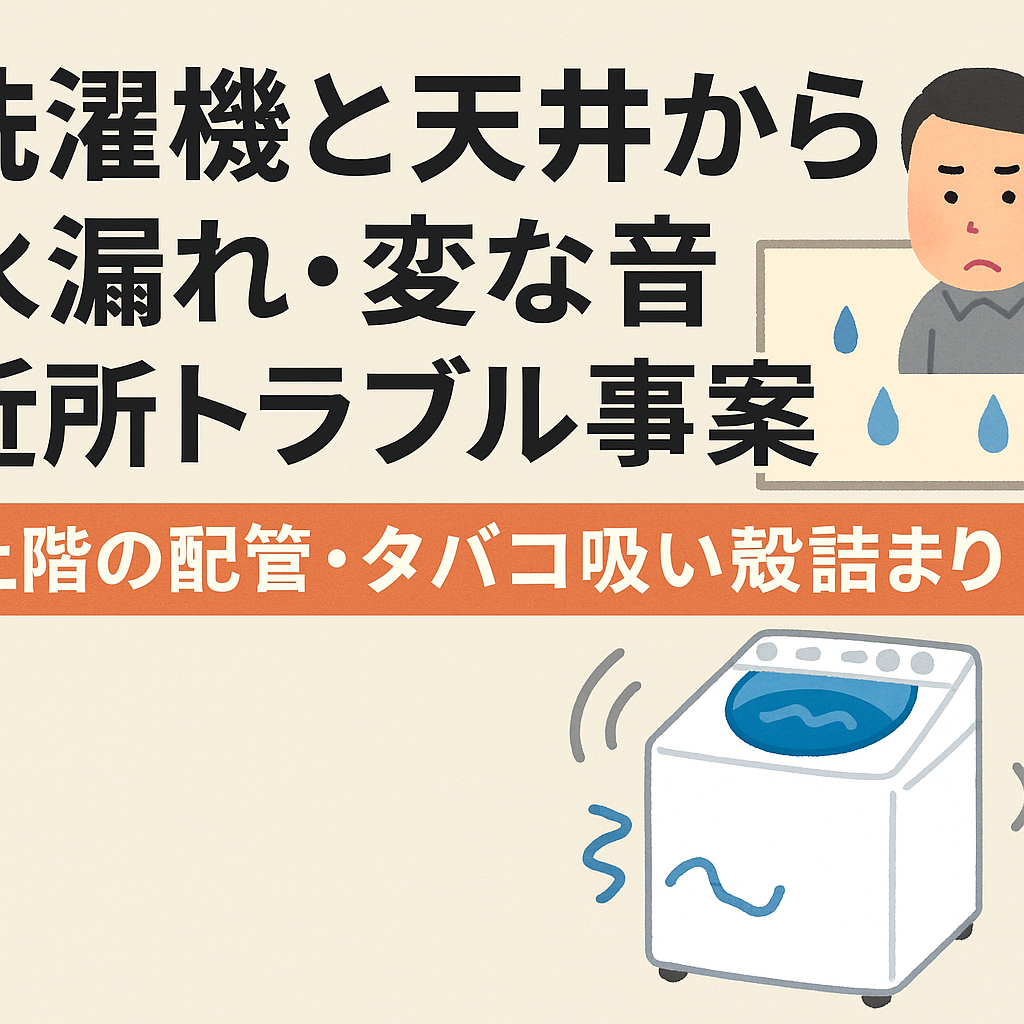
私はある日、洗濯機を回して数分後に、天井からポタポタと水滴が落ちてくるという恐怖の瞬間に遭遇しました。使用中に変な「ゴボゴボ」「ギシギシ」という音も洗濯機から聞こえてきて、慌てて天井を確認すると、上階キッチンからの配管が原因とも思われる水漏れ痕。そして、もっと衝撃だったのは、管理会社に報告後も上階住人からの謝罪は一切なく、トラブルが解消されず近所の関係も気まずくなったことです。この記事では、私が体験したこのトラブルを振り返りつつ、原因究明・法的責任・実際に行った対策をまとめてお伝えします。
- 洗濯機を使っていたら天井から水漏れ?事故として知っておきたいこと
- 「変な音が洗濯機から」– 実は隠れたサインだった
- 近所トラブルとしての構図:謝罪なし・責任放置の末路
- 原因究明から実践した対策:私が取ったステップ
- 近隣トラブルを防ぐために知っておきたい法律・マナー
- まとめ:早めの対応と証拠がカギ
- ■ The Shocking Discovery: Water Leaking from the Ceiling While Doing Laundry
- ■ Unusual Washing Machine Noises Were Actually a Warning Sign
- ■ Neighbor Conflict: No Apology, No Responsibility
- ■ What I Did to Resolve the Issue
- ■ Legal and Social Etiquette You Should Know
- ■ Final Thoughts: Don’t Ignore the Signs
洗濯機を使っていたら天井から水漏れ?事故として知っておきたいこと
ある平日の夕方、いつものように洗濯機を回していたら、数分後に「あれ、天井から水の滴が…」という違和感が。見上げると、天井に小さな水滴が数箇所現れており、慌てて洗濯機の運転を止めました。幸い浸水というレベルではありませんでしたが、天井材や内装に染み出していることには明らかに異常を感じました。
その土台には、次のような可能性が考えられます:
- 洗濯機の排水ホースもしくは配管が詰まり、水が逆流して天井裏を浸水させた
- 上階住戸のキッチン配管や流し台排水が詰まり、タバコの吸い殻や油汚れ、髪の毛などが原因となって溢れた
- 上階住戸の配管劣化・施工不良による水漏れが、洗濯機使用時の振動で天井材に影響を与えた
日本の賃貸住宅における水漏れ事故では、「自分の故意・過失によるもの」か「共有配管・建物構造の瑕疵」かが、責任所在を左右します。法テラス+1
もし上階住人が「タバコの吸い殻をキッチン配管に捨てていた」「油汚れで排水管が慢性的に詰まっていた」という事情があれば、それは故意・過失にあたる可能性があります。
「変な音が洗濯機から」– 実は隠れたサインだった
水漏れが起きていた間、洗濯機からは普段聞かない「ゴボゴボ」「ギシギシ」という音も発生しました。点検業者に聞いたところ、このような音は以下のような状況で発生することがあると言われました:
- 排水ホースや排水管に詰まり・逆流が生じ、内部で気泡や空気が混入して音を発生させる
- 洗濯機からの排水流量が通常と異なり、排水トラップや配管内で渋滞し、その振動・音が機械本体に伝わる
- 天井裏・壁内配管が水に浸かることで振動・変形が生じ、洗濯機の設置がわずかに変わり異音が出る
つまり、単なる「機械の故障」ではなく、建物/配管系のトラブルが洗濯機の異常音として表れるケースも少なくないのです。
この経験から、洗濯機の異音・振動・天井からの水滴は、上階・建物構造・排水配管系のトラブルという“近所トラブル”のサインとも言えます。
近所トラブルとしての構図:謝罪なし・責任放置の末路
今回私のケースで困ったのは、上階住人・管理会社双方からの対応が非常に乏しかったことです。私から管理会社に連絡した後、数日経っても何の連絡もなく、上階住人からも電話・訪問・謝罪など一切なし。配管詰まりによる水漏れ+変な音という被害が起きているにもかかわらず、責任を認められないまま時間だけが過ぎていきました。
このような状況では、以下のようなストレスが生まれます:
- 被害住戸が「いつまた漏れるか」「被害が拡大するか」という不安を抱える
- 上階住戸の不適切な配管利用(例えばタバコの吸い殻や油の流入)による場合、故意・過失として責任追及できる可能性があるにもかかわらず、関係者が曖昧にしてしまう
- 管理会社・大家が「賃貸借契約書上では誰の範囲か」という責任所在を持ちたがらず、こちらが何度も確認・催促する必要が出てくる
日本の法律では、賃貸住宅において「修繕が必要な瑕疵・共用部分の故障等」は大家または建物管理側の責任とされており、借主が故意・過失でなければ借主に修繕義務はありません。住宅政策ポータル+1
しかし、今回のケースでは「タバコの吸い殻が配管に詰まっていた」など、上階住人の明らかな過失が疑われるため、借主として被害を補償・修繕を求める根拠があると考えられます。
原因究明から実践した対策:私が取ったステップ
このまま放置していれば、天井の染み/カビ/構造被害が出る可能性もありました。そこで私は自分なりに動きました。以下が私が取った実践ステップです。
ステップ1:状況記録と証拠収集
まず行ったのは、天井の水滴跡・染み・洗濯機異音の録音・写真撮影です。さらに「洗濯機を回した時間」「音が出た時間」「天井からの水滴を確認した時間」もメモしました。こうした証拠が、後の責任追及・修繕交渉で非常に役立ちました。
ステップ2:管理会社・大家へ書面で正式連絡
口頭で「水漏れが起きています」と伝えるだけでなく、メールまたは内容証明書レベルで「上階住戸の配管、タバコの吸い殻詰まりと思われる。被害が継続しています。修繕および原因究明を求めます」と送付しました。法的には、不動産管理者が早期に対応すべき“使用可能な状態を維持する義務”を負っています。法テラス
ステップ3:専門業者による配管・天井点検を要請
管理会社を経由して、配管業者・洗濯排水・キッチン排水トラップの点検をしてもらいました。調査の結果、上階キッチンの配管に吸い殻・油脂汚れが溜まり、排水が詰まって逆流し、天井裏で漏水していたことが判明しました。また、排水音が洗濯機の異音として感じられていたのです。
ステップ4:近隣住戸との関係修復+再発防止策
トラブルをきっかけに、私から上階住戸へ訪問し、「おそらく配管詰まりが原因のようなので、一緒に管理会社に相談しましょう」と提案しました。謝罪がなかったものの、共同で管理会社に対応を促せたことで、少しだけ関係が穏やかになりました。さらに、洗濯機使用時には排水ホースの向き・洗濯後のトラップ確認・タバコ吸殻や油を流さないルール化を管理会社に提案しました。
近隣トラブルを防ぐために知っておきたい法律・マナー
このようなケースでは、以下の法律・ガイドラインが参考になります。
- 賃貸住宅において「通常の使用にともなう損耗・劣化」は大家側負担。借主に過失がある場合は借主が責任を負う。住宅政策ポータル+1
- 水漏れ・騒音などの被害が出た場合、修繕義務・賠償義務が発生する可能性あり。特に上階住戸の過失が明らかであれば、借主・大家・管理会社を通じて損害賠償を請求できる場合があります。法テラス+1
- マンション・アパートの集合住宅では「騒音・水漏れ・住戸間トラブル」は住民間の同意・管理規約・連帯責任が絡むため、早期の相談・記録・交渉が重要です。
- 洗濯機・排水配管使用時のマナーも重要で、夜間や静かな住宅地では洗濯機の音・振動が近隣迷惑になることもあります。Japan Dev
まとめ:早めの対応と証拠がカギ
洗濯機の使用がきっかけで「天井から水漏れ」「変な音」「配管詰まり」「上階住人とのトラブル」という一連の問題に発展した私の体験から学んだことは以下の通りです。
- 異音や水滴を発見したら、軽視せず早めに記録して対応を始めること
- 管理会社・大家・上階住戸それぞれの責任・義務を把握し、書面で連絡を取ること
- 上階配管やタバコ吸殻・油脂汚れによる詰まりも「予防可能な不法行為・過失」として責任の根拠になる可能性
- 近隣トラブルが長期化すると精神的負担・賠償リスク・関係悪化などが生じるため、調整・交渉を諦めないこと
- 建物構造・配管仕様・機械(洗濯機)使用状況を見ることで、再発防止策を提案できる
もし同じような状況でお悩みなら、「ただ泣き寝入り/ストレスを抱えたまま居住継続」ではなく、自分で動く・証拠を残す・管理会社と交渉するという姿勢を持つことが、問題解決への第一歩です。
あなたが安心して暮らせる住環境を取り戻せるよう、応援しています。
Washing Machine Trouble Experience: Water Leaking from the Ceiling, Strange Noises, Neighbor Disputes, and Pipe Blockages Caused by Cigarette Butts – When the Upstairs Neighbor Takes No Responsibility
One day while doing laundry, I noticed something strange — water dripping from the ceiling. At the same time, my washing machine began making odd noises like “gurgling” and “creaking.” When I looked up, I saw clear water spots forming on the ceiling. Upon further investigation, it appeared the water was seeping from the upper floor, possibly due to blocked kitchen pipes filled with cigarette butts and grease.
To make matters worse, when I reported it to the property manager, the upstairs neighbor offered no apology, and the situation escalated into a tense neighborhood conflict. This article walks through my real-life experience, from the signs I noticed, to the legal responsibilities involved, and the steps I took to resolve the issue.
■ The Shocking Discovery: Water Leaking from the Ceiling While Doing Laundry
On a weekday evening, I turned on my washing machine as usual. A few minutes later, I noticed drops falling from the ceiling. When I looked up, I found multiple water spots forming. I quickly stopped the washing machine and checked for damage. Fortunately, the water didn’t reach flooding levels, but the ceiling was clearly damp.
There were several possible causes:
- The drainage hose or pipes were clogged, causing water to back up and seep into the ceiling.
- The kitchen pipes of the upstairs unit were blocked with grease, hair, or cigarette butts, leading to an overflow.
- The pipes above had aged or were poorly installed, and vibrations from washing machines triggered water leakage.
In Japan, whether the tenant or landlord is responsible for the damage depends on the cause. If the issue stems from building structure or shared pipes, it’s usually the landlord’s responsibility. However, if it’s due to the negligence of an upstairs tenant (like throwing cigarette butts into the sink), they may be liable.
■ Unusual Washing Machine Noises Were Actually a Warning Sign
While the ceiling leaked, the washing machine made strange sounds that I’d never heard before. According to a plumbing technician I consulted, such noises may occur due to:
- Air bubbles or backflow in the drainage system caused by clogged pipes.
- Drainage flow being blocked or slowed, causing pressure changes and vibrations.
- Internal pipe leaks in the ceiling that cause resonance and affect the washing machine’s performance.
In short, strange noises from your washing machine could be a sign of a deeper problem with the plumbing system — not just the appliance itself.
■ Neighbor Conflict: No Apology, No Responsibility
What made the situation worse was the response — or rather, the lack of it. After reporting the leak to the management company, I waited several days with no reply. The neighbor above me also made no effort to apologize or acknowledge the incident.
This added emotional stress to the physical damage:
- I feared the leak would get worse.
- The upstairs neighbor clearly contributed to the problem with careless actions but refused to accept any blame.
- The property management company didn’t act quickly, forcing me to repeatedly follow up.
Japanese law typically states that structural or shared facility failures are the landlord’s responsibility, unless the tenant caused the problem through negligence. In this case, if cigarette butts or grease caused the blockage, the upstairs neighbor could be legally responsible for damages.
■ What I Did to Resolve the Issue
Here’s how I dealt with the situation — a series of practical steps I recommend:
Step 1: Document the Evidence
I took photos of the water stains, ceiling damage, and recorded the strange noises from the washing machine. I also noted the exact times of each event. These materials later helped me in formal complaints and negotiations.
Step 2: Formal Written Notice to the Property Manager
Instead of relying on phone calls, I sent a detailed written report via email and registered mail, describing the timeline and suspected cause. I also requested a full inspection and repairs. Written complaints are legally stronger and harder to ignore.
Step 3: Request a Professional Inspection
Through the property manager, I arranged for a plumber and maintenance team to inspect the piping. The investigation revealed that the kitchen pipe of the upstairs unit was severely clogged with cigarette butts and grease, leading to backflow and water leakage. The noise from the washing machine was due to pressure irregularities.
Step 4: Attempt to Rebuild Relations with the Upstairs Neighbor
Even though I never received an apology, I initiated a conversation with the neighbor. I explained the findings and suggested working together to get management to fix the problem. This softened the atmosphere slightly, and we both pushed the building management for preventive measures.
■ Legal and Social Etiquette You Should Know
If you experience a similar issue, it’s helpful to know the following:
- Japanese tenant law stipulates that landlords are responsible for damage caused by structural defects unless the tenant was negligent.
- Water leakage due to pipe blockage from a tenant’s actions (such as improper disposal) can make the tenant liable for repair costs.
- Evidence matters — photos, videos, and written logs significantly strengthen your case.
- Apartment living etiquette includes proper usage of drains and washing machines. Pouring oil or cigarette butts down the sink is not only bad etiquette — it can lead to legal consequences.
■ Final Thoughts: Don’t Ignore the Signs
From ceiling leaks to strange noises and neighbor conflicts, what seemed like a minor issue quickly became a serious problem. What I learned:
- Document everything early.
- Contact the right people and follow up regularly.
- Understand your legal rights and responsibilities.
- Try to communicate diplomatically with neighbors.
If your washing machine starts making strange noises or water begins to drip from above, don’t assume it’s a fluke. Start documenting and act quickly — the peace of your home depends on it.

コメント