
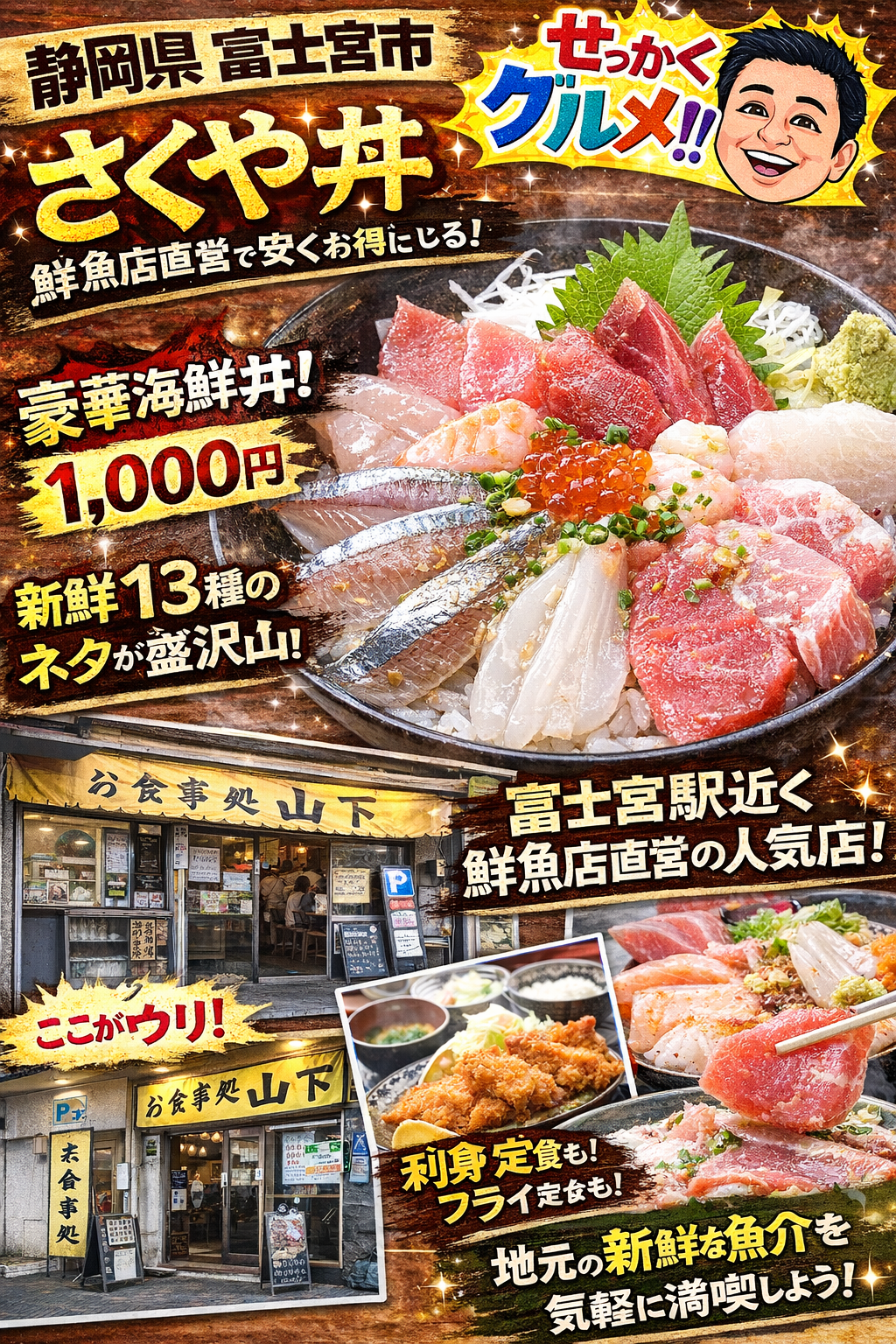
- 富士宮で海鮮丼を食べるなら、まず気になる一軒
- 山下の強みは、“鮮魚店直営”という分かりやすさ
- 佐久夜丼は、富士宮らしさが詰まった名物丼
- 「安い」と言われやすいのは、価格だけではない
- せっかくグルメの文脈ともかなり相性がいい
- 初めて行くなら、佐久夜丼を軸に考えるのが分かりやすい
- まとめ|富士宮で佐久夜丼を安く、しっかり食べたいなら山下は有力
- A restaurant that quickly stands out when you look for a seafood bowl in Fujinomiya
- Yamashita’s appeal starts with one clear point: it is run by a fish shop
- Sakuyadon is more than just a seafood bowl — it is a local signature
- Why people are likely to describe it as “cheap” or “good value”
- It also fits the Sekkaku Gourmet atmosphere very well
- If you visit for the first time, Sakuyadon is the easiest place to start
- Final thoughts: if you want Sakuyadon in Fujinomiya and want it to feel worth the money, Yamashita is a strong choice
富士宮で海鮮丼を食べるなら、まず気になる一軒
2026年4月12日放送の**「バナナマンのせっかくグルメ!!」では、日村さんが静岡県富士宮市を訪れ、「豪華!マグロ、アジ、タイ…新鮮な13種類の極上海鮮丼」を味わうと予告されています。TBS公式では事前に店名までは出ていませんが、富士宮で海鮮丼の有力候補として名前が挙がりやすいのが、お食事処 山下です。富士宮市観光協会の案内でも、山下は鮮魚店直営のお食事処として紹介され、看板メニューとして「佐久夜丼」**が明記されています。
山下の所在地は富士宮市中央町3-4。観光協会によると、営業時間は昼11:30〜14:00、夜17:30〜20:00、定休日は水曜日です。駐車場は1台分があり、さらに中央パーキングの駐車券対応も案内されています。富士宮駅周辺で観光ついでに立ち寄りやすく、駅からのアクセスも比較的良い店です。外部の地域記事では、富士宮駅から徒歩約3分、富士山本宮浅間大社からでも徒歩約7分と紹介されていて、車でも徒歩でも使いやすい立地だと分かります。
山下の強みは、“鮮魚店直営”という分かりやすさ
山下が気になる理由は、何よりもまず鮮魚店直営という分かりやすさにあります。観光協会は、山下について**「駿河湾の新鮮な食材を使って皆様に喜んで頂けるお料理を提供」すると案内していますし、地域記事でも西隣の老舗鮮魚店「魚虎」**が営む食事処だと説明されています。つまり、単に海鮮丼がある食堂ではなく、魚屋の目利きが前提にある店として見られているわけです。
しかも、この店は昔から地元の商店街に馴染んできたタイプの食堂です。地域記事では、母体の鮮魚店「魚虎」が昭和10年開業、お食事処 山下は昭和44年開業と紹介されていて、アーケード商店街の中で長く親しまれてきたことがうかがえます。店内も大きすぎず、カウンター10席と小上がり中心の最大18名ほどの規模とされていて、いかにも“知っている人が通う町の人気店”という空気があります。
佐久夜丼は、富士宮らしさが詰まった名物丼
山下を語るうえで外せないのが、やはり**佐久夜丼(さくやどん)です。富士宮市観光協会は、この丼を「浅間大社1200年祭にちなみ造りました大好評の『佐久夜丼』」**と紹介しています。つまり佐久夜丼は、単なる海鮮丼ではなく、富士宮浅間大社や富士宮の土地の文脈を背負ったご当地性のある一杯として位置づけられているわけです。
しかも、外部レビューではこの佐久夜丼がかなり目立っています。食べログ由来の検索結果では、**「佐久夜丼1,000円」という記述が確認でき、同じ掲載には「サービス定食A750円」**も見られます。もちろん価格は訪問当時の情報で、現在も同額とは限りません。ただ、少なくとも過去の評価としては、看板メニューの海鮮丼が1,000円級、サービス定食はさらに手頃という印象を持たれていたことは確かです。ここから見えてくるのは、山下が“高級海鮮の店”というより、良い魚を比較的手の届きやすい価格で出す店として受け止められてきたことです。
「安い」と言われやすいのは、価格だけではない
山下について「安い」と感じる人が多いのは、単純に最安値を争う店だからではありません。むしろ、鮮魚店直営の安心感に対して、値ごろ感があるところが大きいです。地域記事でも、魚料理は母体の鮮魚店の魚を使っているので、“リーズナブルでクオリティーが高い”と評価されています。これはかなり重要で、ただ安いだけなら町の定食屋はいくらでもありますが、山下は魚の質込みで納得感があるから印象に残るのです。
しかも山下は、海鮮丼専門店のようにメニューを絞り込みすぎていません。地域記事によると、刺身定食だけでなく、フライ、焼き魚、焼肉定食まで揃っていて、季節や仕入れによっておすすめも変わるとされています。つまり、佐久夜丼だけで一発勝負している店ではなく、毎日の食事処としてちゃんと機能している。この“日常使いできる感じ”が、価格面の印象も含めて「安い」「使いやすい」と感じさせる理由になっています。
せっかくグルメの文脈ともかなり相性がいい
今回の「せっかくグルメ」で富士宮回が注目されているのは、焼きそばだけではなく、新鮮な13種類の極上海鮮丼も予告されているからです。山下は観光協会の段階で鮮魚店直営、佐久夜丼が看板と明確に紹介されており、番組の予告内容とかなり噛み合います。加えて、駅から近く、浅間大社からも歩ける立地なので、ロケで立ち寄る導線としても自然です。
さらに、山下は派手すぎないのも番組向きです。全国区の巨大観光店というより、地元の人が普段から知っていて、でも観光客も行きやすい。こういう店は、「せっかくこの町に来たならここ」と紹介されやすいです。外部の“放送後まとめ”記事でも、4月12日回で山下が取り上げられたとする情報が出ていますが、ここはTBS公式の事前ページでは店名未公表だった点は分けて見るのが安全です。
初めて行くなら、佐久夜丼を軸に考えるのが分かりやすい
もし初めて山下に行くなら、やはりまずは佐久夜丼を基準に考えるのが分かりやすいです。観光協会が看板として推している以上、この店の顔であることは間違いありません。特に「せっかくグルメ」を見て気になった人にとっては、まずその看板メニューを押さえるのがいちばん自然です。
一方で、山下の魅力は丼だけに閉じません。鮮魚店直営だからこそ、その日の魚の状態や仕入れ次第で、定食系にもかなり期待できます。何度か通うなら、刺身定食や焼き魚系に広げていくと、この店の強さがさらに見えてきそうです。これは地域記事ベースの見方ですが、山下は**“観光客が一度行って終わり”より、地元の人が繰り返し使う店**という空気が強いです。
まとめ|富士宮で佐久夜丼を安く、しっかり食べたいなら山下は有力
富士宮市で佐久夜丼が気になっていて、しかもできれば安く、納得感のある海鮮丼を食べたいなら、お食事処 山下はかなり有力な一軒です。富士宮市観光協会が鮮魚店直営、佐久夜丼が看板と案内しており、駅近で浅間大社からも歩きやすい立地。さらに外部レビューでは、過去に佐久夜丼1,000円、サービス定食750円という記録も見られ、昔から“質のわりに手が届きやすい店”として受け止められてきたことが分かります。
「せっかくグルメ」で富士宮の海鮮丼が気になった人にとって、山下はとても分かりやすい候補です。豪華さだけでなく、地元の鮮魚店が支える日常のうまさがある。だからこの店は、観光の思い出としても、町の実力店探しとしても、かなり満足度の高い一軒になりそうです。
Yamashita in Fujinomiya: Is the Sakuyadon Popular and Affordable? A Strong Candidate Behind the Sekkaku Gourmet Buzz
A restaurant that quickly stands out when you look for a seafood bowl in Fujinomiya
In the April 12, 2026 episode of Banana Man no Sekkaku Gourmet!!, Himu-san visits Fujinomiya in Shizuoka and is shown enjoying what the official preview describes as “a luxurious seafood bowl topped with 13 kinds of ultra-fresh ingredients, including tuna, horse mackerel, and sea bream.” The TBS preview does not reveal the restaurant name in advance, but one strong candidate in Fujinomiya that naturally matches this description is Oshokujidokoro Yamashita.
The Fujinomiya Tourism Association introduces Yamashita as a restaurant directly operated by a fish shop, and clearly lists its signature dish as Sakuyadon. That alone makes it a very plausible fit for the kind of seafood bowl spotlighted by a food-travel program. Rather than just being another restaurant that happens to serve seafood, Yamashita is presented as a place where the freshness and credibility of a fishmonger form the foundation of the meal.
Yamashita is located at 3-4 Chuo-cho, Fujinomiya. According to the tourism association, it is open for lunch from 11:30 a.m. to 2:00 p.m. and for dinner from 5:30 p.m. to 8:00 p.m., and it is closed on Wednesdays. The shop has one parking space, and it also offers support for nearby Chuo Parking. Local articles say it is about a three-minute walk from Fujinomiya Station and around seven minutes on foot from Fujisan Hongu Sengen Taisha, making it easy to visit whether you are sightseeing or simply looking for a good local meal near the station.
Yamashita’s appeal starts with one clear point: it is run by a fish shop
What makes Yamashita immediately attractive is the clarity of its identity. It is not merely a restaurant that buys seafood. It is a place backed by a fish retailer’s eye for quality.
The tourism association describes Yamashita as a restaurant serving dishes made with fresh ingredients from Suruga Bay, while local coverage explains that it is operated by the long-established fish shop Uotora, located right next door. In other words, this is not just a place selling seafood bowls because they are popular. It is a restaurant whose entire credibility begins with the fish itself.
That local grounding runs deep. Community articles say that the parent fish shop Uotora opened in 1935, while Yamashita itself opened in 1969. The restaurant has therefore long been part of Fujinomiya’s shopping street life. It is not a giant tourist-oriented establishment, either. Reports describe a small, cozy space with 10 counter seats and a raised seating area for a total of around 18 people, giving it the atmosphere of a true neighborhood favorite rather than a mass-market destination.
Sakuyadon is more than just a seafood bowl — it is a local signature
The dish you cannot leave out when talking about Yamashita is, of course, Sakuyadon.
The Fujinomiya Tourism Association explains that this bowl was created in connection with the 1200th anniversary of Sengen Taisha, and describes it as a dish that has become very popular. That means Sakuyadon is not simply a generic seafood rice bowl. It carries clear local meaning, tied to Fujinomiya’s spiritual and cultural identity through the Sengen Taisha tradition.
This gives the dish a different weight. It is not just “a good kaisendon.” It is a bowl with a local story behind it, which makes it especially appealing for visitors who want something that feels rooted in the place rather than interchangeable with seafood bowls elsewhere in Japan.
Outside reviews also highlight it strongly. Search results linked to Tabelog include references to “Sakuyadon 1,000 yen”, along with mentions of a “Service Set Meal A for 750 yen.” Of course, those prices reflect the time of the review and should not automatically be assumed to be current today. But they do show how Yamashita has been perceived: not as a luxury-only seafood restaurant, but as a place where high-quality fish is offered at a price that still feels approachable.
Why people are likely to describe it as “cheap” or “good value”
When people say Yamashita feels affordable, they are usually not saying it is the absolute cheapest place around. What they really mean is that it offers strong value for the level of seafood quality.
That distinction matters. Local articles describe Yamashita’s food as reasonably priced while maintaining high quality, precisely because the fish comes through the connected fish shop. Many low-priced eateries exist, but Yamashita leaves a stronger impression because the pricing feels fair in relation to the freshness and trustworthiness of the ingredients.
The restaurant also does not limit itself too narrowly. Reports say the menu includes not only sashimi-based dishes but also fried items, grilled fish, and even grilled meat set meals, with recommended items changing depending on the season and the day’s supply. This means Yamashita is not a one-item shop built only around Sakuyadon. It functions as a real everyday dining place for locals.
That matters when discussing value. A restaurant that locals actually use in daily life tends to feel more grounded and more honest in its pricing than a place built mainly around tourist demand. That sense of daily usability is one reason the restaurant is likely to be perceived as both approachable and affordable.
It also fits the Sekkaku Gourmet atmosphere very well
What makes Yamashita especially interesting in the context of Sekkaku Gourmet is how naturally it matches the type of place the show likes to highlight.
The official preview for the Fujinomiya episode mentions “a luxurious seafood bowl with 13 kinds of fresh toppings.” Yamashita already checks several important boxes: it is officially introduced as fish-shop-operated, its Sakuyadon is presented as a signature dish, and it is conveniently located near both the station and a major sightseeing landmark. From a program-structure point of view, it fits beautifully.
It is also not too flashy. Yamashita does not feel like a giant commercial seafood restaurant built for bus tours or social media spectacle. It feels like the kind of place local people genuinely know, trust, and continue to use, while still being accessible enough for visitors. That is exactly the type of restaurant a show like Sekkaku Gourmet often makes look especially appealing.
There are outside recap-style articles online identifying Yamashita as the seafood bowl shop featured in the April 12 broadcast, but it is important to separate that from the official TBS preview, which did not name the restaurant in advance. Even so, as a likely match for the teaser, Yamashita feels very convincing.
If you visit for the first time, Sakuyadon is the easiest place to start
For a first visit, the most natural choice is to begin with Sakuyadon.
Since the tourism association itself presents it as the restaurant’s standout item, it clearly represents the face of the shop. Anyone who becomes curious after seeing or hearing about the program will probably want to start there, and that makes perfect sense.
At the same time, Yamashita’s appeal does not end with one bowl. Because it is tied directly to a fish shop, its broader menu likely deserves just as much attention. Over repeat visits, moving into dishes such as sashimi set meals or grilled fish would probably reveal even more of the restaurant’s strengths. Based on local coverage, Yamashita feels less like a place visitors try once for a famous dish and more like a place locals return to again and again.
Final thoughts: if you want Sakuyadon in Fujinomiya and want it to feel worth the money, Yamashita is a strong choice
If you are interested in Sakuyadon in Fujinomiya, and you are also hoping for a seafood bowl that feels affordable, satisfying, and trustworthy, then Oshokujidokoro Yamashita is a very strong option.
The Fujinomiya Tourism Association officially presents it as a fish-shop-operated restaurant with Sakuyadon as a signature item. It is close to both the station and Sengen Taisha, and outside reviews suggest that it has long been seen as a place where the balance between seafood quality and price feels very fair. Past listings mentioning Sakuyadon at 1,000 yen and a service set meal at 750 yen reinforce that impression, even if current prices should always be checked directly before visiting.
For viewers intrigued by the seafood bowl featured in Sekkaku Gourmet, Yamashita is an especially appealing possibility. What it offers is not just visual luxury, but something more valuable: the everyday deliciousness supported by a real local fish shop. That combination of freshness, local history, and reasonable value is exactly what makes a restaurant memorable — and exactly why Yamashita feels like such a strong candidate.

コメント