

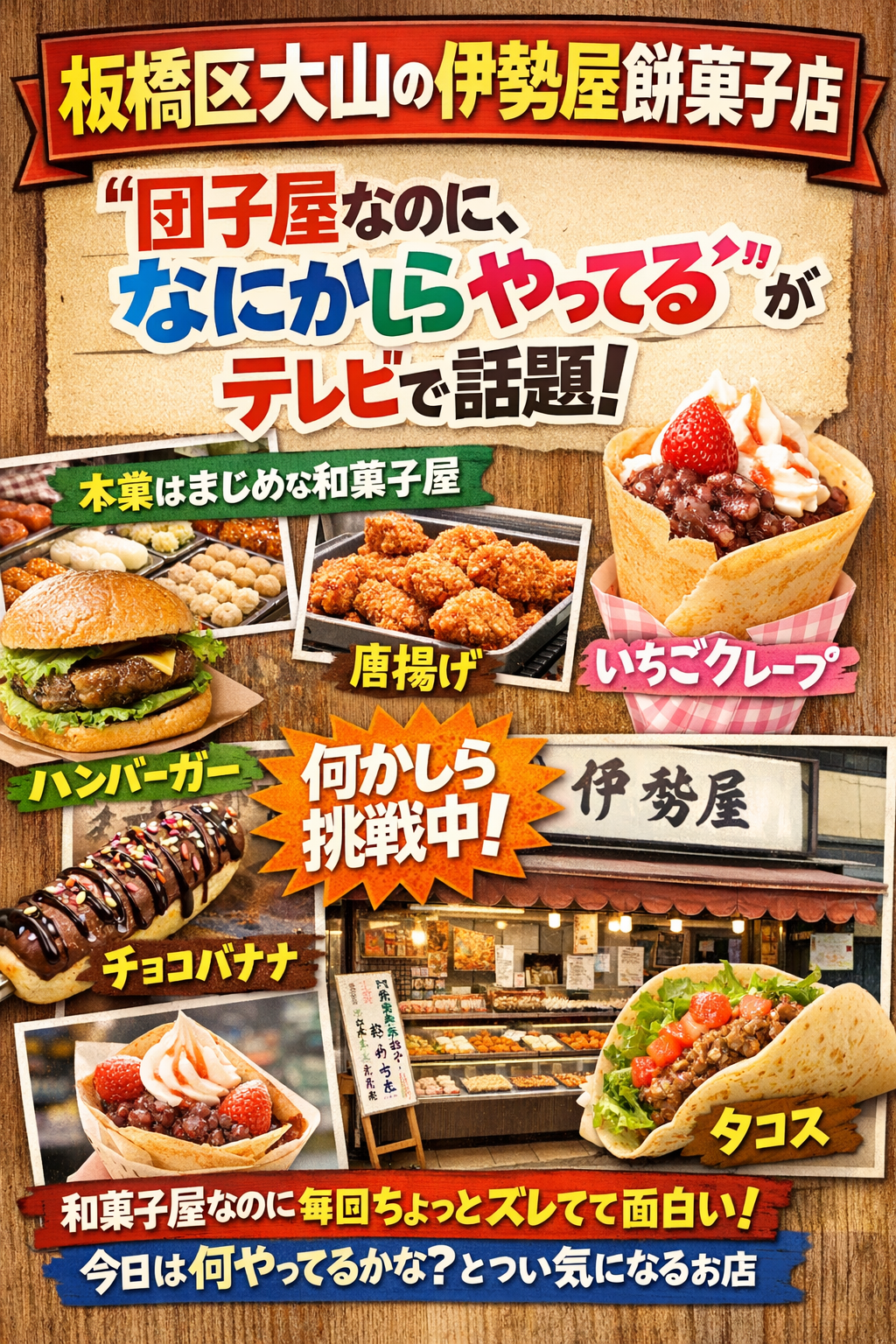
板橋区大山で「最近あの団子屋、また何かやってるよね」と言われる店があります。
ハッピーロード大山商店街にある 伊勢屋餅菓子店。本来は団子や葛餅、おせんべい、おにぎりなどを扱う昔ながらの和菓子店なのに、テレビでは“赤字の団子屋”企画の舞台としてたびたび登場し、そのたびに 唐揚げ、ソフトクリーム、クレープ、ハンバーガー、タコス、チョコバナナ など、和菓子屋の枠を軽々飛び越える新商品が話題になっています。
この店の面白さは、ただ奇抜なことをしているだけではないところです。
ちゃんと地元に根を張った老舗で、そこにテレビ企画の“無茶ぶり”みたいな新商品が重なるから、妙に応援したくなる。大山の伊勢屋が話題になる理由は、まさにこの 「本業はまじめな和菓子屋」×「でもテレビで何かしら挑戦している」 というギャップにあります。
- まず押さえたい:伊勢屋は“ちゃんとした老舗”です
- “なにかしらやってる”の中身が、毎回ちょっとズレてて面白い
- テレビの反響は大きい。でも、ずっと売ってるわけじゃない
- じゃあ、何を目当てに行けばいい?
- ハッピーロード大山という場所も、この店を面白くしている
- まとめ
- First things first: Iseya is a real old-school shop
- What they’re “doing” is always slightly offbeat — and that’s what makes it fun
- The TV response is big — but that does not mean the items stay on sale forever
- So what should you go there for?
- Happy Road Oyama itself also adds to the appeal
- Conclusion
まず押さえたい:伊勢屋は“ちゃんとした老舗”です
伊勢屋餅菓子店は、地域記事によると 1956年創業。現在は 3代目 が店を切り盛りし、ふだんは団子、葛、せんべい、かき氷、おにぎり、赤飯などを販売する、地元密着の和菓子店として営業しています。商店街の公式店舗情報でも、働く人向けの“ガッツンとくるボリューム”が魅力として紹介されており、観光向けというより、昔から生活圏に溶け込んできた店だと分かります。
つまり、テレビでいきなり見た人には「変わった企画店」に見えるかもしれませんが、実際は逆です。
土台にあるのは 商店街の和菓子屋としての日常。その上に、番組企画として“何かしら”のチャレンジ商品が載るから、あの店だけの空気が生まれています。
“なにかしらやってる”の中身が、毎回ちょっとズレてて面白い
伊勢屋がテレビで話題になった理由を一言で言うなら、毎回ちょっと予想外だからです。
地域記事では、これまでの企画として 唐揚げ、みたらしソフト、いちごあんこクレープ、ハンバーガー、タコス、チョコバナナ などが挙げられています。和菓子店なのに、次に何を出してくるのか読めない。この“店の本気度”と“番組のムチャ感”のバランスがちょうどよくて、つい気になってしまうんです。
しかも面白いのは、どれも単なるウケ狙いで終わっていないこと。
クレープなら いちごあんこ、ソフトクリームなら みたらし と、ちゃんと和菓子屋らしい要素が残っている。だから見た目は変化球でも、根っこには伊勢屋らしさがある。この“和魂洋才”みたいな感覚が、テレビ向きでありながら店の個性にもなっています。
テレビの反響は大きい。でも、ずっと売ってるわけじゃない
ここで大事なのが、テレビで見た商品がいつでも買えるわけではない ということです。
実際、地域メディアが放送後に店頭で反響を聞いた記事では、「クレープの問い合わせは増えたけど、クレープはもう売ってない」といった話が紹介されています。また、店側の「いっぺんにできない」という発言も引用されていて、本業の団子やおにぎりと、テレビ企画商品を同時に回すのは物理的に難しい様子が伝えられています。
この“続けられない感じ”も、逆にこの店らしいところです。
大量生産して商機を逃さない、というより、できる範囲でちゃんと作る。だからこそ「テレビで見て行ったけど、もう終わってた」ということも起きる。でもその不器用さが、商店街の老舗らしい誠実さにも見えるんです。
じゃあ、何を目当てに行けばいい?
伊勢屋に行くなら、テレビ企画商品だけを狙うより、もともとの店の良さも見た方が楽しいです。
地域記事では、おにぎりや赤飯、団子、せんべいが普段の主力として紹介されていて、食べログでも業態は和菓子というより 「おにぎり」 として登録されています。つまり、地元の人にとっては“話題の店”である前に、“ちゃんと使える店”なんです。
おすすめの楽しみ方は、
「今日は何かテレビ企画の痕跡あるかな」とのぞきつつ、なければ 団子やおにぎりを普通に買う こと。
その方が、この店の面白さが分かります。奇抜な企画を知ってから、日常のショーケースを見ると、「結局ここ、ちゃんとした和菓子屋なんだな」と腑に落ちるはずです。
ハッピーロード大山という場所も、この店を面白くしている
伊勢屋の舞台がハッピーロード大山商店街だというのも大きいです。
地域記事では、商店街に屋根があるため 雨天でもロケしやすく、人気ロケ地 だという話も出ています。商店街自体に活気があり、人の流れがあるから、テレビ企画との相性もいい。派手すぎず、でも画になる。伊勢屋が“テレビで何かしらやってる店”として定着した背景には、この立地の強さもあります。
まとめ
板橋区大山で“団子屋なのに、なにかしらやってる”と話題の店は、伊勢屋餅菓子店でほぼ間違いないです。
商店街公式では 板橋区大山町47-6、8:00〜19:00営業 の老舗和菓子店。地域記事によれば 1956年創業の3代目の店 で、本来は団子や葛餅、おにぎりを売る店ですが、テレビ企画では クレープ、ハンバーガー、タコス、チョコバナナ まで飛び出す“挑戦する団子屋”として注目を集めています。
話題性だけでなく、ちゃんと地元に根付いている。
だから伊勢屋は、ただの“ネタ店”では終わらない。
ハッピーロード大山に行ったら、「今日は何やってるかな」と覗きたくなる——そんな商店街の楽しさを体現している一軒です。
Itabashi-ku Oyama’s “Iseya Mochigashi-ten” — Why a “Dango Shop That’s Always Doing Something” Keeps Making TV Buzz
In Oyama, Itabashi, there is a shop people often talk about by saying, “That dango shop is doing something again, isn’t it?”
That shop is Iseya Mochigashi-ten, located in the Happy Road Oyama Shopping Street. At its core, it is a traditional Japanese sweets shop selling items like dango, kuzumochi, rice crackers, and onigiri. Yet on television, it has repeatedly appeared as the setting for a so-called “money-losing dango shop” project, and each time, it draws attention with new products that leap far beyond the boundaries of a normal wagashi shop: fried chicken, soft serve ice cream, crepes, hamburgers, tacos, and chocolate bananas.
What makes this place so charming is that it is not just doing bizarre things for attention.
It is a genuine long-established neighborhood shop, and on top of that solid foundation come these TV-driven “wild card” products. That contrast makes people want to root for it. The reason Iseya in Oyama gets so much attention is precisely this gap between “a serious traditional sweets shop at heart” and “a place that is somehow always taking on some strange new challenge on TV.”
First things first: Iseya is a real old-school shop
According to local media coverage, Iseya Mochigashi-ten was founded in 1956. It is now run by the third generation of the family, and on a normal day it operates as a community-based sweets shop selling dango, kuzumochi, senbei, shaved ice, onigiri, and sekihan. The official shopping street store listing also describes it as a place known for hearty, filling food that really hits the spot, suggesting that it is less of a tourist novelty and more of a shop woven into everyday local life.
So for people who first discover it through television, it may look like some kind of quirky stunt shop. But in reality, it is the opposite.
At its core is the everyday life of a traditional shopping-street wagashi shop. The unusual TV-project items are layered on top of that. That is what creates the unique atmosphere only this shop seems to have.
What they’re “doing” is always slightly offbeat — and that’s what makes it fun
If you had to sum up why Iseya became such a TV talking point in one sentence, it would be this: every new idea is just a little unexpected.
Local articles have listed past project items such as fried chicken, mitarashi soft serve, strawberry-and-red-bean crepes, hamburgers, tacos, and chocolate bananas. For a Japanese sweets shop, there is no predicting what might come next. The balance between the shop’s sincerity and the TV show’s absurd demands is just right, and that makes people curious.
What is especially interesting is that these items are not merely gimmicks.
If it is a crepe, it becomes strawberry and anko. If it is soft serve, it becomes mitarashi-flavored. In other words, even when the format is unconventional, the essence of the shop still remains. That blend of traditional Japanese sensibility with creative adaptation makes it television-friendly while still feeling true to Iseya’s identity.
The TV response is big — but that does not mean the items stay on sale forever
One important thing to understand is that just because you saw an item on TV does not mean you can always buy it.
In fact, one local media report that visited the shop after a broadcast quoted the staff as saying that there were many more inquiries about the crepes, but they were no longer selling them. The same coverage also cited a comment from the shop along the lines of, “We can’t do everything all at once.” It is easy to see that running the regular business of making dango and onigiri while also producing TV-project items is physically difficult.
And oddly enough, this sense that they cannot keep everything going forever is part of the shop’s charm.
Rather than mass-producing whatever gets media attention and fully cashing in, they make what they can, properly, within their limits. That means sometimes people go there after seeing something on television only to find that it is already gone. But that very awkwardness also feels honest — like the sincerity of a long-established neighborhood shop.
So what should you go there for?
If you visit Iseya, it is more fun not to focus only on the TV-project products, but also to appreciate what the shop has always been good at.
Local articles describe onigiri, sekihan, dango, and rice crackers as part of its regular core lineup, and on Tabelog the business is even categorized less as a wagashi shop and more as an onigiri shop. In other words, for local residents it is not simply “that famous place from TV” — it is also a genuinely useful everyday shop.
The best way to enjoy it may be this:
Take a peek and think, “I wonder if there are any traces of the latest TV project today.” And if there are not, just buy some dango or onigiri as usual.
That is probably the best way to understand what makes this place special. Once you know about the bizarre projects, looking at the ordinary display case makes you realize, “At the end of the day, this really is a proper traditional sweets shop.”
Happy Road Oyama itself also adds to the appeal
Another big reason Iseya works so well as a TV phenomenon is its location in Happy Road Oyama Shopping Street.
Local coverage notes that because the shopping street has a roof, it is easy to film there even in bad weather, making it a popular location for TV shoots. The arcade itself has energy and foot traffic, which makes it a perfect match for television projects. It is not overly flashy, but it still looks great on camera. Part of the reason Iseya has become established as “that shop that is always doing something on TV” is the strength of this setting.
Conclusion
If people in Oyama, Itabashi are talking about “the dango shop that somehow keeps doing something unusual,” they are almost certainly referring to Iseya Mochigashi-ten.
According to the official shopping street listing, it is a long-established Japanese sweets shop located at 47-6 Oyama-cho, Itabashi-ku, open from 8:00 a.m. to 7:00 p.m. Local articles say it was founded in 1956 and is now run by the third generation. Its regular business is selling things like dango, kuzumochi, and onigiri, but on television it has attracted attention as a “dango shop that keeps taking on new challenges,” with products ranging from crepes and hamburgers to tacos and chocolate bananas.
It is not just talk-worthy — it is genuinely rooted in the community.
That is why Iseya does not end up being seen as just another novelty shop.
When you visit Happy Road Oyama, it is the kind of place that makes you want to peek in and think, “What are they doing today?” In that sense, it perfectly embodies the lively charm of the shopping street itself.

コメント