


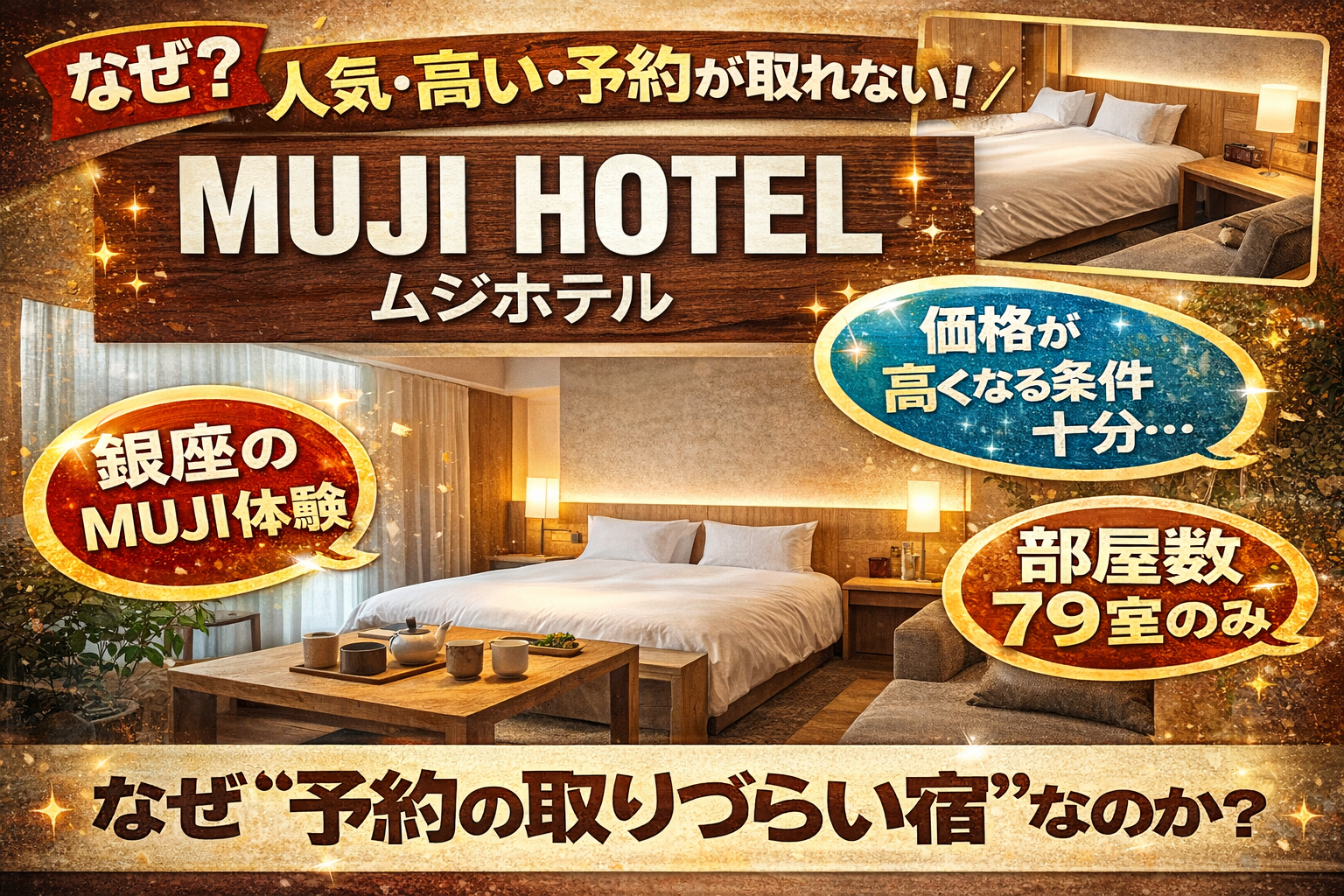
「MUJI HOTELって気になるけど、高いし、そもそも予約が取れないって聞く…」――そんな声が出やすいのが MUJI HOTEL。とくに東京の MUJI HOTEL GINZA は、無印良品の世界観を“泊まって体験できる”希少なホテルとして注目されていて、週末や連休、イベント時期は空室が見つかりにくいこともあります(時期で変動)。公式サイトでも、銀座の中心にほど近い立地で、木・石・土を中心にした素材感や、敷石・船の廃材の再利用など、空間そのものに「無印らしさ」を詰め込んでいることが分かります。
この記事では、なぜ「人気で高く見えるのに選ばれるのか」、そして「予約が取りづらく感じる理由」を、納得感が出る形で整理します。
- まず結論:高いのに人気、予約が取りづらい“構造”がある
- 「人気」の理由:泊まるだけで“無印の世界観”に浸れる
- 「高い」と感じる理由:銀座立地+体験価値で“単価が上がりやすい”
- 「予約が取れない」になりやすい理由:部屋数×需要の掛け算
- 予約を取りやすくする現実的なコツ
- まとめ:MUJI HOTELは“高い”のではなく「人気になりやすい設計」
- MUJI HOTEL (MUJI Hotel) — Why It’s “So Popular,” “Expensive,” and “Hard to Book”
- The short answer: the “hard to book” feeling is built into the structure
- Why MUJI HOTEL is so popular
- Why it feels expensive
- Why reservations feel impossible
- Practical ways to book it more easily (no gimmicks, just what works)
- Final takeaway
まず結論:高いのに人気、予約が取りづらい“構造”がある
MUJI HOTELがこの3点セットになりやすいのは、ざっくり言うと次の構造です。
- 供給が少ない:客室数が多くない
- 需要が強い:無印ファン+立地+デザイン目的の宿泊
- 価格は“体験料込み”:銀座立地と空間設計の価値が乗る
MUJI HOTEL GINZAは全79室と公式に明記されています。
79室という規模は、都心ホテルとしては大きくない部類。ここに人気が集中すると「予約が取れない」に繋がりやすいのは、ある意味当然です。
「人気」の理由:泊まるだけで“無印の世界観”に浸れる
MUJI HOTELが支持される最大の理由は、ホテルというより **“無印の生活を拡張した体験”**に近いこと。
公式サイトでは、内装に木・石・土などの素材を使い、さらに路面電車の敷石や本物の船の廃材を再利用している、と説明しています。
単にシンプルでキレイ、ではなく「素材の物語」まで含めて“無印らしさ”を設計しているから、泊まる行為がコンテンツになります。
そして客室ページでも、最小クラスの部屋でも“細長い空間に工夫を凝らす”という設計思想が見えます。
こういうホテルは、目的が「寝る」だけじゃない。**“空間を味わいに行く”**人が一定数いて、需要が落ちにくいのが強みです。
「高い」と感じる理由:銀座立地+体験価値で“単価が上がりやすい”
正直、MUJI HOTELは「ビジネスホテル価格」を期待すると高く感じます。
ただし、価格が上がりやすい背景も分かりやすいです。
1)銀座という立地
MUJI HOTEL GINZAは銀座エリアにあり、アクセス面でも強い(周辺相場も上がりやすい)立地です。
2)価格が“季節・曜日で動く”タイプ
宿泊料金は日程で変動します。たとえば価格比較サイト(価格.com)や楽天トラベルのページでは、プラン・日付を入れて料金比較/空室確認する形式になっており、「常に定額」ではないことが前提です。
つまり、平日と週末、繁忙期と閑散期で体感が変わります。高いと感じる人は、週末やイベント期に当たっているケースが多いです。
3)“アンチゴージャス、アンチチープ”という立ち位置
楽天トラベルの紹介文でも、MUJI HOTEL GINZAは「アンチゴージャス、アンチチープ」というコンセプトが掲げられています。
高級ホテルの豪華さとも、最安ビジホの割り切りとも違う。ちょうど中間の“気持ちよさ”を狙うぶん、価格も中〜上に乗りやすい、という理解がしっくりきます。
「予約が取れない」になりやすい理由:部屋数×需要の掛け算
予約が取りづらい理由は、特別な裏事情というより、需要と供給の話です。
1)客室数が79室と限られる
繰り返しですが、全79室。
人気が高いホテルほど、部屋数が少ないと「空室がない日」が出やすいです。
2)“目的地化”している
無印ファンはもちろん、「一度泊まってみたい」「内装や空気感を体験したい」目的で泊まる人がいます。こうなると、価格が多少高くても需要が落ちにくい。
3)取り方が偏る(週末・連休に集中)
銀座観光・買い物・ミュージカル・ライブ・展示会など、予定を組みやすい街なので、週末需要が強くなります。結果、予約が「取れない」と感じるタイミングが生まれます。
予約を取りやすくする現実的なコツ
(裏ワザというより、当たり前が一番効きます)
- 平日を狙う:最優先。体感が変わります
- 1〜2か月以上前から見る:週末は特に
- 公式と予約サイトを両方チェック:空室の出方が違うことがあるので、価格.comの比較や楽天などで横断すると探しやすい
- キャンセル無料プランの動きを見る:直前に空くことがある(一般論)
まとめ:MUJI HOTELは“高い”のではなく「人気になりやすい設計」
MUJI HOTELが「人気・高い・予約取れない」になりやすいのは、
- 客室数79室という供給の限り
- 銀座の中心に近い立地と、素材・再利用までこだわった空間体験
- 価格が日程で変動する(=高い日に当たると印象が強い)
この3つが重なっているからです。
「無印の空気感で1泊して整えたい」タイプの人には、値段以上に刺さるホテル。逆に、ただ寝るだけなら割高に見える。目的がハマるかどうかで評価が割れる、分かりやすい存在です。
MUJI HOTEL (MUJI Hotel) — Why It’s “So Popular,” “Expensive,” and “Hard to Book”
If you’ve ever thought, “MUJI HOTEL looks amazing, but it’s pricey… and I can never find an available room,” you’re not alone. MUJI HOTEL—especially MUJI HOTEL GINZA in Tokyo—often gets described with the same three phrases: popular, expensive, and impossible to book.
The truth is, those three things are connected. MUJI HOTEL GINZA isn’t just a place to sleep—it’s a place people choose because it feels like stepping into MUJI’s philosophy in real life. And when a hotel becomes a “destination experience,” demand rises fast.
The short answer: the “hard to book” feeling is built into the structure
MUJI HOTEL GINZA is relatively small for a major Tokyo hotel: it has 79 rooms in total.
That’s the key number. When demand spikes (weekends, holidays, peak travel seasons), a 79-room hotel can look “sold out” quickly—even if it’s not a massive property with hundreds of rooms.
So the “hard to book” reputation isn’t mysterious. It’s simply:
- Limited supply (79 rooms)
- Strong demand (MUJI brand + Ginza location + design experience)
- Pricing that rises with high-demand dates (weekends, peak seasons)
Why MUJI HOTEL is so popular
1) People don’t book it just for a bed—they book it for “the MUJI experience”
MUJI HOTEL GINZA is designed so that staying there feels like living inside MUJI’s world: calm, minimal, material-focused, and quietly refined. The room concept itself is explained on the official site—even the most compact room is described as being carefully designed to restore travelers “in body and spirit.”
That’s a strong signal: the product is not “cheap sleep.” It’s “a lifestyle experience,” and that attracts travelers who are willing to pay for atmosphere.
2) A clear design philosophy: “anti-gorgeous, anti-cheap”
MUJI HOTEL GINZA is often introduced with a concept that perfectly explains why it feels different from both luxury hotels and budget hotels: “anti-gorgeous, anti-cheap.”
This positioning is powerful. It promises comfort and quality without flashy luxury—and it creates a very specific type of fan: people who want calm, design, and materials rather than glitter.
3) The location factor: “MUJI + Ginza” is naturally high-demand
Ginza is one of Tokyo’s most convenient and high-profile areas for shopping, food, and city access. MUJI HOTEL GINZA benefits from being part of a destination people already want to visit. On major booking platforms, it’s also categorized at a higher tier (commonly shown as a 4-star property), which shapes expectations and price levels as well.
Why it feels expensive
To be clear: “expensive” is relative. If you compare MUJI HOTEL to typical business hotels, yes, it can feel high. But it’s priced like a design-forward, experience-driven stay in a premium Tokyo area.
Here are the main reasons the price feels higher:
1) You’re paying for “space design,” not just facilities
MUJI HOTEL’s value is not about huge rooms or luxury services. It’s about how the room makes you feel: quiet, organized, softened. Even in the smallest rooms, the official description focuses on details like mattresses informed by sleep/posture research and lighting designed to guide guests toward natural sleep.
That kind of “designed comfort” often costs more than you expect—because you’re paying for concept and execution, not square meters.
2) Rates move by date (weekend/holiday pricing hits hard)
Like most Tokyo hotels, pricing changes significantly depending on the calendar. If you only check weekend dates or holiday seasons, you’ll mostly see the high side—and you’ll remember MUJI HOTEL as “always expensive.”
Why reservations feel impossible
1) Only 79 rooms means peak dates disappear fast
Again: 79 rooms is the core reason.
When a hotel becomes “a place people want to try once,” it turns into a bucket-list stay, and those guests concentrate on the easiest dates (Friday/Saturday, long weekends).
2) It’s “destinationized”: people book it because it’s MUJI
Some hotels are chosen after flights are booked. MUJI HOTEL is often chosen as part of the trip plan itself. That drives demand even when prices rise.
3) The schedule bias: weekends + events = instant sellout vibes
Ginza has constant event pull—shopping, exhibitions, concerts nearby, seasonal tourism. Even without a single major event, weekends in Tokyo are simply competitive.
Practical ways to book it more easily (no gimmicks, just what works)
If you want a realistic strategy:
- Aim for weekdays (Sun–Thu): This is the biggest difference-maker.
- Start checking early for weekends: popular dates get taken first.
- Check multiple booking channels: availability can vary by platform (official site vs major booking sites).
- Watch for last-minute cancellations: many travelers book flexible plans and release rooms close to the date.
Final takeaway
MUJI HOTEL—especially MUJI HOTEL GINZA—tends to be popular, expensive, and hard to book because it sits at the intersection of:
- limited supply (79 rooms)
- strong brand-driven demand
- premium Tokyo location
- a design concept (“anti-gorgeous, anti-cheap”) that creates loyal fans
It’s not “just a hotel.” It’s a place people book to feel a certain way. And when that happens, the calendar fills up.

コメント