
- 「オモウマ」で伊勢崎の焼き芋が気になった人が増えている
- 今回話題なのは、八百屋の続きではなく“焼き芋屋としての再出発”
- 6個1袋500円は、やはりかなり強い
- “安い焼き芋”なのに、ちゃんとおいしそうなのが強い
- 店名や詳しい所在地は、現時点では報道ベースで見えていない
- オモウマで注目される理由は、“安い焼き芋屋”以上の物語があるから
- まとめ|伊勢崎市の焼き芋6個1袋500円は、オモウマらしさ満点の話題店
- More people are getting curious about Isesaki’s roasted sweet potatoes after Omouma
- What makes this interesting now is that it is not just a sequel to the greengrocer story—it is a fresh start as a roasted sweet potato shop
- Six for 500 yen is, undeniably, a strong hook
- What makes it stronger is that it does not sound like “cheap roasted sweet potatoes”—it sounds like properly delicious roasted sweet potatoes that also happen to be cheap
- At the moment, the shop name and exact location still do not seem to be clearly established in public reporting
- What makes this such a perfect Omouma topic is that it is about more than cheap roasted sweet potatoes
- Final thoughts: Isesaki’s “6 roasted sweet potatoes for 500 yen” feels like a perfect Omouma story
「オモウマ」で伊勢崎の焼き芋が気になった人が増えている
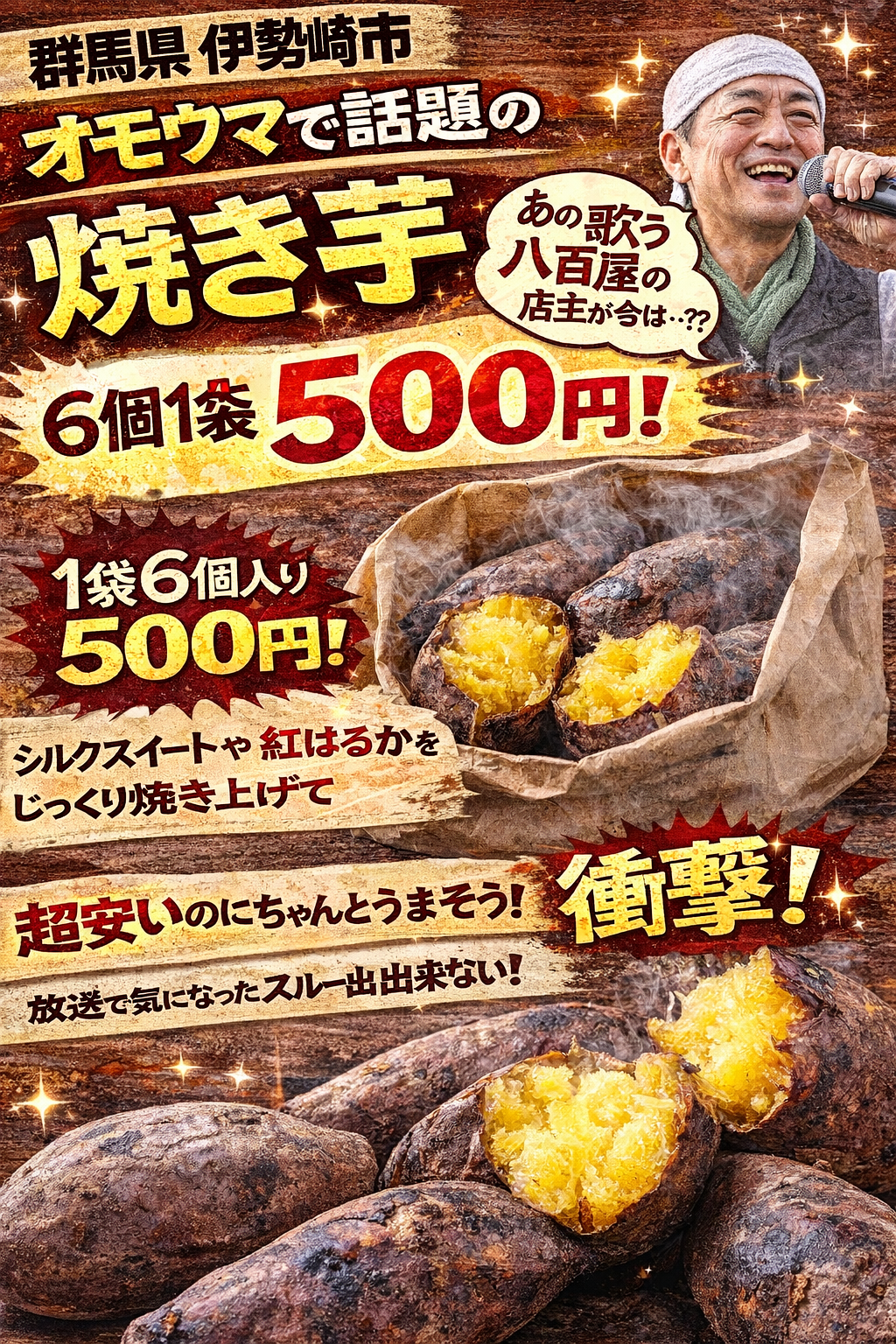
2026年4月14日放送の**「ヒューマングルメンタリー オモウマい店」では、以前“気前が良すぎる八百屋”として話題になった小林君八百屋のその後が取り上げられました。番組関連の報道によると、2024年8月に店を閉めた店主の哲夫さんは、現在群馬県伊勢崎市で新たに焼き芋店をオープンしていると紹介されています。しかも、その店で販売している焼き芋は「1袋6個入りで500円」**。このインパクトのある価格設定が、放送前からかなり注目を集めていました。
もともと小林君八百屋は、群馬県みどり市の店としてオモウマ視聴者の記憶に残っていた存在です。スイカを大胆にサービスしたり、来店客の前で菅田将暉さんの「虹」を熱唱したりと、“商品だけでなく人柄まで含めて強く印象に残る店”として人気を集めていました。中京テレビの過去放送内容でも、2022年4月26日放送回に小林君八百屋が実名で掲載されており、オモウマの代表的な再訪案件として扱われていることがわかります。
今回話題なのは、八百屋の続きではなく“焼き芋屋としての再出発”
今回の伊勢崎の話が面白いのは、ただ「前に出た店のその後」では終わらないところです。報道によると、哲夫さんは八百屋を閉店したあと、**「歌いながら世界を回りたい」**という思いからヨーロッパを回り、その後に伊勢崎市で焼き芋店を始めたとされています。つまり今回の焼き芋店は、以前の人気をそのまま引き継いだだけではなく、店主自身の人生の続きとして始まった新しい商売なんです。
しかも、新しい店でも“歌のサービス”は健在と報じられています。以前と変わらず「虹」を歌いながら客をもてなしているとのことで、八百屋時代の“オモウマらしさ”はそのままに、商品だけが焼き芋へと変わったような構図になっています。だから視聴者にとっては、「あの人が今は焼き芋を売っているのか」というストーリーごと気になってしまうわけです。
6個1袋500円は、やはりかなり強い
今回もっとも目を引くのは、やはり**「焼き芋1袋(6個)500円」という価格です。報道では、哲夫さんは茨城県産のシルクスイートや紅はるか**といった質の良いさつまいもを仕入れ、1時間以上かけてじっくり焼き上げることで甘みを引き出した焼き芋を、この価格で販売していると紹介されています。安さだけでなく、素材と焼き方にもちゃんと手をかけていることがわかる内容です。
焼き芋は近年、専門店化やブランド化が進んでいて、1本単位でもしっかりした価格になることが珍しくありません。そうした流れの中で、6個入り500円というのは、やはり相当わかりやすい安さです。もちろん、芋のサイズや時期、仕入れ状況によって印象は変わるはずですが、少なくともオモウマ文脈で注目されるのは当然の数字だと言えます。しかも“安いだけ”ではなく、シルクスイートや紅はるかを使い、時間をかけて焼くという説明がつくことで、「どうしてその値段で出せるの?」という驚きにつながっています。
“安い焼き芋”なのに、ちゃんとおいしそうなのが強い
安さが話題になる店はたくさんありますが、本当に人の印象に残るのは、安いのにちゃんとおいしそうな店です。今回の焼き芋店もそこが強いです。報道では、仕入れている品種としてシルクスイートと紅はるかが挙げられていますが、どちらも焼き芋向きとして人気の高いさつまいもです。特に紅はるかは甘みの強さで知られ、シルクスイートはしっとり感やなめらかな食感で好まれやすい品種です。そこへ1時間以上の焼成をかけているとなれば、単なる格安品というより、**「ちゃんと甘さを引き出した焼き芋」**として期待したくなります。
つまりこの店の魅力は、価格で驚かせて、品種と焼き方で納得させるところにあります。オモウマい店に出てくる店は、サービス精神だけでなく「結局うまそう」が必要ですが、今回の焼き芋はそこをしっかり満たしている印象です。安いから一度買ってみようではなく、安いのにちゃんと焼き芋として気になる。この順番だから、放送でさらに話題になりやすいのだと思います。
店名や詳しい所在地は、現時点では報道ベースで見えていない
ここでひとつ注意したいのは、今回確認できた公開情報の範囲では、伊勢崎市の新しい焼き芋店の店名や詳細住所までははっきり確認できなかったことです。中京テレビの番組トップや関連報道では、**「伊勢崎市で新たに焼き芋店をオープン」**というところまでは出ていますが、現時点で店名を公式に強く打ち出した情報は見つけられていません。
そのため、記事としては**「オモウマで取り上げられた、元・小林君八百屋店主の伊勢崎の焼き芋店」という表現で紹介するのがいちばん安全です。逆に言えば、店名がまだ広く出ていない段階でもこれだけ話題になっているのは、“誰がやっている店なのか”がすでに強いブランドになっている**からとも言えます。商品だけでなく、店主のキャラクターまで含めて注目されているのが、この店のいちばんオモウマらしいところです。
オモウマで注目される理由は、“安い焼き芋屋”以上の物語があるから
今回の伊勢崎の焼き芋店が強いのは、単に「安い焼き芋が買える」だけではないことです。以前の八百屋時代から続く哲夫さんのサービス精神、閉店から欧州歴訪を経て再出発したという人生の流れ、そして今も変わらず歌で客をもてなしているというキャラクター性が全部つながって、はじめてこの店の面白さになっています。
だからこの話は、焼き芋の価格や個数だけで終わりません。視聴者が気になるのは、6個500円の安さそのもの以上に、**「あの店主が次は焼き芋でどんな幸せを作っているのか」**という点です。オモウマい店がただのグルメ番組で終わらないのはこういうところで、料理や商品と同じくらい、その店の人の生き方が見えてくるから人の記憶に残ります。
まとめ|伊勢崎市の焼き芋6個1袋500円は、オモウマらしさ満点の話題店
群馬県伊勢崎市で話題になっている焼き芋は、元・小林君八百屋の店主が始めた新しい焼き芋店として、2026年4月14日放送の「オモウマい店」で大きく注目されています。公開報道によると、そこで売られているのはシルクスイートや紅はるかを1時間以上かけて焼いた焼き芋で、価格は1袋6個入り500円。安さのインパクトが強い一方で、素材や焼き方を見ると、ちゃんと味でも期待できる内容です。
しかも、この店の魅力は値段だけではありません。八百屋時代から続く気前のよさ、歌のサービス、そして閉店後の再出発という背景まで含めて、とても“オモウマい店”らしい話題性を持っています。伊勢崎で焼き芋を探している人はもちろん、安い・うまそう・人が面白いの三拍子がそろった店が気になる人にとっても、かなり気になる存在になりそうです。
Isesaki’s Roasted Sweet Potatoes Become an Omouma Talking Point: Is 500 Yen for a Bag of 6 Really That Cheap? The Latest Chapter in the Story of the Former “Singing Greengrocer”
More people are getting curious about Isesaki’s roasted sweet potatoes after Omouma
On the April 14, 2026 episode of Human Gourmet: Omouma Mise, the show revisited Kobayashi-kun Yaoya, the famously over-generous produce shop that had previously made a big impression on viewers. According to coverage related to the broadcast, the former owner, Tetsuo, who closed the shop in August 2024, has now opened a new roasted sweet potato shop in Isesaki, Gunma. What really caught people’s attention was the price: a bag of 6 roasted sweet potatoes for 500 yen. Even before the episode aired, that price alone was enough to spark major interest.
Kobayashi-kun Yaoya had already stayed in viewers’ memories as one of the standout shops in Midori City, Gunma. The owner became known not just for selling produce, but for his overwhelming generosity and unforgettable personality—giving away watermelon in dramatic fashion and even singing Masaki Suda’s “Niji” in front of customers. In other words, it was the kind of place people remembered not only for the products, but for the person behind the counter.
What makes this interesting now is that it is not just a sequel to the greengrocer story—it is a fresh start as a roasted sweet potato shop
What makes this Isesaki story especially compelling is that it is not simply “whatever happened to that old shop?” According to reports, after closing the produce store, Tetsuo spent time traveling around Europe because he wanted to sing while traveling the world, and then later started a roasted sweet potato business in Isesaki. That means this new shop is not just an extension of his old fame. It is being presented as the next chapter in his life.
And notably, his trademark hospitality through singing has apparently not disappeared. Reports say he still sings “Niji” for customers, just as he did during his greengrocer days. So to viewers, it feels like the same lovable “Omouma” personality has simply changed products—from vegetables to roasted sweet potatoes. That is why the story becomes about more than just cheap food. People want to know what that owner is doing now.
Six for 500 yen is, undeniably, a strong hook
The most eye-catching part of the story is of course the price: 6 roasted sweet potatoes in one bag for 500 yen. Reports say Tetsuo uses quality sweet potato varieties such as Silk Sweet and Beni Haruka from Ibaraki Prefecture, then roasts them slowly for more than an hour to bring out their sweetness before selling them at that price.
That matters. The appeal is not just that they are cheap. It is that he appears to be using sweet potato varieties already associated with good roasted sweet potatoes, and he is also putting time into the roasting process. In recent years, roasted sweet potatoes in Japan have become increasingly specialized and branded, and it is no longer unusual for even a single sweet potato to carry a noticeable price. In that context, 500 yen for 6 pieces is extremely easy for people to understand as a bargain.
Of course, the size of each sweet potato, the season, and the supply conditions all affect how people perceive value. But even so, the price is striking enough that it naturally fits the Omouma style of “wait, how is that possible?” And because the explanation includes quality varieties and careful roasting, the surprise is not just about low price. It becomes: how can something made with that much care still be sold that cheaply?
What makes it stronger is that it does not sound like “cheap roasted sweet potatoes”—it sounds like properly delicious roasted sweet potatoes that also happen to be cheap
There are many places that become known for low prices. The ones people really remember, though, are the places where the food still sounds genuinely good.
That is where this roasted sweet potato shop seems especially strong. The reported varieties—Silk Sweet and Beni Haruka—are both popular choices for roasted sweet potatoes. Beni Haruka is especially known for its sweetness, while Silk Sweet is often appreciated for its moist texture and smooth mouthfeel. If those are then roasted for more than an hour, it stops sounding like a pile of bargain-bin sweet potatoes and starts sounding like something that was prepared with real intention.
So the appeal of this shop seems to follow a very effective order: first it surprises people with the price, then it convinces them with the ingredients and method. That pattern is very Omouma. The audience is not just reacting to “it’s cheap, so maybe I’ll try it once.” They are reacting to “it’s cheap, but it also sounds like a roasted sweet potato worth eating.” That difference matters.
At the moment, the shop name and exact location still do not seem to be clearly established in public reporting
One important point to note is that, based on the public information currently available, the name of the new roasted sweet potato shop in Isesaki and its exact address have not yet been clearly confirmed. Program coverage and related reports state that Tetsuo opened a new roasted sweet potato shop in Isesaki, but there does not yet appear to be a widely circulated official source strongly promoting the new store name.
Because of that, the safest way to describe it is as the new roasted sweet potato shop in Isesaki opened by the former owner of Kobayashi-kun Yaoya, featured on Omouma Mise. In a way, that uncertainty says something interesting on its own. Even before the shop name is fully widespread, people are already paying attention. That suggests the strongest “brand” here may not be the store name at all—it may be the owner himself.
That is one of the most Omouma things about this story. The product matters, but so does the person selling it.
What makes this such a perfect Omouma topic is that it is about more than cheap roasted sweet potatoes
The strength of this story is not simply that there is a place selling low-cost roasted sweet potatoes. What really gives it power is the full context behind it: Tetsuo’s generosity from his greengrocer days, his decision to close the old store, his journey through Europe, and his new start in Isesaki—while still singing for customers the way he always did.
That is why this story does not end with the number “6 for 500 yen.” Viewers are interested in that price, of course, but what really keeps them emotionally engaged is the question: what kind of happiness is this owner creating now, through roasted sweet potatoes instead of produce?
That is one reason Omouma Mise works so well as more than just a food show. It leaves an impression because, alongside the food and prices, it also lets people see something about the life and character of the person behind the business.
Final thoughts: Isesaki’s “6 roasted sweet potatoes for 500 yen” feels like a perfect Omouma story
The roasted sweet potatoes now drawing attention in Isesaki, Gunma have become a major talking point because they are tied to the former owner of Kobayashi-kun Yaoya, featured in the April 14, 2026 episode of Omouma Mise. According to publicly available reports, the shop is selling roasted Silk Sweet and Beni Haruka sweet potatoes, slowly baked for over an hour, for 500 yen per bag of 6. The price is the obvious attention-grabber, but the ingredient choices and roasting method suggest that the product itself may also be genuinely appealing.
And in the end, the charm of this shop is not just the low price. It is also the owner’s generosity, his continued musical hospitality, and the sense of a new beginning after closing his old store. Taken together, that gives the whole story exactly the kind of appeal people associate with Omouma: cheap, delicious-looking, and powered by a memorable human story.
For anyone interested in roasted sweet potatoes in Isesaki—or in the kind of shop that combines value, personality, and heart—this is a story that feels hard to ignore.

コメント