
京都の喫茶文化といえば、街なかの老舗や学生街の名店を思い浮かべる人が多いかもしれない。けれど、京都の喫茶の奥深さは中心部だけでは語れない。地下鉄東西線・椥辻駅から歩いて数分。山科の住宅地に、長年地元の人に愛され続けてきた一軒の純喫茶がある。それが**「やましなコーヒープラザ マリ亜ンヌ」**だ。1973年創業の老舗で、今なお昭和の空気を色濃く残しながら、多くの喫茶ファンを惹きつけている。
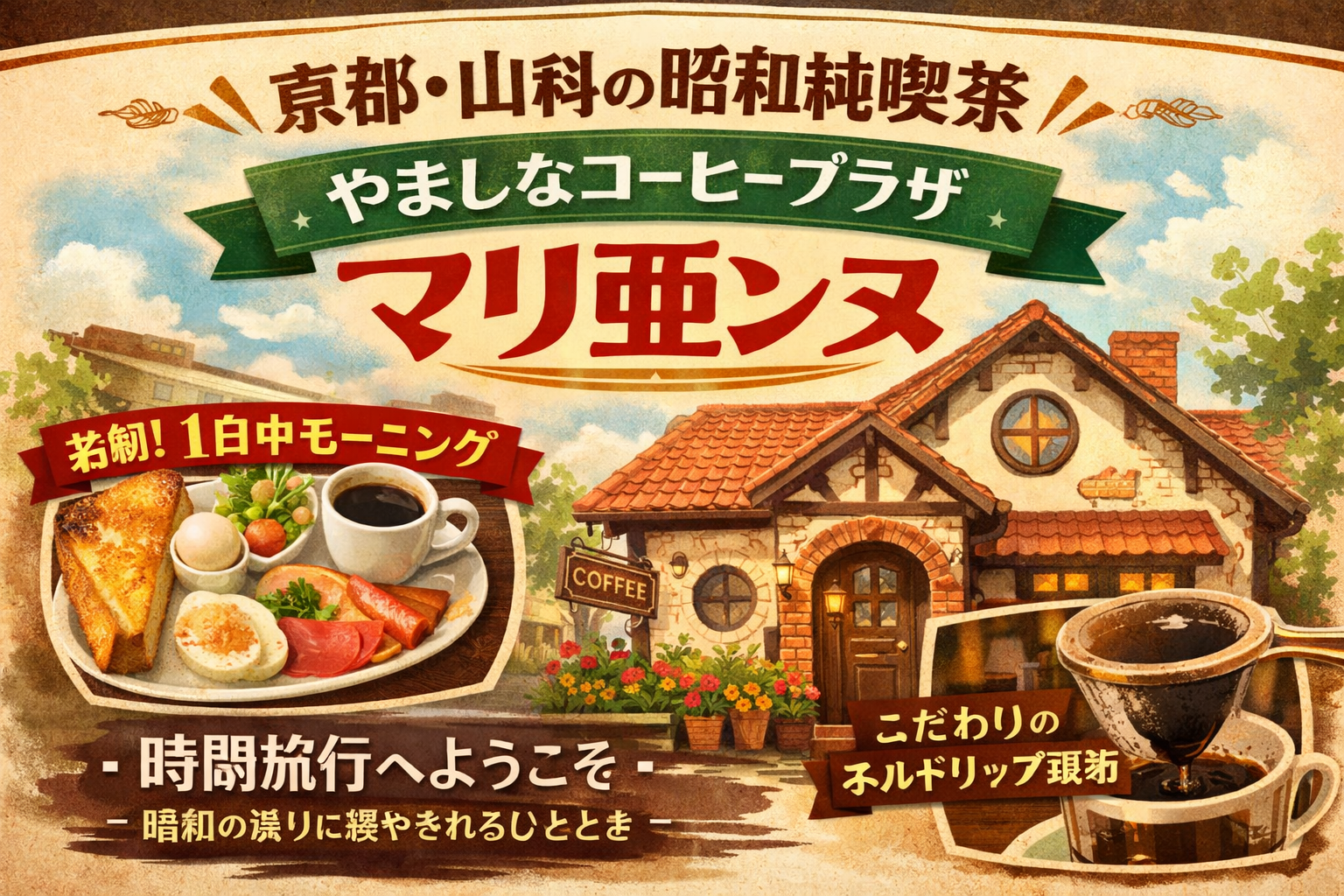
この店を語るうえで、まず触れたいのがその外観である。丸窓が印象的な建物は、どこか物語の中の家のようで、初めて訪れても強く記憶に残る。紹介記事によれば、店はフランスの田舎にある家をイメージしてつくられたといい、その言葉どおり、可憐さと懐かしさが同居した独特の存在感を放っている。京都の町家とも、都市型のカフェとも違う。あくまで“喫茶店”でありながら、店構えそのものに小さな旅情があるのが、マリ亜ンヌの大きな魅力だ。
扉を開けると、店内には昭和の純喫茶らしい落ち着いた空気が流れている。布張りの壁紙、アンティーク調の家具、やわらかな照明。最近よくある“レトロ風”の演出ではなく、長い歳月の中で自然に育まれてきた本物の雰囲気がある。だからこそ、写真映えという一言では片づけられない深みがあるのだろう。流行を追ってつくられた空間ではなく、日々の暮らしとともに磨かれてきた店の表情が、そのまま店内に息づいている。
マリ亜ンヌが喫茶好きの間でとくに知られている理由の一つが、一日中モーニングを提供していることだ。朝の時間帯だけではなく、昼を過ぎても“モーニング”を注文できるというこのスタイルは、忙しい現代人にとってもありがたい。記事では、さまざまな時間帯で生活する人が、いつ来ても同じように楽しめるようにとの思いから続けられていると紹介されている。単なるサービスではなく、地域の人の生活に寄り添ってきた喫茶店ならではのやさしさが感じられる。
しかも、そのモーニングは内容が充実している。レビューでは7種類ほどのモーニングに触れられており、トースト系だけでなく和食系までそろうなど、選ぶ楽しさもあるようだ。野菜やスープが付いたセットもあり、“軽い朝食”の域を超えた満足感がある。おしゃれに少量を食べるのではなく、しっかり食べて一日を始めたい、あるいは昼食も兼ねたい。そんな需要にきちんと応えてくれる懐の深さが、この店にはある。喫茶店のモーニング文化を大切にしながら、それを実用的な形で今に受け継いでいるのである。
もちろん、喫茶店である以上、主役はやはりコーヒーだ。紹介記事では、コーヒーはコクのあるネルドリップ方式とされている。ネルで丁寧に抽出されたコーヒーは、ペーパードリップとはまた異なるまろやかさと厚みを感じさせる。効率だけでは続けにくい手法を守り続けているところにも、店の矜持が見える。昭和の純喫茶においてコーヒーは、ただの飲み物ではなく、その店の時間そのものを味わうための一杯だ。マリ亜ンヌにも、そうした喫茶店本来の価値観がしっかりと息づいている。
この店の名が広く知られるようになった背景には、テレビ番組で取り上げられたこともある。2023年11月放送の**『マツコの知らない世界』の“昭和レトロ喫茶店の世界”**で紹介されたことが、各種記事で確認できる。テレビで紹介されると、一時的に“話題の店”として消費されがちだが、マリ亜ンヌの場合、その根底にあるのは半世紀以上続く営業の積み重ねだ。番組出演はきっかけにすぎず、本質的な魅力はもっと前から静かに育まれてきたものだと言える。
また、店名の由来にも純喫茶らしい味わいがある。食べログのレビューでは、先代マスターが女優・真理アンヌさんのファンだったことから名付けられたと紹介されている。事実関係はレビュー由来ではあるものの、こうしたエピソードには昭和の店らしい人間味がにじむ。合理性やマーケティングではなく、好きなものを店名に宿す。その素朴でまっすぐな感覚こそ、昔ながらの喫茶店文化の魅力なのかもしれない。
アクセス面でも、マリ亜ンヌは訪ねやすい。住所は京都市山科区椥辻池尻町32-4、最寄りの椥辻駅から約238メートルとされ、徒歩数分で到着する。営業時間は、確認できた情報では平日8時〜17時、土曜8時〜13時30分前後、日祝定休となっている。ただし営業時間は変更の可能性もあるため、来店前に確認するのが安心だ。京都観光の王道エリアから少し離れているぶん、わざわざ足を運ぶ価値がある一軒として、喫茶巡り好きにはむしろ魅力的な立地ともいえる。
マリ亜ンヌの魅力は、単に“レトロでかわいい”ことではない。長く続いてきた店には、流行の言葉では言い表せない説得力がある。建物の表情、店内の空気、ネルドリップのコーヒー、充実したモーニング、そして地元の日常に寄り添う営業スタイル。それらすべてが積み重なって、この店だけの時間をつくっている。京都には数え切れないほどのカフェがあるが、純喫茶という文化の厚みを静かに感じたいなら、山科のマリ亜ンヌは外せない存在だろう。観光地の喧騒から少し離れ、昭和から続く一杯と一皿に身をゆだねる。そんな贅沢を味わえる店が、いまも京都にちゃんと残っている。
Savoring Time in Yamashina, Kyoto: Marianne Coffee Plaza, a Classic Showa-Era Café
When people think of Kyoto’s café culture, they often imagine long-established coffee shops in the city center or beloved student hangouts near universities. Yet Kyoto’s kissaten culture runs much deeper than its central districts alone. Just a few minutes’ walk from Nagitsuji Station on the Kyoto Municipal Subway Tozai Line, tucked into a residential area of Yamashina, stands a café that has been cherished by locals for decades: Yamashina Coffee Plaza Marianne. Founded in 1973, this long-running establishment still retains the atmosphere of the Showa era, continuing to attract fans of traditional Japanese coffee shops.
One of the first things worth mentioning is the building itself. Its round window gives the exterior a distinctive, memorable appearance, almost like something out of a storybook. According to articles introducing the café, the shop was designed to resemble a country house in rural France. That description feels fitting: the exterior combines charm and nostalgia in a way that is both elegant and warmly familiar. It is neither a Kyoto machiya townhouse nor a sleek urban café. Instead, it is unmistakably a classic kissaten, with a sense of quiet travel and escape built right into its façade. That alone is part of what makes Marianne so special.
Step inside, and the interior is filled with the calm, grounded atmosphere of a traditional Showa-era coffee shop. Fabric-covered wallpaper, antique-style furnishings, and gentle lighting create a space that feels lived in rather than staged. Unlike many modern cafés that try to imitate retro style, Marianne offers the real thing. Its appeal goes beyond mere “Instagrammable” nostalgia. The shop carries the depth that only time can create. It is not a space designed to follow trends, but one shaped gradually by decades of daily life, conversation, and quiet routine. That accumulated history can be felt throughout the room.
One reason Marianne is especially well known among café lovers is its unusual approach to breakfast: morning sets are served all day. Rather than limiting breakfast offerings to the early hours, the café allows customers to order them well into the afternoon. In an age when people live on many different schedules, this kind of flexibility feels especially welcome. Articles about the shop explain that the idea is to make the café accessible to everyone, no matter what time their day begins. This is more than just a convenient service; it reflects the kindness and practicality of a café that has long been part of the community.
The breakfast menu itself is also impressively varied. Reviews mention around seven different morning sets, including not only toast-based options but also Japanese-style selections. Some sets come with vegetables or soup, making them feel far more substantial than a light snack. Marianne is not the sort of place that serves tiny portions for appearance’s sake. It is a café for people who want to begin the day properly—or perhaps combine breakfast and lunch into one satisfying meal. In that sense, the shop preserves the spirit of Japan’s morning-set culture while adapting it to the real needs of everyday customers.
Of course, in a kissaten, coffee remains the true centerpiece. Articles introducing Marianne note that its coffee is prepared using a nel drip method, which produces a rich and full-bodied flavor. Compared with paper-drip coffee, nel-dripped coffee often has a softer texture and greater depth. It is a brewing method that requires time and care, and one that is not necessarily the most efficient in a modern business sense. The fact that Marianne continues to use it speaks to the pride and dedication behind the shop. In a classic Japanese café, coffee is never just a drink; it is part of the experience of time itself. At Marianne, that philosophy is still very much alive.
The café became more widely known after being featured on television. Various sources confirm that it appeared in the November 2023 broadcast of Matsuko no Shiranai Sekai (“Matsuko’s Unknown World”), in a segment focused on retro Showa-era cafés. Television exposure often turns places into temporary trends, but Marianne’s appeal clearly rests on something much deeper. Its presence on the program may have introduced it to a wider audience, but the café’s true value lies in the half-century of steady operation and accumulated atmosphere that came long before the cameras arrived.
There is also a charming story behind the café’s name. A review on Tabelog mentions that the previous owner was a fan of the actress Mari Anne, and that this inspired the shop’s name. While this detail appears in a user review rather than an official source, it nonetheless feels perfectly suited to the spirit of a Showa-era café. It suggests a time when a shop name might come not from branding strategy or market research, but simply from personal affection and taste. That kind of unpretentious warmth is part of the charm of old-fashioned kissaten culture.
Marianne is also relatively easy to visit. Its address is 32-4 Nagitsuji Ikejiri-cho, Yamashina-ku, Kyoto, and it is listed as being about 238 meters from Nagitsuji Station, making it only a short walk away. Based on available information, business hours are generally 8:00 a.m. to 5:00 p.m. on weekdays, 8:00 a.m. to around 1:30 p.m. on Saturdays, and closed on Sundays and public holidays. As opening hours may change, it is always wise to confirm before visiting. Because it lies a little outside Kyoto’s most famous sightseeing districts, Marianne has the feel of a destination worth seeking out—a place that rewards those willing to step away from the standard tourist routes.
What makes Marianne truly memorable is not simply that it is “retro” or visually charming. Long-running cafés possess a kind of quiet authority that cannot be manufactured. The expressive building, the atmosphere inside, the nel-drip coffee, the generous breakfast menu, and the way the shop continues to fit naturally into local daily life—all these elements come together to create a space with its own distinct sense of time. Kyoto has no shortage of stylish cafés, but for anyone hoping to experience the depth and texture of traditional kissaten culture, Marianne in Yamashina stands out as a place not to be missed. Away from the noise of the tourist center, it offers the rare luxury of surrendering to a cup of coffee and a meal in a space where the Showa era still quietly lingers.

コメント