

- 小川町の魅力を映す新しい道の駅
- 人気を集めるベーカリー「おがわっ子」
- 和紙あんぱんとはどんなパンなのか
- 人気の理由は「わかりやすさ」と「ご当地性」
- 道の駅名物としての完成度も高い
- まとめ 小川町に行くなら一度は食べたいあんぱん
- A Newly Renewed Roadside Station That Reflects the Charm of Ogawa Town
- The Popular Bakery “Ogawakko”
- What Kind of Bread Is Washi Anpan?
- Its Popularity Comes from Clarity and Strong Local Identity
- A Highly Complete Roadside-Station Specialty
- Conclusion: A Sweet Bun Worth Trying in Ogawa Town
小川町の魅力を映す新しい道の駅
埼玉県比企郡小川町にある道の駅おがわまちは、いま小川町の魅力をまとめて体験できる拠点として注目を集めている。公式サイトでは、小川町の歴史・文化・自然が織りなす魅力を未来へつなぐ場所と位置づけられており、伝統工芸施設、飲食・物販棟、ふれあい広場などを備えた複合的な施設として案内されている。2025年5月にリニューアルオープンし、物販や食事だけでなく、和紙の展示や紙漉き体験まで楽しめる“体験型パーク”として再出発した。所在地は埼玉県比企郡小川町大字小川1220-1、営業時間は道の駅全体が9時から17時、ベーカリーおがわっ子も9時から17時となっている。
小川町といえば、やはり小川和紙の町として知られる存在だ。公式サイトでも、道の駅のコンセプトは「手漉き和紙と有機の里」とされており、伝統工芸施設では1,300年の歴史を誇る和紙文化に触れられると紹介されている。小川町長のコメントでも、ユネスコ無形文化遺産に登録されている「細川紙」などの伝統産業が息づく町として説明されている。つまり、ここで売られる商品には単なる土産以上の意味がある。土地の文化や歴史を、食や買い物の形で体験させる役割が与えられているのだ。
人気を集めるベーカリー「おがわっ子」
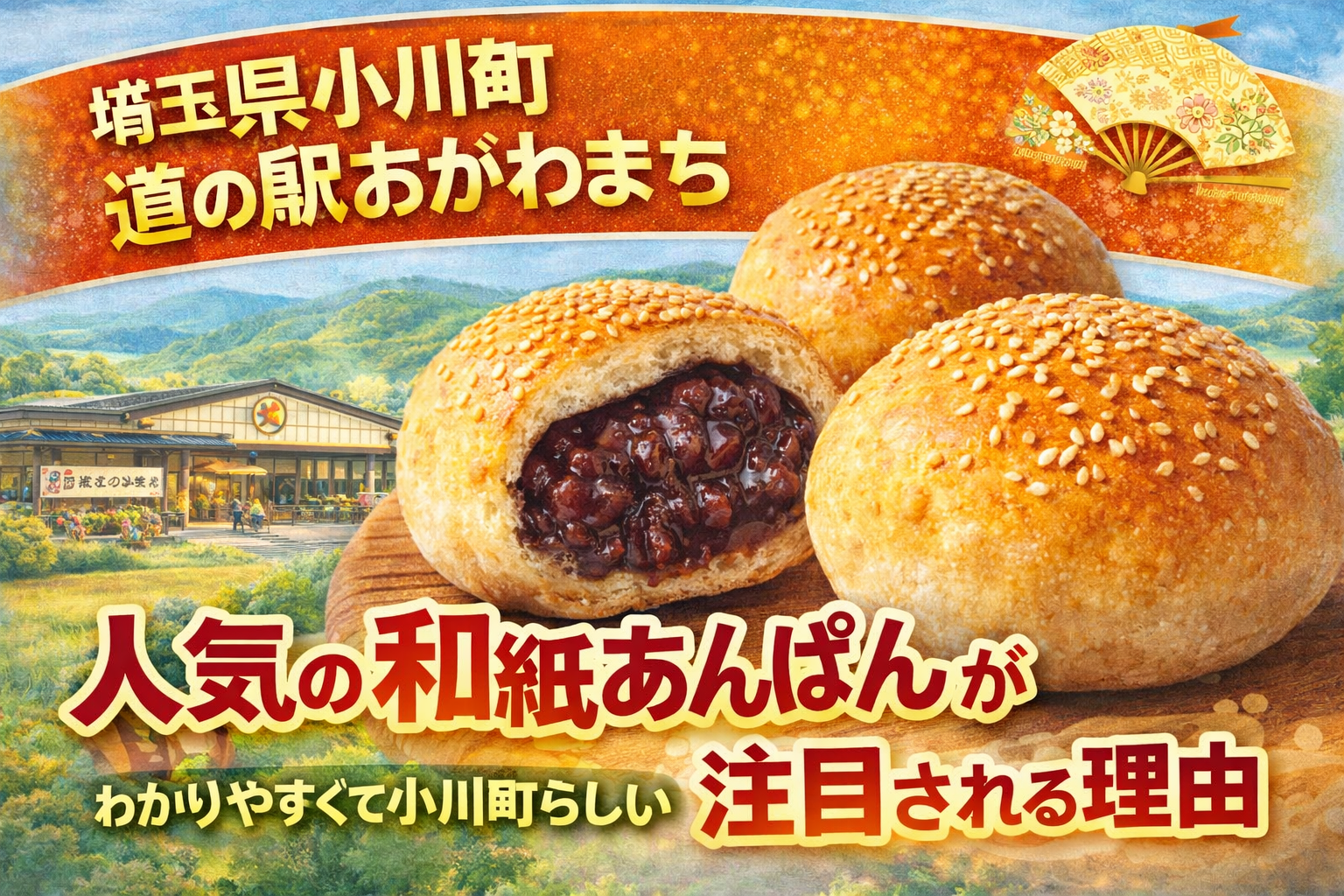
そんな道の駅おがわまちの中で、特に目を引く存在がベーカリーおがわっ子である。食べログの公式店舗情報では、道の駅おがわまち併設のパン店として紹介され、看板商品のひとつに「和紙あんぱん」が挙げられている。紹介文でも、“和紙の町”小川町ならではの薄皮に老舗のあんこが詰まった一品として前面に押し出されており、店の個性をもっとも象徴する商品といってよさそうだ。抹茶やおいものあんぱん、あんバター、ビッグあんぱん、深谷ねぎを使ったパンなどもそろうが、その中でも和紙あんぱんは真っ先に名前が出る。そこに、この商品の特別な立ち位置が表れている。
ベーカリーおがわっ子の魅力は、単にパンを売るだけでなく、地元らしさをパンに変換していることにある。食べログの店舗説明では、「食×工芸×自然」が融合した道の駅の中にあるベーカリーとして位置づけられ、地元産の食材や老舗のあんこを使ったパンづくりが強みだとされている。道の駅の中にあるパン屋というと、休憩ついでに立ち寄る存在と思われがちだが、ここではむしろパン自体が目的になる。和紙あんぱんは、その象徴として機能している。
和紙あんぱんとはどんなパンなのか
和紙あんぱんの最大の特徴は、その名の通り**“和紙のように薄い皮”**にある。食べログの店舗情報では、和紙のような薄皮の生地は埼玉県産の小麦粉・米粉・卵で仕上げられていると説明されている。さらに中には、生地の4倍はあるという老舗のあんこがたっぷり詰め込まれているという。埼玉新聞でも、和紙のように薄いパン生地にたっぷりのあんこが入った商品として紹介されており、外から見ても中身の充実ぶりが伝わる名物として扱われている。
この構成がおもしろいのは、一般的なあんぱんの発想を少し逆転させている点だろう。普通のあんぱんは、パン生地とあんこのバランスで成り立つことが多い。しかし和紙あんぱんは、あえて生地を薄く仕立てることで、あんこの存在感を前面に押し出している。しかもその“薄さ”を、小川町の象徴である和紙になぞらえているところが秀逸だ。単なる薄皮あんぱんではなく、土地の文化をネーミングと食感に重ねたご当地パンになっているのである。
人気の理由は「わかりやすさ」と「ご当地性」
和紙あんぱんが人気を集める理由のひとつは、まずわかりやすいことにある。名前を見ただけで、「和紙の町らしいパンなんだな」と伝わる。さらに実際に食べれば、薄皮とたっぷりのあんこによって印象がはっきり残る。観光地の商品は、特徴が曖昧だと埋もれやすいが、和紙あんぱんは名前、見た目、食感、町の背景がきれいにつながっているため、記憶に残りやすい。道の駅の商品として非常に強い設計だと言える。
もうひとつ大きいのが、小川町らしさが過不足なく詰まっていることだ。小川町は和紙文化で知られる一方、有機農業の里としての顔も持つ。道の駅おがわまちは、そうした町の個性をまとめて発信する場所として整備されている。和紙あんぱんは、その中でも特に「小川町に来た実感」を持ち帰りやすい商品だ。和紙そのものを買うのも素敵だが、食べ物のほうが気軽に手に取りやすい。お土産にも、その場で食べる軽食にもなり、老若男女に伝わりやすい。そうした親しみやすさも人気の理由だろう。
道の駅名物としての完成度も高い
和紙あんぱんは、道の駅名物としての完成度も高い。道の駅で支持される商品には、地域性、話題性、持ち帰りやすさ、写真映え、そして“ここでしか出会えない感じ”が求められる。その点、和紙あんぱんは非常に条件がそろっている。小川和紙という地域資源と結びつき、包みにも小川和紙を使うと案内されており、見た目からして特別感がある。しかも中身は老舗のあんこをたっぷり詰め込んだ実力派で、ネタ商品に終わっていない。
さらに、道の駅おがわまちは和紙工房、展示、食堂、ソフトクリーム、みたらしやけんぴの店などもそろった複合施設で、家族連れでも一日楽しめるつくりになっている。そうした賑わいの中で、和紙あんぱんは「まず買ってみたい一品」として機能しやすい。道の駅全体の魅力が高いからこそ、パンの注目度も上がり、逆にパンの存在が道の駅の印象を強める。両者がうまく支え合っている。
まとめ 小川町に行くなら一度は食べたいあんぱん
埼玉県小川町の道の駅おがわまちで人気を集める和紙あんぱんは、単なるご当地パンではない。和紙のように薄い皮、たっぷり詰まった老舗のあんこ、埼玉県産素材へのこだわり、そして小川和紙の町ならではの発想がひとつにまとまった、小川町らしさの濃い一品である。町の歴史や文化を、難しくなく、おいしく伝えてくれるところがこのパンの強さだ。
小川町を訪れるなら、和紙工房や展示を見て終わるのではなく、ぜひ和紙あんぱんまで味わってみたい。見るだけではなく、食べることで土地を覚える。和紙あんぱんは、そんな体験を自然に叶えてくれる道の駅名物だと言える。リニューアルした道の駅おがわまちの中でも、まず注目したい人気商品として十分な存在感がある。
Ogawa Town’s Popular Anpan: Why “Washi Anpan” at Michi-no-Eki Ogawamachi Is Getting Attention
A Newly Renewed Roadside Station That Reflects the Charm of Ogawa Town
Michi-no-Eki Ogawamachi, located in Ogawa Town in Saitama Prefecture, has recently been drawing attention as a place where visitors can experience the town’s many attractions all in one stop. It has been presented as a hub that connects Ogawa’s history, culture, and natural beauty to the future. After reopening in renewed form in 2025, it has become more than just a roadside station. With traditional craft facilities, shopping and dining spaces, and open community areas, it now functions as an experience-based destination where visitors can enjoy not only local products and meals, but also exhibitions related to handmade paper and even papermaking workshops.
Ogawa Town is especially well known as a town of traditional washi paper. For centuries, it has been associated with this craft, and that cultural identity remains one of its defining features. Because of that, many products sold at the roadside station are more than simple souvenirs. They are also designed to express the history and culture of the town in a way that visitors can easily enjoy and take home. Food, in particular, plays a major role in that experience.
The Popular Bakery “Ogawakko”
One of the most eye-catching spots inside Michi-no-Eki Ogawamachi is Bakery Ogawakko. This bakery has become especially well known for one signature product: Washi Anpan. It is introduced as a specialty that represents the identity of Ogawa Town itself. While the shop also offers matcha anpan, sweet potato anpan, an-butter bread, oversized anpan, and breads made with local ingredients such as green onions, Washi Anpan is clearly treated as one of its most symbolic products.
The charm of Bakery Ogawakko lies in the way it transforms local identity into bread. It is not simply a bakery attached to a roadside station where people stop casually while passing through. Instead, the bread itself becomes a reason to visit. Washi Anpan serves as the clearest example of that concept. It connects food with local craft and makes the town’s heritage feel approachable.
What Kind of Bread Is Washi Anpan?
The greatest defining feature of Washi Anpan is exactly what its name suggests: a paper-thin outer layer inspired by washi paper. The dough is made as a very thin skin, evoking the delicate image of Ogawa’s famous washi. Inside that thin layer is a generous amount of sweet red bean paste from a long-established producer. The filling is said to be abundant enough to create a striking contrast with the lightness of the outer dough.
What makes this concept especially interesting is that it slightly overturns the usual idea of anpan. In a typical anpan, the bread and the bean filling are balanced in a more even way. In Washi Anpan, however, the dough is intentionally made thin so that the bean paste takes center stage. The “thinness” is not merely a technical feature. It is linked directly to the identity of Ogawa as a washi town. That makes it more than just a thin-skinned sweet bun. It becomes a regional bread that connects local culture with flavor and texture.
Its Popularity Comes from Clarity and Strong Local Identity
One reason Washi Anpan has become popular is that its concept is immediately easy to understand. Even before tasting it, people can guess from the name that it is a bread connected to the town’s washi heritage. Once they actually try it, the thin skin and rich filling make the impression even clearer. Many local specialty products struggle if their identity is vague, but Washi Anpan succeeds because the name, appearance, texture, and story of the town all fit together so neatly. That makes it a very effective roadside-station specialty.
Another major reason is that it captures the spirit of Ogawa Town in a very approachable way. Ogawa is known not only for washi paper, but also for its rural richness and agricultural traditions. Michi-no-Eki Ogawamachi is meant to showcase these local qualities, and Washi Anpan is one of the easiest ways for visitors to feel that connection. Buying handmade paper is certainly meaningful, but food is often even easier to enjoy and share. Washi Anpan works well both as a souvenir and as a snack to eat on the spot. Its appeal is broad and accessible, which helps explain why it draws attention from so many kinds of visitors.
A Highly Complete Roadside-Station Specialty
Washi Anpan also feels especially successful as a roadside-station signature item. Products that become popular at roadside stations usually need several qualities: they should reflect the region, have a memorable concept, be easy to carry, and offer a sense that they could only really be found in that place. Washi Anpan meets all of those conditions. Its connection to Ogawa’s washi heritage gives it a strong local identity, and even its packaging reportedly enhances that sense of uniqueness. At the same time, it is not merely a novelty item. The quality of the filling and the care in the concept give it genuine substance.
Michi-no-Eki Ogawamachi itself also strengthens the appeal of the bread. The facility brings together paper-related exhibitions, hands-on activities, local food, and shopping in one place. Because there are so many reasons to visit, a product like Washi Anpan naturally stands out as one of the first things people want to try. In that sense, the popularity of the roadside station and the popularity of the bread support each other. The station gives the bread a strong stage, and the bread, in turn, becomes part of what makes the station memorable.
Conclusion: A Sweet Bun Worth Trying in Ogawa Town
The Washi Anpan at Michi-no-Eki Ogawamachi is more than just another regional sweet bun. Its washi-like thin outer layer, its generous filling of sweet red bean paste, and its strong connection to the cultural identity of Ogawa Town make it a truly distinctive local specialty. What makes it especially appealing is the way it expresses the town’s history and traditions in a form that is simple, delicious, and easy for anyone to appreciate.
If you visit Ogawa Town, it is worth going beyond simply viewing the craft displays and exhibitions. Trying Washi Anpan adds another dimension to the experience. It allows you not only to see the town’s heritage, but also to taste it. In that sense, Washi Anpan is one of the most memorable foods to try at the renewed Michi-no-Eki Ogawamachi, and it stands out as a specialty that represents the town in a warm, accessible, and delicious way.

コメント