

東京・錦糸町といえば、大型商業施設や飲食店が集まり、駅前には人の流れが絶えない、にぎやかな街という印象が強い。総武線と半蔵門線が交わり、通勤や買い物、映画、食事と、さまざまな目的を持った人が行き交う。その一方で、少し路地に入るだけで、昔ながらの東京の生活感を残した風景にも出会える。そんな錦糸町の空気を静かに受け止めてきた一軒が、喫茶ニットである。駅南口から歩いて数分、京葉道路を渡った先に店を構えるこの喫茶店は、流行を追いかけるカフェとは違う、落ち着いた時間を今も守り続けている。所在地は東京都墨田区江東橋4丁目26-12、駅から近い立地にありながら、店の中には外のせわしなさが入り込んでこない。
喫茶ニットの魅力は、まず何よりも**「本物の老舗喫茶店」であることにある。近年は“レトロ風”のカフェも多いが、ニットが放つ空気は演出ではなく、実際に長い年月を積み重ねてきた店にしか出せないものだ。紹介記事では、創業は昭和41年、つまり1966年ごろとされており、すでに60年近い歴史を持つという。さらに店名の「ニット」は、かつてこの場所がニット(メリヤス)工場**だったことに由来すると紹介されている。工場から喫茶店へと姿を変え、半世紀以上にわたって地域の人や喫茶店好きに親しまれてきたという背景は、この店の個性そのものだ。店名に過去の記憶がそのまま刻まれているところにも、東京の下町らしい面白さがある。
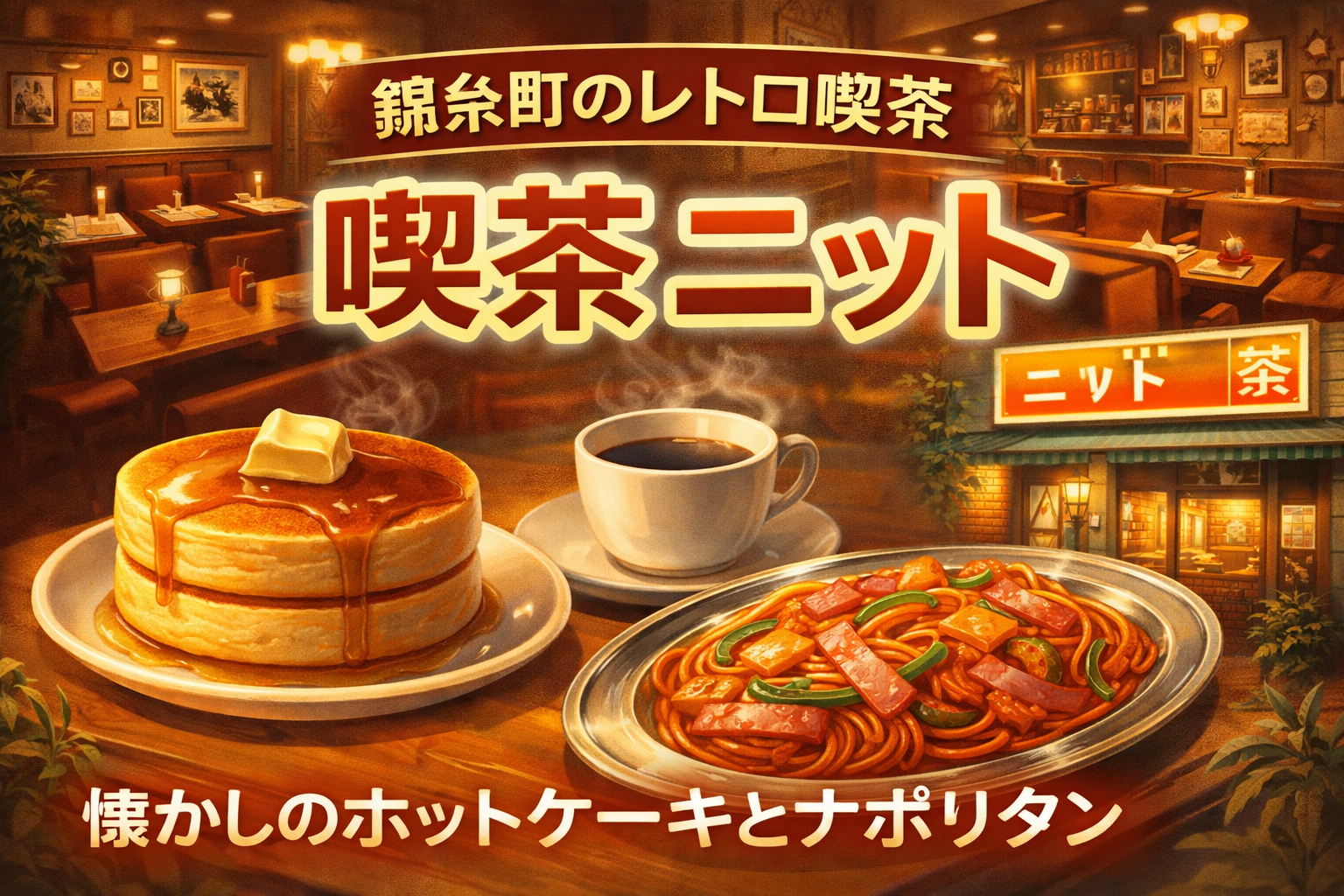
店内に足を踏み入れると、まず印象に残るのは昭和の純喫茶らしい奥行きのある空間だ。記事では、あめ色の壁、レトロな照明、体を包み込むようなソファ、高めの天井が作る開放感などが描写されている。明るく白い現代的なカフェとは違い、ニットの空間には少し陰影があり、その落ち着きが心地よい。ここでは、スマートフォンで写真を撮ることよりも、椅子に深く腰をかけて時間をやり過ごすことのほうが似合う。喫茶店というより、街の中に残された小さな避難所のようでもある。錦糸町というにぎやかな街の中で、こうした“自分の呼吸を取り戻せる場所”が残っていること自体が、すでに大きな価値だと感じられる。
喫茶ニットを語るうえで欠かせないのが、やはり名物のホットケーキだろう。各種紹介記事でも、この店のホットケーキは繰り返し取り上げられている。特徴は、銅板でじっくりと焼き上げる、厚みのあるしっかりした生地にある。注文を受けてから焼くため、提供まで20分から30分ほどかかることがあるとされるが、その待ち時間もまたこの店の魅力の一部だ。目の前に運ばれてくるのは、きれいな円形に焼かれた分厚いホットケーキが二枚重なった、堂々とした姿。最近流行のふわふわスフレ系ではなく、表面は香ばしく、中はしっとりと目が詰まった昔ながらの食感で、バターとシロップを合わせて味わうと、素朴でありながら強く記憶に残る甘さが広がる。ニットのホットケーキが長年愛されてきたのは、単に見た目のインパクトだけではなく、古典的なおいしさをきちんと守っているからだろう。
そして、喫茶ニットは甘いものだけの店ではない。食事系メニューの中では、銀皿で提供されるナポリタンもよく知られている。最近の訪問記事では、鮮やかな赤いソースをまとった太めのスパゲッティ、やわらかな麺の食感、ベーコンの存在感など、王道の喫茶店ナポリタンとして高く評価されている。こうした料理には、専門店の洗練とは別の魅力がある。少し懐かしく、少し気取らず、それでいて妙に食べたくなる味だ。喫茶店の食事は、ときに“軽食”と呼ばれるが、実際にはその店の個性が最もよく表れる部分でもある。ニットのナポリタンは、まさにこの店が積み重ねてきた時間を象徴する一皿と言える。ホットケーキと並ぶ名物として語られるのも納得できる。
この店の魅力は、料理や内装だけでは終わらない。喫茶ニットには、長く家族で店を守ってきた歴史がある。近年の記事では、現在は三代目の店主と90代の女将が店を切り盛りしていることが紹介されている。こうした背景を知ると、店内の空気がより立体的に見えてくる。ただ古いのではなく、人が実際に守り、使い続けてきたからこそ残っている空間なのだと分かるからだ。古い喫茶店の魅力は、家具やメニューだけでは生まれない。そこで働いてきた人の時間や、通ってきた常連の記憶、街とともに続いてきた日々が重なって、ようやく店の雰囲気になる。喫茶ニットには、その厚みがある。
また、喫茶ニットは観光名所のように派手ではないが、東京らしい街歩きの記憶を深くしてくれる店でもある。旅行や散策では、つい有名なランドマークばかりを追いかけがちだが、本当に印象に残るのは、こうした日常に根ざした一軒だったりする。錦糸町という街は、再開発された都市の顔と、昔ながらの生活の顔が混ざり合っている。その中で喫茶ニットは、後者の温度を今に伝える存在だ。店に入って席に座り、少し時間をかけてコーヒーやホットケーキを待つ。その体験は、効率が優先される今の都市生活とは違うリズムを思い出させてくれる。早く、安く、便利に、だけでは測れない豊かさがあるのだ。
営業時間については、食べログでは禁煙の喫茶店として掲載されており、訪問記事では11時から20時、日曜定休という情報も見られる一方、掲載時点や媒体によって異なる可能性があるため、実際に訪れる際は最新情報の確認が望ましい。こうした点を差し引いても、喫茶ニットが錦糸町を代表する老舗喫茶の一つであることは揺るがない。極厚ホットケーキ、銀皿のナポリタン、昭和の空気を色濃く残す店内、そして家族で受け継がれてきた歴史。そのどれもが、この店を単なる“人気店”ではなく、“街の文化”として成立させている。
喫茶ニットは、言ってしまえば、錦糸町の中に残る時間のかたまりのような場所である。そこでは新しさが主役ではない。むしろ、変わりすぎないこと、急がないこと、手間を惜しまないことが価値になっている。厚いホットケーキを焼くために待つ時間、ソファに身を沈める時間、にぎやかな街から少しだけ距離を置く時間。そのひとつひとつが、この店の味わいを形作っている。東京には数え切れないほどのカフェがあるが、記憶の中で長く残るのは、案外こういう店なのではないか。錦糸町を歩く機会があるなら、喫茶ニットはただ休憩するためではなく、その街の時間に触れるために立ち寄りたい一軒である。
Kissa Knit: A Long-Established Coffee Shop That Slows Time in Kinshicho
Kinshicho in Tokyo is often seen as a lively district filled with large commercial facilities, restaurants, and constant movement around the station. With the Sobu Line and the Hanzomon Line intersecting there, the area is always busy with commuters, shoppers, moviegoers, and diners. Yet if you step just a little away from the main streets, you can still find traces of an older Tokyo, where everyday life continues at a quieter pace. One place that has long embraced that side of Kinshicho is Kissa Knit, a traditional coffee shop located just a few minutes from the station’s south exit. Though it stands close to the noise and energy of the city, the atmosphere inside feels entirely different. It is a place that has continued to protect a calmer rhythm of time.
One of the greatest attractions of Kissa Knit is that it is a genuine old coffee shop, not simply a café styled to look retro. In recent years, many places have adopted nostalgic designs, but the atmosphere of Knit is not something artificially created. It comes from decades of real history. The shop is said to have opened in 1966, giving it a history of nearly sixty years. Even the name “Knit” reflects its past, as the building was once used as a knitwear factory. Later transformed into a coffee shop, it has remained a beloved place for local residents and kissaten enthusiasts alike. There is something deeply charming about the fact that the memory of the building’s former life still survives in the name itself. It gives the shop a distinct identity rooted in the everyday culture of old Tokyo.
Stepping inside, what stands out first is the depth and atmosphere of a classic Showa-era coffeehouse. Visitors often describe amber-colored walls, retro lighting, comfortable sofas that seem to wrap around you, and a sense of openness created by the high ceiling. Unlike the bright, white, modern cafés common today, Kissa Knit has a softer, shadowed kind of calm. It is the kind of space where taking photographs feels less important than simply sinking into your seat and letting time pass. In that sense, it feels almost like a small refuge hidden within the city. In a busy neighborhood like Kinshicho, the fact that such a place still exists is already valuable in itself.
No discussion of Kissa Knit would be complete without mentioning its famous hotcakes. They are one of the items most frequently featured in articles and reviews about the shop. Their defining characteristic is their impressive thickness and the careful way they are cooked on a copper griddle. Because they are made only after the order is placed, it can take twenty to thirty minutes before they are served, but even that waiting time feels like part of the experience. What arrives at the table is a proud, beautifully formed stack of two thick hotcakes. They are not the airy, soufflé-like pancakes that have become trendy in recent years. Instead, they are the kind of old-fashioned hotcakes with a golden, fragrant surface and a dense, moist interior. When eaten with butter and syrup, they offer a sweetness that is simple but memorable. The reason these hotcakes have remained loved for so many years is not only their striking appearance, but the way they preserve a truly classic kind of deliciousness.
Kissa Knit is not only a place for sweets, however. Among its savory dishes, the Napolitan served on a silver plate is also especially well known. Recent accounts describe thick spaghetti coated in a vivid red sauce, with a soft texture and the satisfying presence of bacon. It is precisely the kind of Napolitan one hopes to find in a traditional Japanese coffee shop. There is a charm in such dishes that differs from the refinement of specialty restaurants. They are slightly nostalgic, unpretentious, and somehow exactly what you want to eat. In many coffee shops, meals are described merely as “light food,” but in reality they often reveal the strongest part of a shop’s personality. At Kissa Knit, the Napolitan is one of the dishes that best symbolizes the time and character the café has accumulated. It makes perfect sense that it is spoken of alongside the hotcakes as one of the shop’s signature items.
The appeal of this place does not end with its food or interior. Kissa Knit also carries the weight of a family-run history. Recent reports note that the shop is now operated by the third-generation owner together with a proprietress in her nineties. Knowing this adds another layer of meaning to the atmosphere of the café. It is not simply old; it has remained because people have continued to care for it, preserve it, and use it over many years. The charm of an old kissaten does not come only from its furniture or menu. It emerges from the time of the people who have worked there, the memories of the regular customers, and the long, quiet relationship between the shop and the neighborhood. Kissa Knit has exactly that kind of depth.
Kissa Knit may not be a flashy tourist attraction, but it is the kind of place that can make a walk through Tokyo feel far more memorable. When traveling or exploring a city, people often focus on famous landmarks. Yet sometimes the places that remain most deeply in memory are small establishments rooted in ordinary life. Kinshicho itself is a district where the face of modern redevelopment and the face of older daily life continue to coexist. Within that mixture, Kissa Knit represents the warmth of the latter. Sitting down inside, waiting for coffee or hotcakes to be prepared, and letting time unfold at a slower pace reminds visitors of a rhythm very different from the efficiency-driven life of the modern city. There is a richness here that cannot be measured simply by speed, convenience, or cost.
In the end, Kissa Knit feels like a solid piece of time preserved within Kinshicho. Novelty is not the main attraction here. Rather, its value lies in not changing too much, in not rushing, and in not cutting corners. The time spent waiting for thick hotcakes to cook, the time spent sinking into the sofa, and the time spent stepping slightly away from the noise of the city all shape the experience of the shop. Tokyo has countless cafés, but the places that remain in memory for the longest time are often establishments like this. If you ever have the chance to walk around Kinshicho, Kissa Knit is worth visiting not merely as a place to rest, but as a place to encounter the city’s deeper sense of time.

コメント