
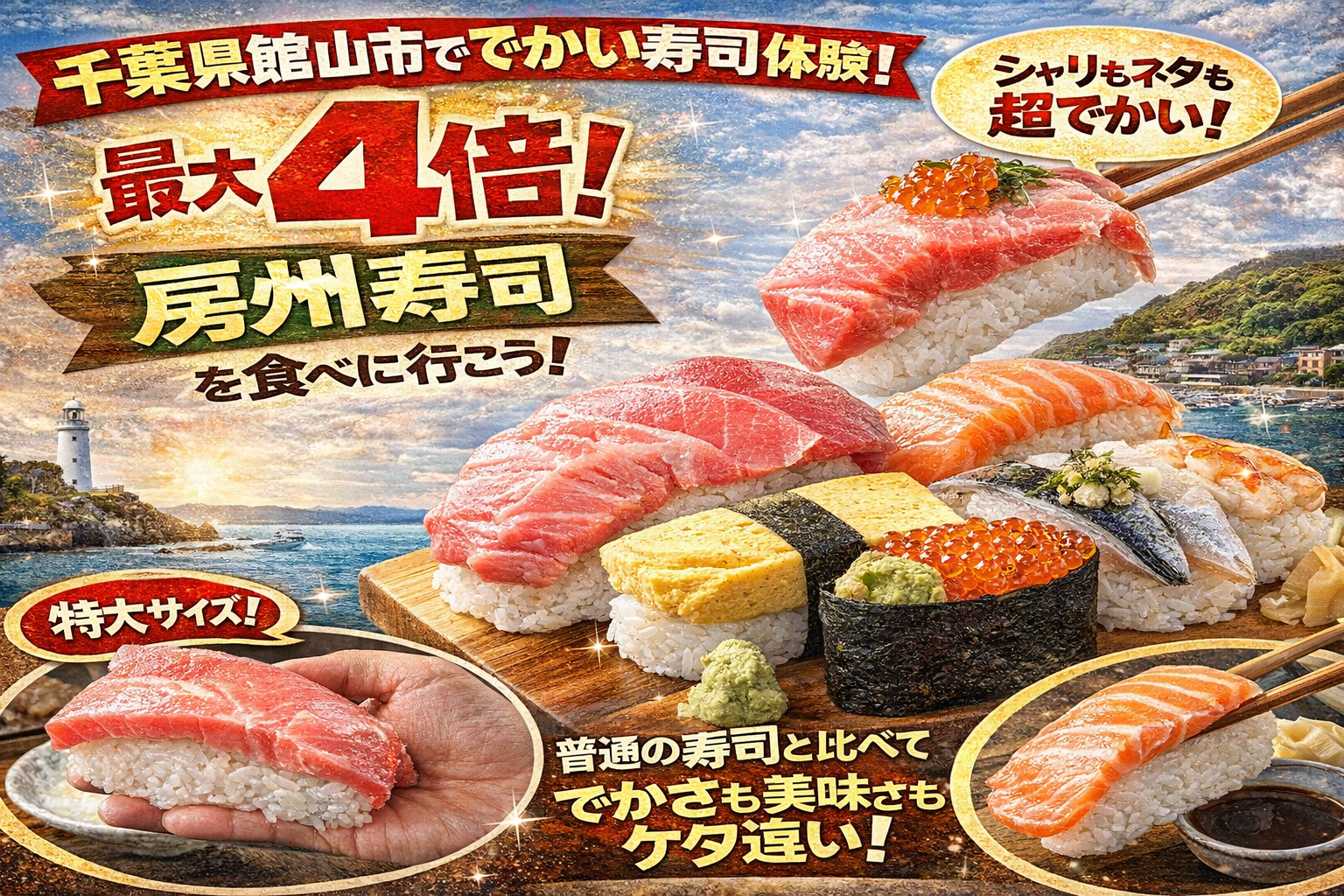
千葉県館山市は、海の町らしく寿司屋が多く「鮨のまち」としても知られています。観光で来た人が驚くのが、地魚のうまさだけじゃなく、**“一貫がでかい寿司”=房州鮨(房州寿司)の存在。普通の江戸前を想像して行くと、握りが運ばれてきた瞬間に「え、これ一貫?」となるやつです。実際、館山の紹介記事でも、館山には地魚を使った寿司やちょっと大きめサイズの「房州鮨」**があると触れられています。
この記事では「館山の“でかい寿司”ってどんなもの?」「なぜ大きい?」「どこで食べられる?」を、初めての人向けにまとめます。
- そもそも“4倍の寿司”って本当?
- なぜ房州寿司は大きいの?(“海の町の合理”)
- 館山で“でかい寿司”を食べるなら:代表格はこの系統
- 食べ方のコツ:最初の一貫で“戦い方”を決める
- 館山で“でかい寿司”を食べる価値
- まとめ
- Tateyama, Chiba — The “Huge Sushi” Experience
- So is it really “4x bigger”?
- Why is Boshu sushi so big?
- What the experience is actually like
- Places associated with Tateyama’s “huge sushi”
- How to eat it without embarrassing yourself
- Why this matters as a travel food experience
- Final takeaway
そもそも“4倍の寿司”って本当?
結論から言うと、館山・南房総で出てくる房州寿司は、現代の一般的な握りより2〜3倍級として紹介されることが多いです。たとえば館山市北条の老舗「白浜屋本店」は、房州寿司の特徴を**「通常の江戸前寿司の2倍~3倍の大きさ」**と説明しています。
一方で面白いのは、「なぜそんな大きさなのか」という話。白浜屋本店の同記事では、房州寿司のルーツははっきりしないとしつつ、江戸時代の江戸前寿司は現在の2倍~4倍の大きさだったと言われるため、房州寿司は昔のサイズ感を残しているのかもしれない、という見方も紹介されています。
つまり「館山で“4倍”」は、“江戸時代サイズ(最大4倍級)”の握り感を体験できる、という意味でかなりしっくりきます。実際に現地で食べると、体感として「これ、ほぼ4倍じゃない?」と感じる大きさの日もあると思ってOKです(※店・ネタ・握り方で差が出ます)。
なぜ房州寿司は大きいの?(“海の町の合理”)
房州寿司が大きい理由は、豪快さだけじゃなく「合理」もあります。
- 漁師や家庭で食べるなら、小さく握るより大きいほうが手間が少ない
- もともと寿司が“今より大きかった時代”の名残
- 地魚が豊富で、ネタを厚く切っても成立しやすい
こういう背景が重なって、「館山らしい寿司文化」になった、という理解がいちばん自然です。
館山で“でかい寿司”を食べるなら:代表格はこの系統
ここでは「房州寿司」を明確に紹介している例を挙げます(※営業状況は変わるので、行く前確認推奨)。
1)白浜屋本店(館山市北条)
白浜屋本店は、創業の古い老舗として紹介され、名物として**房州寿司(2〜3倍サイズ)**が挙げられています。注文時に大きさを聞かれ、小さな握りに変更できるとも書かれているので、「でかいのは興味あるけど不安…」という人にも優しい設計です。
房州寿司は箸で持つとずっしり重く、一口で食べるのが大変な大きさとも記載されています。
2)茂八寿司(館山市・船形港前)
もう一つ、“巨大房州寿司”として紹介されているのが茂八寿司。記事では、ネタとシャリが通常の2倍ほどある「田舎寿司/房州寿司」として紹介され、名物に厚焼き玉子やアジの姿寿司が挙げられています。
※ユーザーさんの「4倍」というキーワードに一番近いのは、上で触れた「江戸時代の寿司は2〜4倍」という説明部分です。
現代の“4倍固定”というより、**“最大4倍級の昔サイズを味わう”**と捉えると、館山の房州寿司はまさにその体験ができます。
食べ方のコツ:最初の一貫で“戦い方”を決める
房州寿司は、普通の寿司の感覚で「一貫=一口」でいくと、だいたい口が大変なことになります。
おすすめの攻略法はこの3つ:
- 最初は手で持つ(箸より安定する)
- 無理に一口でいかない(口に合うサイズで、落ち着いて)
- 連れとシェア前提で頼むのもアリ(特上などは特に)
そして最大のポイントは、**「何貫で満腹になるか」**が普通の寿司と違うこと。房州寿司は“量の計算”が変わるので、最初は控えめに頼んで追加が安全です。
館山で“でかい寿司”を食べる価値
館山の房州寿司は、ただのデカ盛りじゃありません。
- 地魚のうまさが土台にある
- 文化として「大きい」が残っている
- 江戸前の“昔サイズ(最大4倍級)”を体験できる
この3つが揃って、旅の記憶になる寿司になります。
まとめ
千葉県館山市で「でかい寿司」「4倍の寿司」を探すなら、キーワードは房州寿司。現代の一般的な握りに比べて2〜3倍級として語られることが多く、さらに“江戸時代サイズは2〜4倍だった”という説明もあるので、最大4倍級の迫力を体験できるのが館山の面白さです。
Tateyama, Chiba — The “Huge Sushi” Experience
Eating Boshu-style sushi that feels up to 4x bigger than ordinary nigiri
If you visit Tateyama in Chiba Prefecture and ask locals about memorable sushi, one thing comes up again and again: big sushi. Not just “good fish,” not just “fresh local seafood,” but nigiri so large that your first reaction is basically, “Wait… this is one piece?”
That style is commonly known as Boshu sushi or inaka-zushi (country-style sushi), and it’s one of the most fun food experiences in Tateyama. Local and travel sources describe Boshu sushi as a regional style linked to Tateyama, with notably larger pieces than standard modern nigiri.
What makes it especially interesting is this: today’s Boshu sushi is often described as 2 to 3 times the size of ordinary Edo-style sushi, while some explanations connect it to the Edo period, when sushi itself is said to have been much larger—sometimes described as 2 to 4 times the size of modern nigiri.
So when people talk about “4x sushi” in Tateyama, the most accurate way to understand it is: you’re tasting a style that preserves the spirit of older, much larger sushi.
So is it really “4x bigger”?
The careful answer is: sometimes it feels that way, but the usual description for current Boshu sushi is more often 2–3x larger than standard modern nigiri. A recent local introduction to Shirahamaya Honten in Tateyama says their country-style sushi is about 2 to 3 times the size of ordinary Edo-style sushi, and that guests can even request smaller pieces if they want.
At the same time, historical explanations of sushi note that early Edo-period nigiri was much larger than what most people expect today, which helps explain why Tateyama’s oversized sushi gets talked about as “4x-class” in spirit.
So the best way to say it in English is this:
Tateyama’s Boshu sushi may not literally be four times larger in every case, but it absolutely delivers the feeling of eating an old-school giant nigiri.
Why is Boshu sushi so big?
That’s part of the charm. There isn’t one universally fixed explanation, but the most common ideas are:
- it reflects an older sushi style from a time when nigiri was generally bigger
- it may connect to the practical culture of a fishing town, where hearty portions made sense
- Tateyama’s access to fresh local seafood makes thick cuts and bold portions feel natural rather than excessive
This is why Boshu sushi doesn’t feel like a gimmick. It feels like a local food culture that stayed true to itself.
What the experience is actually like
The first shock is visual. The second shock is weight.
With Boshu sushi, the rice is larger, the topping is thicker, and the overall balance is completely different from the neat, delicate nigiri many people imagine when they think of Tokyo-style sushi. Instead of “small and elegant,” this is more like “generous and proud.”
That doesn’t mean rough or careless. In fact, the appeal is that Tateyama’s big sushi still depends on excellent fish. Boshu sushi is memorable not only because it’s huge, but because it uses the strengths of southern Chiba seafood culture to make that scale feel justified.
Places associated with Tateyama’s “huge sushi”
Shirahamaya Honten
This is one of the best-known examples when people talk about large Boshu sushi in Tateyama. A recent local feature describes the shop’s sushi as 2–3x the size of normal Edo-style sushi, and notes that smaller-size ordering is possible.
That detail matters, because it tells you two things:
- the sushi is genuinely big enough to require warning
- the size is part of the shop’s identity, not an accident
Mohachi Sushi
Another well-known Tateyama-area name is Mohachi, located near Funakata Fishing Port. Tabelog describes it as a long-established restaurant known for its countryside sushi, made with fresh local seafood from Minamiboso and local rice.
This is exactly the kind of place people point to when talking about Tateyama’s “big sushi” culture.
How to eat it without embarrassing yourself
If you’re used to normal-size nigiri, Boshu sushi changes the rules a little.
A few practical tips:
First, do not assume one piece = one bite.
Sometimes it can be done, but often it is simply more enjoyable to eat it at your own pace.
Second, order with some restraint at first.
Because Boshu sushi is large, the number of pieces that feels “reasonable” may be much smaller than what you’d order at a normal sushi place.
Third, if you’re going with other people, sharing is smart.
Big sushi is more fun when everyone can compare reactions.
Why this matters as a travel food experience
A lot of oversized food in Japan is just about volume. Tateyama’s Boshu sushi is different. It has:
- regional identity
- historical flavor
- serious seafood quality
- and the fun of eating something that feels totally unlike ordinary modern nigiri
That is why it stays in your memory. You’re not just eating “a lot of sushi.” You’re tasting a local tradition that still feels alive.
Final takeaway
If you want to write about “huge sushi” in Tateyama, Chiba, the key phrase is Boshu sushi. The most grounded description is that it is often presented as 2–3x larger than ordinary modern nigiri, while its appeal is often linked to the idea that older sushi styles in Japan were once much bigger—sometimes described as 2–4x modern size.

コメント