
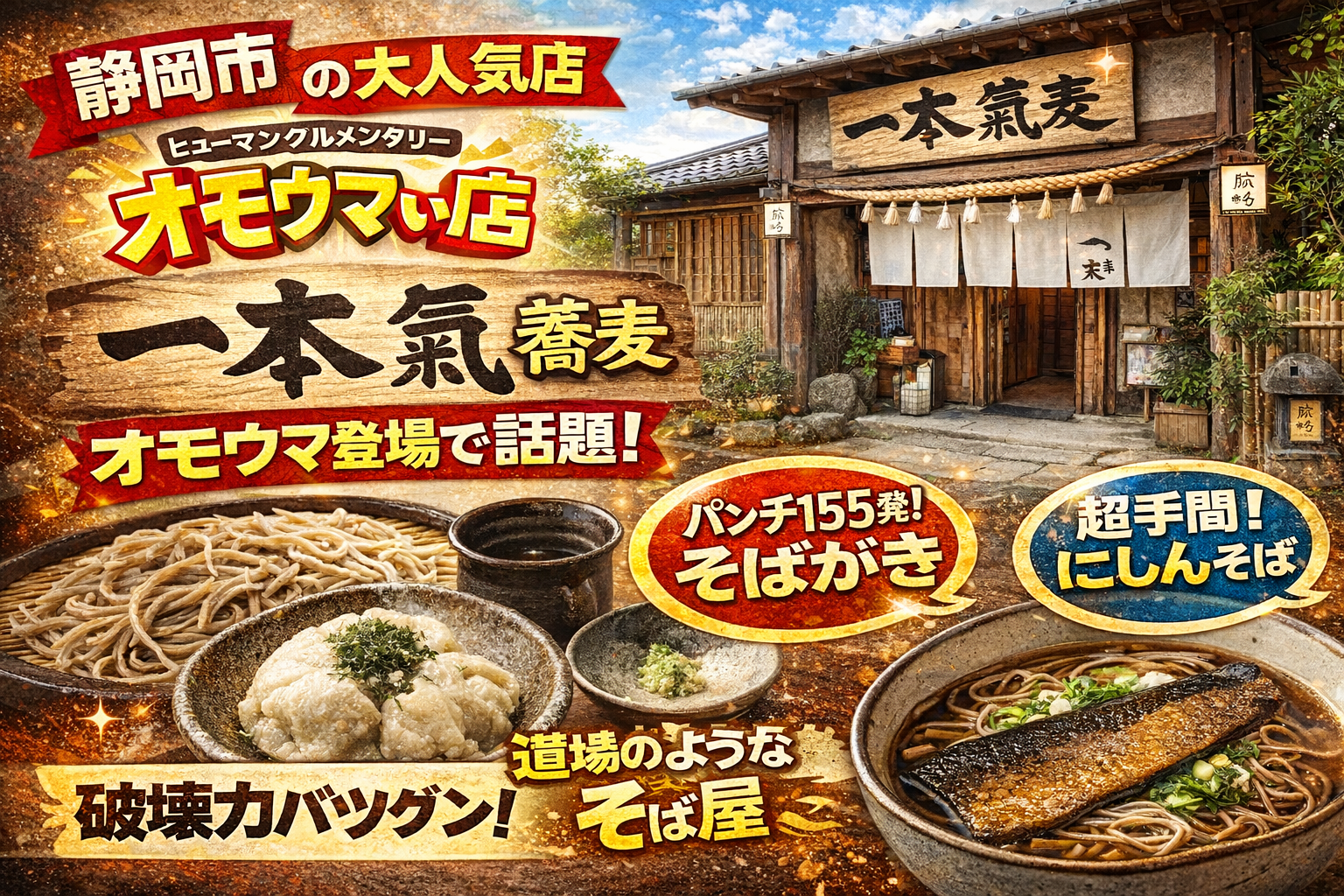
静岡市駿河区の住宅街に、まるで道場みたいな外観のそば屋があります。その名も**「一本氣蕎麦(いっぽんぎそば)」。2026年3月3日放送の『ヒューマングルメンタリー オモウマい店』で、「自信満々 天真爛漫 カリスマンのそば」として紹介され、一気に注目度が上がりました。
でもこの店、ただ“テレビに出たから”じゃない。そばそのものの完成度が高いのはもちろん、店主のキャラと仕事のこだわりが噛み合って、「また行きたくなる物語」**があるんです。
- 一本氣蕎麦ってどんな店?
- オモウマ回の見どころ:名物が“理屈付きで強い”
- 天ぷらも強い:衣は“熱い油×冷えてる粉”でカリッと
- 店主の物語:有名店に感動→開業、そば作りは独学
- アクセス・営業時間(行く前にここだけ確認)
- まとめ:一本氣蕎麦は「そばの旨さ+店主の熱」で記憶に残る
- “Ippongi Soba” in Shizuoka City — The Omouma (オモウマい店) Feature That Made Everyone Curious
- A soba shop that feels like a “dojo”
- What “Omouma” highlighted: the signature dishes are “strong,” with reasons
- 1) Seiro (Cold Soba) — simple, but serious
- 2) Sobagaki — the “155 punches” legend
- 3) Nishin Soba — “four days to complete”
- 4) Other repeat-worthy favorites
- Tempura also plays a big role
- The owner’s “story” is part of the taste
- Before you go: basic info (check latest updates)
- Final takeaway: Ippongi is “great soba + unforgettable energy”
一本氣蕎麦ってどんな店?
公式サイトによると、一本氣蕎麦は2012年11月オープン。店主は「この場所で蕎麦職人として人間的に磨きをかけたい」という思いから、建物を“道場のような外観”にしたと語っています。
そば粉は北海道産の粗挽きと福井産を使い、千葉県柏の有名店「竹やぶ」で学んだ基本を軸に、最高のタイミングで出すために気を抜かず仕事をしている——この熱量が文章からも伝わってきます。
つゆにも特徴があって、
- ざるつゆ:静岡に合わせて少し甘め
- かけじる:そばの風味を大切に、少し薄めで品のある味
という方向性。さらに朝霧高原豚を使った豚そばや天ぷらなど、素材にこだわる姿勢も明記されています。
オモウマ回の見どころ:名物が“理屈付きで強い”
今回の放送内容で特に刺さるのが、「こだわりが変態級に言語化されている」点。TV LIFE webの記事では、一本氣蕎麦の看板メニューがかなり具体的に紹介されています。
① せいろ(1,000円)— 九割そば×本節・荒節ブレンドのつゆ
番組では“せいろ”が九割そばで、つゆはかつお節の本節・荒節をブレンドと紹介。さらにマルドンの塩と伊豆産わさびを添えるこだわりまで出てきます。そば好きのお客さんが「ここが一番おいしい。そばに味がある」と語った、というのも強い。
(“味があるそば”って、褒め言葉としては最高クラス。)
② そばがき(1,000円)— “パンチ155発”で、もっちりふわふわ
一本氣蕎麦を語るなら、絶対外せないのがここ。店主が自画自賛する名物がそばがきで、TV LIFE webによると福井産と埼玉産の10割そば粉を練る。そして、まとまり始めたそば粉を泡立て器や麺棒でパンチして作ることで、もっちりふわふわ食感に。しかもその数、155発。さらに店主はボクシング経験者で、そのキャリアが生きている——と紹介されています。
もう情報量が多すぎて、頼まずに帰るのが難しくなるやつです。
③ にしんそば(1,900円)— 完成まで4日、手間の暴力
“にしん”も店主自慢の一品。にしんの棒煮は、米のとぎ汁でくさみを取り、しょうゆ・みりん・上白糖などで約1時間煮込む。完成まで4日かかるとされています。
「そば屋のにしんって、当たり外れあるよね」と思ってる人ほど、ここは刺さるはず。
④ 浅草海苔花巻そば(1,250円)/ごまだれせいろ(1,150円)もクセになる
温かいそばの“浅草海苔花巻そば”は、カツオとサバで取っただしに、有明海産の浅草海苔を香ばしくパリッと乗せるスタイル。ごまだれせいろは、ラー油入り練りごま・にんにく・2種類のつゆを混ぜた自家製ごまだれが決め手で、リピーターが多い逸品として紹介されています。
「一発目はせいろ、二回目はごまだれ」みたいに、通い方が見えるラインナップです。
天ぷらも強い:衣は“熱い油×冷えてる粉”でカリッと
番組では“天せいろ(2,000円)”や“鶏塩麹揚げ(750円)”も登場し、天ぷらの衣は熱い油と冷えたてんぷら粉を使って湿気のないカリッとした仕上がりにする、と説明されています。
そば屋の天ぷらって、実は店の実力が出るところ。ここを語れる店は強いです。
店主の物語:有名店に感動→開業、そば作りは独学
TV LIFE webでは、千葉の有名そば店の味に感動して開業した一方、そば作りは独学だとも紹介されています。さらに、仕込み・天ぷら・そば打ちを基本ひとりで回しながら、「仕事に追われない。自分から追っかけまわす」と前向きに語る姿勢、そして忙しくても客席に出て会話を大事にする“人柄”まで描かれています。
オモウマらしいのは、ここ。料理だけじゃなく、店主の“生き方”が味になるタイプです。
アクセス・営業時間(行く前にここだけ確認)
公式サイト掲載の店舗情報はこちら。
- 住所:静岡市駿河区八幡3丁目1−21
- TEL:054-287-3777
- 営業時間:11:00~14:00/17:00~21:00(※土日祝は14:30まで)
- 定休日:月曜日・第二火曜日(祝日は営業)
- 駐車場:5台(店舗前2台+離れ3台の案内あり)
※食べログ側では夜営業が「~20:00」表記の日もあるので、遠方から行くなら当日確認が安心です。
まとめ:一本氣蕎麦は「そばの旨さ+店主の熱」で記憶に残る
一本氣蕎麦の魅力は、
- **九割そばのせいろ(1,000円)**の完成度
- **パンチ155発のそばがき(1,000円)**という唯一無二の名物
- **完成まで4日のにしんそば(1,900円)**の手間
- そして、店主の“天真爛漫な熱量”が作る空気感
この全部がセットになって「また行きたい」に変わるところです。
初訪問なら、せいろ+そばがきで“基礎と名物”を同時に押さえるのがいちばん満足度高いと思います。
“Ippongi Soba” in Shizuoka City — The Omouma (オモウマい店) Feature That Made Everyone Curious
Hidden in a quiet residential area of Suruga Ward, Shizuoka City, there’s a soba shop that looks almost like a dojo—serious, disciplined, and a little mysterious. The name is Ippongi Soba (一本氣蕎麦). After appearing on Japan’s TV show “Human Gourmet Documentary: Omouma-i Mise (オモウマい店)”, the restaurant suddenly became a hot topic: people weren’t just talking about the food, but also about the owner’s energy, confidence, and unforgettable personality.
But here’s the thing—this isn’t a place that gets attention only because it was on TV. The real reason people remember Ippongi is that its menu has “story” built into it. Each signature dish comes with a level of obsession that makes you think: How far can one person go for soba?
A soba shop that feels like a “dojo”
According to the restaurant’s own introduction, Ippongi Soba opened in November 2012. The owner describes his intention clearly: he wanted this place to be like a training hall where he could continue sharpening his craft and spirit as a soba artisan—so he built it with a dojo-like vibe.
That sense of discipline shows in the details: how the noodles are described, how the soup is tuned, and how the menu is presented. Even before the first bite, you can tell this isn’t a casual “quick lunch soba” shop—it’s a place where the owner wants you to feel his commitment.
What “Omouma” highlighted: the signature dishes are “strong,” with reasons
On the show, Ippongi didn’t come across as “fancy.” It came across as intensely confident. The star isn’t the interior; it’s the owner’s belief that his food is special—and his ability to explain exactly why.
Here are the dishes that became especially memorable.
1) Seiro (Cold Soba) — simple, but serious
The classic starter for any soba lover is seiro: chilled soba served with dipping sauce. On TV, it was introduced as 90% buckwheat soba, with a dipping sauce made from a blend of different types of bonito flakes for depth.
Even the small side details were emphasized—salt selection, fresh wasabi, and the idea that the noodles themselves should have real flavor. When people say “this soba has taste,” that’s one of the highest compliments soba can receive. Ippongi positions its seiro exactly in that category: minimal, but confident.
2) Sobagaki — the “155 punches” legend
If there’s one dish that truly defines Ippongi, it’s sobagaki (a traditional buckwheat dumpling/paste). And this is where the shop becomes unforgettable.
The TV feature introduced the sobagaki as something the owner is openly proud of—almost to the point of comedy. The process is described as intense:
- The buckwheat flour blend is carefully chosen
- The dough is worked until it begins to come together
- Then it is “punched” into the right texture
And the number that made the internet react: 155 punches.
Yes—155. The owner is also said to have a boxing background, and the show framed it as if his boxing experience literally powers the sobagaki technique. The result is described as fluffy yet chewy, with a unique texture that makes it feel less like “a side dish” and more like a signature event.
This is the kind of story that forces you to order it. Even if you came for soba, you’ll end up thinking:
“If I don’t try the 155-punch sobagaki, why did I come?”
3) Nishin Soba — “four days to complete”
Another menu item that stands out is nishin soba (soba with simmered herring). Many soba restaurants offer this dish—but at Ippongi, the “herring” is treated like a long-term project.
On the show, the owner described a process that takes four days to finish. The herring is carefully treated to remove odor and bitterness, then simmered slowly with seasonings until it reaches the right balance. It’s not simply a topping—it’s a statement: this shop is willing to invest time into a single ingredient.
For people who have had “hit-or-miss” nishin soba elsewhere, this kind of commitment makes the dish feel trustworthy before you even taste it.
4) Other repeat-worthy favorites
The Omouma feature also mentioned other items that sound made for repeat visits:
- Asakusa Nori Hanamaki Soba (warm soba with fragrant nori seaweed)
- Goma-dare Seiro (cold soba with rich sesame dipping sauce, often with spicy elements like chili oil and garlic)
These dishes matter because they show range. This isn’t a shop with only one trick—it’s a shop where the owner wants to convince you that every direction on the menu is valid.
Tempura also plays a big role
A strong soba restaurant usually needs strong tempura, and Ippongi clearly leans into that. The TV segment described a crisp tempura technique—emphasizing the balance between hot oil and cold batter for a dry, crunchy finish. There were also mentions of items like tempura seiro and even special fried chicken options.
In other words, you can treat Ippongi as:
- a “pure soba” shop, or
- a “soba + tempura experience” shop
Either way, it’s built to satisfy.
The owner’s “story” is part of the taste
Omouma isn’t just about food—it’s about the people. And at Ippongi, the owner’s personality is a huge part of the attraction.
The show described him as confident, cheerful, and extremely driven—someone who doesn’t feel “busy and stressed,” but instead chooses to chase his work actively. Even when the kitchen is intense, he still comes out to talk with customers. That combination—high standards + human warmth—is exactly what makes an “Omouma” shop stick in your memory.
Before you go: basic info (check latest updates)
Ippongi Soba is in Suruga Ward, Shizuoka City, and it has limited parking. Hours and closing days can vary by season and updates, so if you’re coming from far away, it’s safest to confirm the latest schedule before visiting.
Final takeaway: Ippongi is “great soba + unforgettable energy”
Ippongi Soba isn’t just a place you visit once for photos. It’s the kind of restaurant where:
- the soba is genuinely serious
- the signature dishes come with real technique
- and the owner’s passion becomes part of the experience

コメント