
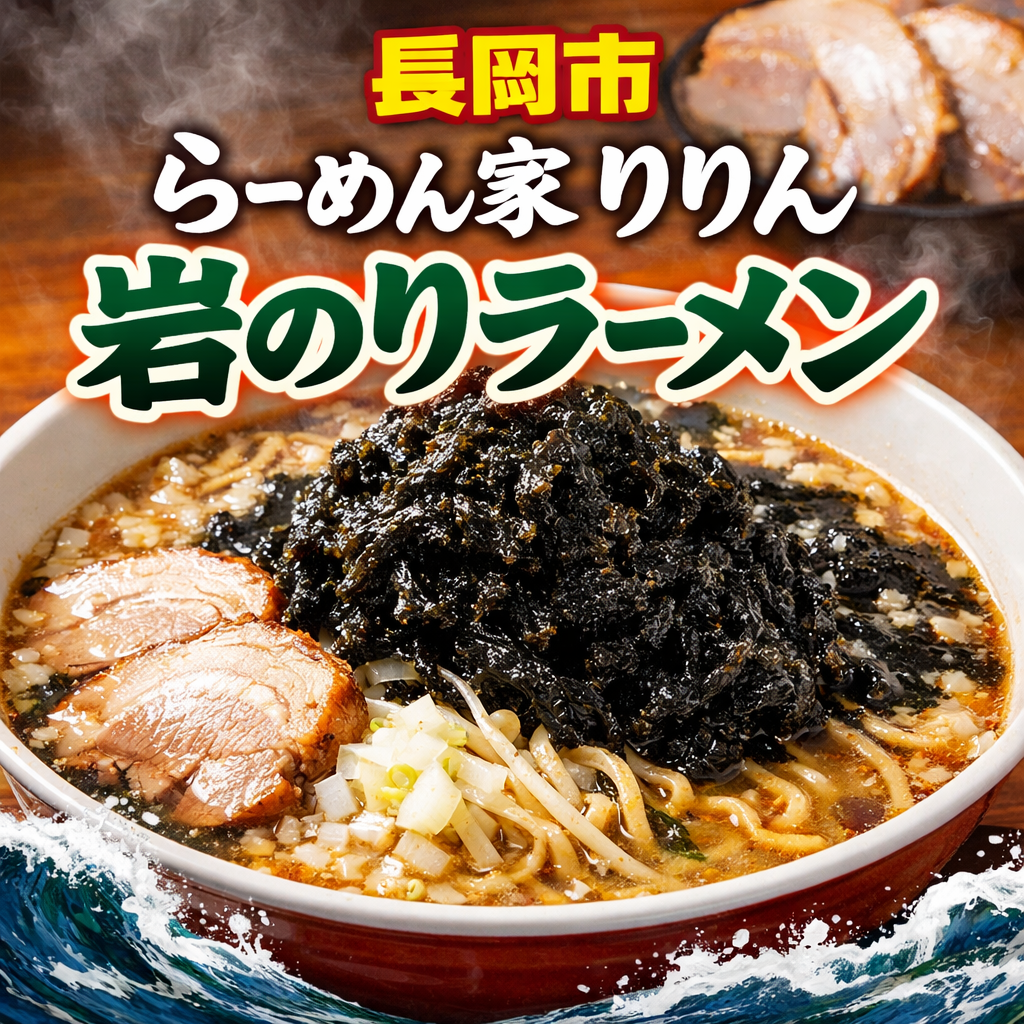
新潟・長岡のラーメン地図を眺めていると、ふと“黒い香り”に引き寄せられる瞬間がある。背脂の白、醤油の褐色、その表面にふわりと広がる海苔の黒――。見た目のコントラストだけで、もう腹が鳴る。長岡市浦の「らーめん家 りりん」は、燕系背脂ラーメンの流れを汲みながら、平打ち手もみの極太麺で強い個性を打ち出す一軒。2020年7月に越路エリアへ移転し、来迎寺駅からもアクセスしやすい場所で、こってり好きの心を掴んできた。
- 越路エリアで“こってり”の灯をともす店
- 「りりん」の核:背脂×極太平打ち手もみ麺
- トッピングは“燕系の作法”を踏まえつつ、海の香りを添える
- 岩のりラーメン:黒い雲が、丼の上でほどけていく
- 極太麺×岩のりの相性が、想像以上に強い
- 食べ方のコツ:岩のりは「少しずつほどく」
- 背脂だけじゃない、メニューの幅も頼もしい
- まとめ:岩のりは、背脂ラーメンを「最後まで食べさせる」仕掛け
- A Bowl of the Sea in Nagaoka: Ririn’s Rock-Seaweed Ramen
- A Comfort Stop in Koshiji: Where “Rich” Doesn’t Mean One-Note
- The Core of Ririn: Back Fat + Thick, Wavy, Hand-Tossed Noodles
- The Supporting Cast: Onion, Sprouts, Pork—And the First Hint of the Sea
- Iwanori (Rock Seaweed) Ramen: When the Bowl Becomes a Moving Flavor
- Why Thick Noodles and Rock Seaweed Work So Well Together
- How to Eat It: Don’t Mix Everything at Once
- More Than One Trick: A Menu Built for Different Cravings
- Final Thoughts: The Seaweed Is the Secret That Makes You Finish the Bowl
越路エリアで“こってり”の灯をともす店
店舗は長岡市浦9641。定休日は水曜で、営業時間は11:00〜20:00(変更の可能性もあるため、来店前に最新情報の確認が安心)。オープン日は2020年7月2日とされ、移転を経ていまの場所でファンを増やしてきた。
また、紹介サイトでは「長岡南越路スマートIC」や来迎寺駅近くへの移転が触れられており、車でも立ち寄りやすい立地感が伝わる。
さらに姉妹店として「黒りりん」の存在も言及されていて、“りりん”という屋号が地域に根を張りはじめていることがうかがえる。
「りりん」の核:背脂×極太平打ち手もみ麺
この店の看板を語るなら、まず“麺”から入るのがいちばん早い。紹介情報では、背脂らーめんは背脂醤油スープに「平打ち縮れ太麺」。しかも手もみ由来の不規則なうねりが、噛むたびに違う表情を見せるタイプだ。
スープの方向性もおもしろい。こってりの象徴である背脂を浮かべながら、豚骨・煮干し・野菜のうま味を抽出した“まろやかさ”が相性の良さとして紹介されている。重たさ一辺倒ではなく、旨味の層で食べさせる設計だ。
トッピングは“燕系の作法”を踏まえつつ、海の香りを添える
背脂らーめんの具として、チャーシュー、もやし、玉ねぎ、そして磯のり(海苔)が挙げられている。
この並びが良い。玉ねぎのシャキッとした辛味と甘味は背脂を軽くし、もやしは歯ざわりで箸を進める。そこに海苔が加わることで、脂の甘い香りに“磯”の輪郭が立つ。背脂のコクは、香りが単調になると急に重く感じることがあるが、海苔はその単調さを断ち切る役割を担ってくれる。
岩のりラーメン:黒い雲が、丼の上でほどけていく
ここで主役の「岩のりラーメン」だ。メニュー情報では「岩のりラーメン 1,180円」と掲載されている。
磯のりが“添え物”だとしたら、岩のりは“主食級”。丼に乗った瞬間は、黒い塊がスープの表面に島のように浮かび、湯気にあぶられて香りが立つ。箸で少し崩すと、細かな岩のりがスープにほどけていき、背脂の白濁の上に墨を流したような景色になる。これがまず楽しい。
味の変化も段階的だ。
最初のひと口は、背脂の甘さと醤油の輪郭、そして極太麺の“噛ませる力”が前に出る。次に、岩のりがスープに溶けはじめると、海藻の旨味と香りが広がり、脂のコクが“海のだし”に寄り添っていく。背脂系の満足感を保ったまま、後味がぐっと立体的になる感覚。こってりなのに箸が止まりにくいのは、この香りの更新があるからだと思う。
極太麺×岩のりの相性が、想像以上に強い
「りりん」の麺は、手もみの縮れ・平打ち・太さという要素で、スープを“絡め取る”力が強いと紹介されている。
ここに岩のりが入ると、絡むのはスープだけじゃなくなる。海苔の細片が麺肌にまとわりつき、ひと啜りの情報量が増える。噛むほど小麦が香り、海苔が香り、背脂が甘い。結果、味が濃いというより“香りが濃い”。岩のりラーメンの満足感は、塩分や脂の強さだけで作っていない。
食べ方のコツ:岩のりは「少しずつほどく」
岩のりを一気に混ぜ込むと、丼が最初から最後まで“海苔の支配下”になる。もちろんそれも正解だけれど、個人的には「手前から少しずつほどく」食べ方をすすめたい。最初は背脂醤油の芯を味わい、途中で岩のりの海感を増やし、終盤は丼の底に溶けた海苔の旨味で締める。ひとつの丼で、味が“移ろう”体験ができる。
背脂だけじゃない、メニューの幅も頼もしい
メニュー掲載を見ると、背脂ラーメン(880円)や背脂味噌系、坦々麺、辛みそ、ぶたキムチなども並び、気分に合わせて選べる幅がある。
また別の紹介では、餃子やチャーシュー丼、唐揚げなどのサイドも提供しているとされ、食事処としての使い勝手も想像しやすい。
ただし今回はあくまで“岩のり”に寄せたい日。海の香りをまとった背脂は、冬の冷え込みにも、雨の日の気だるさにも、やけに似合う。
まとめ:岩のりは、背脂ラーメンを「最後まで食べさせる」仕掛け
「らーめん家 りりん」は、背脂のこってりを真正面から受け止めつつ、極太平打ち手もみ麺で食感の主張を強めた店だ。
そして岩のりラーメンは、その土台の上で“香りと旨味の変化”を足し、丼の時間を長く楽しくしてくれる一杯。価格は1,180円。
背脂ラーメンが好きで、「今日はもう一段、記憶に残るやつを食べたい」と思ったら、黒い雲のような岩のりを選んでみてほしい。越路の湯気の中で、海が丼に降ってくる。
もしこの文章を**食レポ寄り(臨場感強め)とか、逆に店舗情報+観光導線(アクセス重視)**の構成に寄せたいなら、その方向で書き直しもできるよ。
A Bowl of the Sea in Nagaoka: Ririn’s Rock-Seaweed Ramen
When you scan the ramen landscape of Nagaoka, Niigata, there’s a particular kind of “black aroma” that can stop you in your tracks. White back fat floating on the surface, deep amber soy beneath it, and then—like a soft cloud drifting over the bowl—the dark, fragrant presence of seaweed. It’s a color contrast that practically comes with a scent attached.
In the Koshiji area of Nagaoka City, Ramen-ya Ririn (らーめん家 りりん) has built a reputation for a hearty, satisfying style rooted in the back-fat soy ramen tradition, but with a bold signature of its own: wide, extra-thick, hand-tossed noodles that demand to be chewed and savored. And among the menu choices, one bowl in particular turns that already rich base into something more layered and addictive—the Iwanori (rock seaweed) ramen.
This is a story about how a single topping—dark, craggy seaweed—can transform a bowl from “delicious” into “unforgettable.”
A Comfort Stop in Koshiji: Where “Rich” Doesn’t Mean One-Note
Ririn sits in Ura, Nagaoka, a location that feels made for drivers and locals: easy to reach, casual in atmosphere, and built for the kind of meal you come back to when the weather turns cold or your appetite wants something unapologetically full-bodied.
The charm of the place is that it doesn’t treat richness as a gimmick. Back-fat ramen can sometimes lean toward a single dimension—heavy, greasy, and tiring by the last third of the bowl. Ririn’s approach is different. It aims for richness, yes, but also roundness: the sense that there’s structure underneath the fat, and that the bowl has a reason to keep pulling you in.
That foundation matters, because it’s what makes the Iwanori ramen so satisfying. The seaweed isn’t there to mask flaws. It’s there to add a second “axis” of flavor—an oceanic aroma and mineral depth that keeps the rich soy base feeling alive from the first sip to the last.
The Core of Ririn: Back Fat + Thick, Wavy, Hand-Tossed Noodles
If you want to understand Ririn quickly, start with the noodles.
These are not delicate noodles designed to disappear into broth. Ririn’s noodles are flat, thick, and wavy, with a hand-tossed texture that gives them uneven curves and ridges. The result is a noodle that doesn’t simply “carry” soup—it grabs it. Every bite clings to broth and fat, delivering not just flavor but density.
Chewing becomes part of the experience. You’re not merely slurping; you’re working with the noodle’s spring and heft. That physicality is important, because it makes the bowl feel like a meal, not a snack. And it also creates the perfect surface for what comes next: the seaweed.
The Supporting Cast: Onion, Sprouts, Pork—And the First Hint of the Sea
Traditional back-fat soy ramen often relies on a familiar set of toppings: chashu pork, bean sprouts, and onion, each playing a role in balancing richness.
- Onion adds sharpness and brightness, cutting through fat with its bite and sweetness.
- Bean sprouts contribute crunch and freshness, keeping your palate from sinking into heaviness.
- Chashu anchors the bowl with savory depth and comfort.
Ririn’s lineup respects those roles, but the bowl is especially interesting because it introduces seaweed as more than decoration. Even when seaweed appears as a small topping, it hints at something bigger: the idea that ocean aroma and animal richness can be partners, not enemies.
And that’s exactly what the Iwanori bowl proves.
Iwanori (Rock Seaweed) Ramen: When the Bowl Becomes a Moving Flavor
“Iwanori” isn’t the neat, sheet-like nori you might wrap around rice. It’s more rugged—dark, irregular, and fragrant. It arrives on the bowl like a clustered black island, sitting over the broth as steam rises through it.
The first thing you notice is the smell: a sharp, briny ocean note that feels almost like standing near a rocky shoreline after rain. It’s not fishy; it’s mineral. Clean, but powerful.
Then the transformation begins.
If you poke it lightly with chopsticks, the seaweed starts to loosen. Tiny fragments drift into the broth. The surface changes from creamy-white back fat to something marbled with black and green. The bowl looks like ink dispersing in water. It’s visually satisfying—and it also signals what’s happening to the flavor.
Stage 1: The Broth Shows Its Backbone
At the start, the bowl tastes like what it is: a rich soy base with back fat sweetness. The fat provides a soft, rounded mouthfeel; the soy adds definition. The noodles arrive with thick chew and deep wheat character.
Stage 2: The Ocean Moves In
As the seaweed dissolves, the broth’s aroma expands outward. Suddenly the richness isn’t just “rich”—it becomes savory and expansive, layered with seaweed umami and a subtle mineral finish. It’s the difference between a warm lamp and a whole room lit up.
Stage 3: The Finish Turns Addictive
By the later half of the bowl, the seaweed is no longer floating—it’s part of the broth’s identity. The soup tastes deeper, and the fat feels lighter, not because it’s gone, but because the seaweed gives your palate something new to chase.
This is the key: Iwanori doesn’t fight the fat—it refreshes it. It keeps the bowl from becoming monotonous.
Why Thick Noodles and Rock Seaweed Work So Well Together
Seaweed ramen can be delicious with many noodle types, but Ririn’s thick, wavy noodles give it a special advantage.
Rock seaweed doesn’t just dissolve into broth; it also clings. And the uneven ridges of hand-tossed, flat noodles provide the perfect surface for it. When you lift a bundle of noodles, you don’t just get broth—you get broth + seaweed + fat, all tangled together.
That combination creates a high “information density” per bite:
- wheat aroma from the noodles
- soy depth from the broth
- sweetness and body from the back fat
- mineral, briny perfume from the seaweed
It’s not merely salty or heavy. It’s aromatic. The flavor feels full because the scent is full.
How to Eat It: Don’t Mix Everything at Once
If you stir the entire bowl immediately, the seaweed will dominate from start to finish. That’s not wrong—but it flattens the experience into one continuous note.
A better approach is to loosen the seaweed gradually:
- Start by tasting the broth’s base character.
- Break down a portion of seaweed near you and let it melt in.
- Repeat as you go, letting the bowl “evolve.”
It turns one serving into a small journey: rich → ocean-rich → deep and savory. You get variety without changing bowls.
More Than One Trick: A Menu Built for Different Cravings
Even if you visit for Iwanori, it’s worth knowing Ririn isn’t a one-note shop. The menu reportedly includes variations like miso-based back-fat ramen, spicy options, and other hearty combinations, plus side dishes that make it easy to turn a ramen stop into a full meal.
But if you’re the kind of person who likes rich ramen and occasionally thinks, “I want something heavier, but also more memorable,” then Iwanori is the move.
Final Thoughts: The Seaweed Is the Secret That Makes You Finish the Bowl
Ririn is a shop that understands the appeal of back-fat ramen: comfort, density, and satisfaction. But the Iwanori ramen adds something many rich bowls lack—a changing aroma and a second layer of umami that keeps your appetite engaged until the last sip.
If you’re in Nagaoka and the day calls for a bowl that feels both indulgent and surprisingly alive, let that black cloud of rock seaweed drift over your ramen. It’s like the sea arriving in your bowl—quietly at first, and then completely.

コメント