
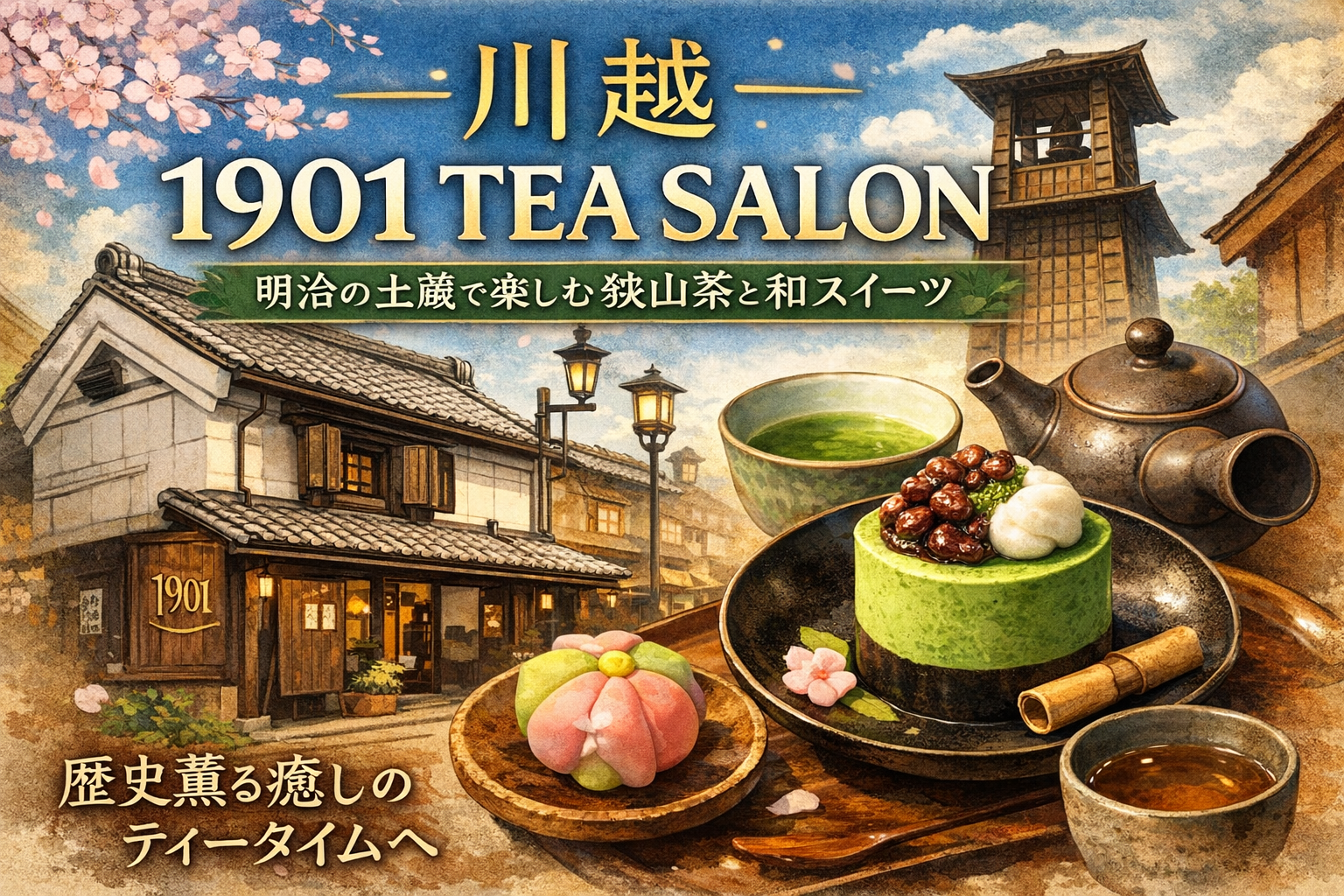
川越の散策で「ちょっと静かにお茶したい」と思ったとき、ちょうどいい距離感で迎えてくれるのが大正浪漫夢通り沿いの 「1901 TEA SALON(1901ティーサロン)」。観光のにぎわいのすぐそばにありながら、扉をくぐると空気がふっと落ち着く。ここは、店名のとおり“1901年”にルーツを持つ場所だ。
この建物は 1901年(明治34年)に建てられた土蔵造りの店蔵。復元工事とリノベーションを経て、和モダンな非日常空間として生まれ変わったという。
さらに紹介記事によれば、約5年をかけて復元・改修し、2022年4月にオープンしたとされている。 つまり「出来たばかり?」という感覚は半分正解で、歴史的建物の“新しい使い方”としてはまだ新しめ、という絶妙な立ち位置だ。
店内は、古い蔵の雰囲気を活かしつつ、照明や木のインテリアが馴染む設え。光の入り方がやわらかく、写真を撮りたくなるのに、長居したくなる落ち着きもある。1階が喫茶スペースで、2階はギャラリーとして展示が行われることもある、というのも散策の途中に寄りたくなる理由のひとつ。
そして主役はもちろん“お茶”。ここでは埼玉の 狭山茶 を軸に、日本茶と相性のいい甘味が組まれている。看板的な存在として挙げられているのが 「川越抹茶ババロアセット」。川越抹茶を使ったババロアにあんこやクリームを合わせ、お茶と一緒に楽しむスタイルで紹介されている。
もう少し季節感を取り込みたいなら、上生菓子や和菓子のセットも候補。紹介では、季節の和菓子セットのように、時期で内容が変わるメニューがある点も触れられている。 旅先の“その日っぽさ”を味わいたい人には、こういう変化球がうれしい。
お茶は、煎茶・ほうじ茶・和紅茶などから選べる形で紹介されていて、甘味との組み合わせで印象が変わる。濃いめの甘さなら煎茶でキリッと、香ばしさを足したいならほうじ茶、ふわっと優しくまとめたいなら和紅茶。どれが正解というより、“今の気分”で選んで外しにくいのが良い。器や急須など、道具そのものが雰囲気づくりに一役買っているのも、この店の強みだと感じる。
アクセス面では、所在地が 埼玉県川越市連雀町で、大正浪漫夢通り沿いという分かりやすさが強い。紹介記事には 住所(連雀町13-4) も掲載されている。
営業時間や定休日も記事内にまとまっている一方、こうした情報は変更されることがあるので、行く前に公式の最新告知(SNSや店舗ページ)も合わせて見るのが安心だ。
川越は歩く街だ。蔵造りの町並み、菓子屋横丁、氷川神社方面……と、見どころは多い。だからこそ、途中で“休む場所”の質が散策全体の満足度を左右する。1901 TEA SALONは、単に座れるカフェではなく、**「歴史ある土蔵の中で、お茶を丁寧に楽しむ」**という体験に寄っている。 旅のテンションを保ったまま、足と気持ちをいったん整えられる場所――それが、この店のいちばんの魅力だと思う。
もしあなたが今お店にいるなら、まずは一杯。スマホで情報を追いかけるより、目の前の香りと甘味に集中してみて。川越の“いい時間”が、ちゃんとここにある。
Kawagoe’s “1901 TEA SALON”: A Quiet Tea Break in a Meiji-Era Kura Storehouse
If you’re wandering around Kawagoe and suddenly feel like you need a calm place to reset—somewhere quieter than the main tourist streets—1901 TEA SALON is an easy, satisfying choice. Located along Taishō Roman Yume-dōri, it sits close to the bustle, yet the moment you step inside, the mood softens. The name “1901” isn’t just for style—it points to the site’s historical roots.
The building is a traditional kura (storehouse) structure built in 1901 (Meiji 34). According to local information, it was restored and renovated, then reopened as a tea salon while preserving the kura character.
A feature article also notes that after years of restoration work, the café opened in April 2022. So if you’re wondering “Is it new?”, the answer is: it’s not brand-new anymore, but it’s still a relatively fresh addition to Kawagoe’s café scene—especially considering the building’s deep history.
Inside, the atmosphere blends old and new in a way that feels intentional rather than staged. The heavy kura presence remains—thick walls, a sense of solidity—while lighting and furnishings create a gentle, modern comfort. That balance matters in a city like Kawagoe, where many places look historic but don’t always feel relaxing once you sit down. At 1901 TEA SALON, it’s genuinely easy to slow your pace. Some introductions mention the space being used not only as a café, but also with a gallery-like element upstairs, which adds to the sense that you’ve stepped into a curated “time pocket” rather than a standard coffee stop.
Of course, the main attraction is tea. The menu is built around Japanese tea culture, often framed through Saitama’s Sayama tea, and paired with sweets designed to match it rather than overpower it. One highlighted signature is a Kawagoe matcha bavarois set, described as a dessert featuring local matcha, served with sweet elements like anko and cream, alongside tea.
If you prefer something more seasonal and traditional, there are also descriptions of sets featuring wagashi (Japanese sweets) that may change depending on the time of year. That “seasonal shift” is part of what makes Japanese tea cafés feel rewarding: even if you’ve been once, the experience can be slightly different the next time.
Tea options commonly introduced include styles such as sencha, hojicha, and Japanese black tea (wakocha). The pairing is where the fun is. A rich, sweet dessert often feels cleaner with sencha. If you want warmth and roasted aroma, hojicha fits naturally. And if you want something softer and rounder, Japanese black tea can create a mellow, dessert-like finish. In this kind of space, the tools and presentation—cups, teapots, and careful serving—become part of the experience, reinforcing that you’re here to taste, not just “drink something.”
In terms of location, articles list the address in Renyaku-chō, Kawagoe (13-4), placing it in a convenient zone for strolling routes that include the historic streets and shopping areas. As always, opening hours and holiday schedules can change, so it’s smart to check the most recent official update before visiting, especially if you’re planning to stop by on a weekday or later in the afternoon.
Kawagoe is the kind of city where you walk—through kura-lined streets, past small snack shops, toward shrines, down lanes that suddenly feel cinematic. And in a walking city, the quality of your “rest stop” can shape the whole day. 1901 TEA SALON isn’t just somewhere to sit; it’s a small experience built around the idea of enjoying tea carefully inside a restored historic kura. It’s the kind of place that lets you keep the atmosphere of the trip—rather than breaking it with a rushed, noisy café break.
If you’re already there now, take advantage of it. Put away the phone for a moment, choose a tea that matches your mood, and let Kawagoe slow down—just enough to feel like you’re actually there.

コメント