

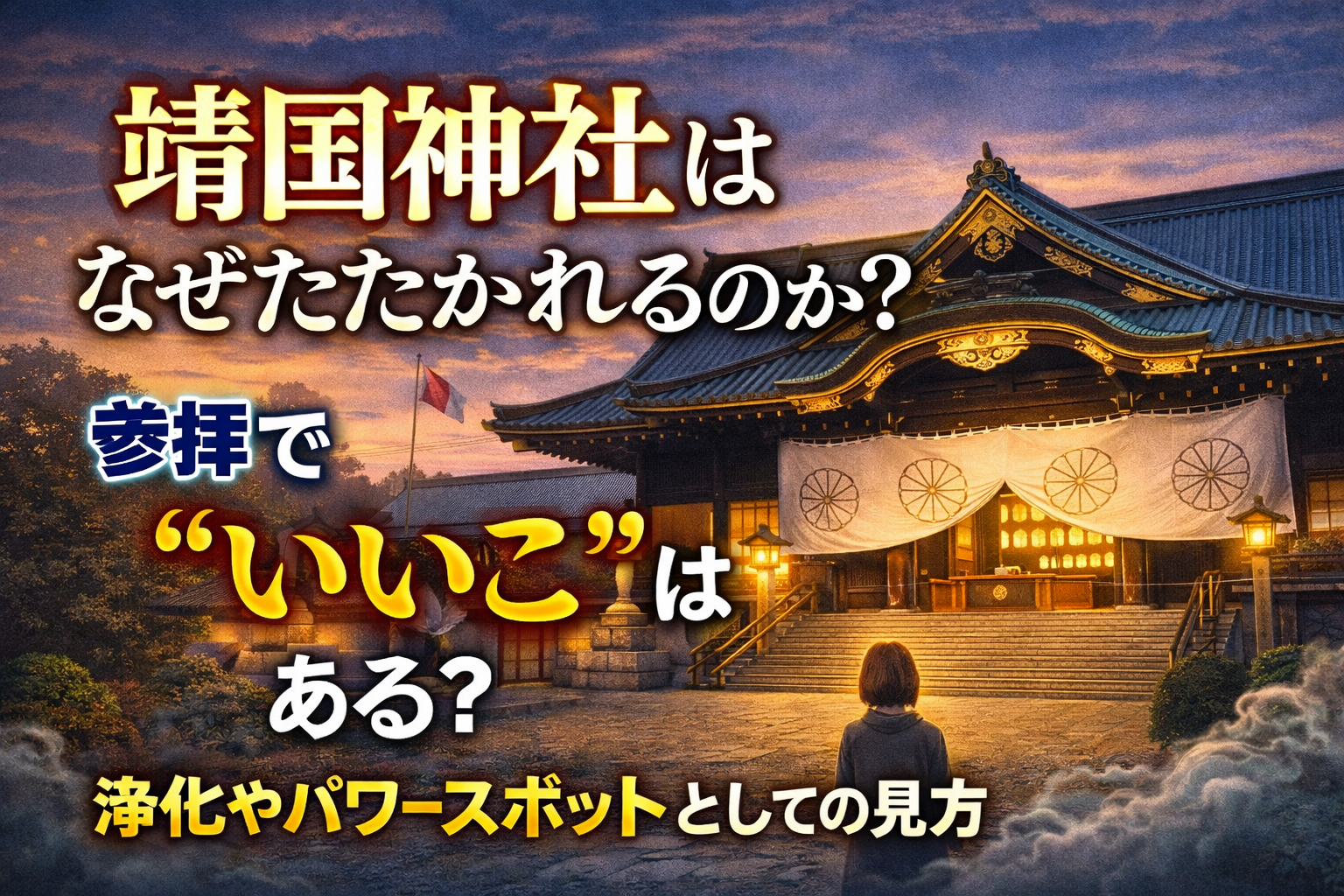
靖国神社(東京・九段下)は、ニュースになるたびに賛否が割れ、「参拝=炎上」のように語られることも少なくありません。一方で、遺族の追悼の場として大切にしている人も多く、「行くと何か“浄化”される?」「パワースポット的に良いことある?」と気になる人もいるはず。ここでは、なぜ批判が起きやすいのかを事実ベースで押さえつつ、参拝の“意味”をどう捉えると落ち着くかをまとめます。
- 1) そもそも靖国神社は何をする場所?
- 2) なぜ批判される? 大きく3つの論点
- 3) 参拝すると「いいこと」はあるの?——答えは“何を求めるか”で変わる
- 4) 「浄化」「パワースポット」はある?——“神社としての浄め”はあるが、政治性もセット
- 5) 行くなら押さえたい“火種を避ける”コツ
- まとめ:靖国神社が叩かれやすいのは“場所の性質上、解釈が衝突する設計”だから
- And if you visit, is there any “benefit”—purification or a “power spot” feeling?
- 1) What is Yasukuni Shrine, in plain terms?
- 2) Why is it criticized? Three major fault lines
- 3) If an ordinary person visits, is there any “benefit”?
- 4) Is there “purification” or a “power spot” at Yasukuni?
- 5) If you go: how to avoid accidental “political messaging”
- Bottom line
1) そもそも靖国神社は何をする場所?
靖国神社は、もともと明治期に「招魂社」として創建され、国家のために亡くなった人々の御霊を慰め、その事績を伝える目的で始まった、と靖国神社自身が説明しています。
現在、祀られている神霊(みたま)は246万6千余柱とされています。
ここまでは「戦没者追悼の場」として理解できますが、問題は“ここから先”で起きます。
2) なぜ批判される? 大きく3つの論点
論点A:A級戦犯(とされる人物)が合祀されている
靖国神社には、第二次世界大戦後の東京裁判で有罪となった**14人の「A級戦犯」**が、1978年に合祀されたことが国際的な強い反発の焦点になっています。
周辺国(特に中国・韓国)から見ると、指導層の戦争責任と、一般の戦没者追悼が同じ場に置かれること自体が受け入れにくく、「参拝=侵略の正当化に見える」と解釈されやすい構造があります。
論点B:政治家の参拝が「政教分離」に触れるのでは、という問題
靖国神社は宗教法人ですが、首相や閣僚が“公的に見える形”で参拝すると、**憲法の政教分離(国が宗教に関与しない原則)**との関係が争点になります。
実際、小泉首相(当時)の参拝をめぐる訴訟で、福岡地裁が「宗教的活動に当たり憲法違反」と判断した例があり(損害賠償請求自体は棄却)、議論が続いています。
一方で政府側は、首相参拝を「職務としてではなく、一人の国民として」「A級戦犯のためではない」と説明し、軍国主義美化ではないと主張してきました。
つまり、国内でも“追悼”と“政治・憲法”が絡んで解釈が割れやすいのが特徴です。
論点C:合祀の「同意」と「取り外し不可」をめぐる摩擦
靖国神社には、植民地期に動員された朝鮮・台湾出身者が含まれていること、さらに「合祀された御霊は取り外せない」とされることが、遺族側の反発を生みやすい点も指摘されています(海外メディアでもこの論点が繰り返し報じられています)。
3) 参拝すると「いいこと」はあるの?——答えは“何を求めるか”で変わる
ここはスピリチュアルの話なので、断言はできません。ただ現実的には、参拝で得られる“良さ”は次の2タイプに分かれます。
① 心理的な「区切り」「鎮まり」
神社参拝は、手水・一礼・黙祷という所作を通じて気持ちを整えやすい。靖国神社は都心なのに境内が広く、静けさを感じる時間帯もあるので、「落ち着く」「頭が整理される」と感じる人はいます(これは宗教的ご利益というより心理的効果に近い)。
② 遺族・追悼としての意味
靖国神社が「国家のために亡くなった人々の御霊を慰める場」と説明している通り、遺族や関係者にとっては、そこで手を合わせること自体が大切な行為になり得ます。
この意味での「いいこと」は、“運が上がる”より **「納得感が増える」「悲しみに形を与える」**に近いです。
4) 「浄化」「パワースポット」はある?——“神社としての浄め”はあるが、政治性もセット
神道には、穢れ(けがれ)を祓い、心身を整えるという発想があります。だから一般論として「神社=浄化っぽい」と感じるのは自然です。
ただ靖国神社の場合、場所の性質上、“浄化だけを切り出して楽しむ”のが難しいことがあります。なぜなら、靖国神社は歴史認識・外交・政治の争点と強く結びついており、同じ空間でも人によって受け取る情報量と感情がまったく違うからです。
「パワースポットか?」に対して一番現実的な言い方をするなら、
- 静かな時間に行けば、整う人もいる
- 政治的な議論が頭に入ると、逆に疲れる人もいる
この両方が成立します。
5) 行くなら押さえたい“火種を避ける”コツ
- 参拝の目的を先に決める(追悼/歴史を知る/建築や空間を見たい、など)
- SNS投稿は煽りになりやすいので、言葉選びに注意
- 「参拝=特定の政治立場の表明」と受け取られる可能性がある点は理解しておく(特に海外文脈)
まとめ:靖国神社が叩かれやすいのは“場所の性質上、解釈が衝突する設計”だから
靖国神社は、創建の目的自体は「御霊を慰める」と説明されている一方で、合祀(A級戦犯を含む)や政治家参拝の扱いが、国内の憲法問題・国外の歴史認識と直結し、批判が起きやすい構造になっています。
参拝で“いいこと”があるかは、スピリチュアルな断言よりも、自分が何を求めて行くかで体験が変わる——それが一番ブレない答えです。
Why Is Yasukuni Shrine Criticized?
And if you visit, is there any “benefit”—purification or a “power spot” feeling?
Yasukuni Shrine in Tokyo (near Kudanshita) often becomes a flashpoint whenever public figures visit. Some people see it as a solemn place to mourn war dead; others see it as a symbol tied to Japan’s wartime past and nationalism. If you’re not already steeped in the debate, it can feel confusing: Why does it get attacked so harshly? And separately, on a personal level: If an ordinary person visits, is there anything “good” about it—purification, calming energy, a power-spot vibe?
This article breaks down (1) the main reasons Yasukuni is criticized and (2) a grounded way to think about personal visits without turning it into a political statement you didn’t intend.
1) What is Yasukuni Shrine, in plain terms?
Yasukuni Shrine describes itself as a place established to enshrine and honor those who died in service to Japan, and it states that more than 2,466,000 “divinities” (enshrined spirits) are listed there.
That basic frame—“a memorial space for the war dead”—is why many bereaved families and visitors consider it a place of mourning.
But the controversy doesn’t end at “mourning.” It begins when you ask: Who is enshrined, what does the site symbolize historically, and how do political visits get interpreted?
2) Why is it criticized? Three major fault lines
A) The enshrinement of convicted “Class A” war criminals
The most widely cited trigger is that 14 men associated with “Class A” war crimes (as defined by the Tokyo Trials) were enshrined in 1978. This has been repeatedly referenced as a key reason the shrine became internationally controversial.
For many in China and South Korea (and others), official or high-profile visits can look like honoring not only ordinary war dead, but also people seen as responsible for initiating or directing the war—so the act is read as historical revisionism or a lack of remorse, even if the visitor claims otherwise.
B) Visits by prime ministers and ministers: “private mourning” vs. “state religion” concerns
Another fault line is domestic: whether a leader’s visit crosses Japan’s constitutional principle of separation of state and religion. Court rulings and lawsuits have treated some visits as potentially unconstitutional depending on circumstances (how the visit is conducted, whether it appears official, etc.).
The Japanese government has also publicly argued the opposite framing at times: that such visits are meant to express respect for the war dead, not to glorify militarism, and not “for the sake of Class-A war criminals.”
So the same act (a visit) gets interpreted through two competing lenses:
- “A personal act of mourning”
- “An official endorsement of a religious institution + a political signal”
C) Enshrinement without consent and the “cannot be removed” dispute
A third source of criticism is the question of people enshrined from former colonies, and related legal disputes where families sought removal of names. Reporting and analysis commonly note that Yasukuni’s stance is that once enshrined, the spirit cannot simply be extracted—fueling long-running conflicts with some families.
Even if you personally approach the shrine as a quiet memorial, these structural issues mean the site carries political meaning for many observers—especially abroad.
3) If an ordinary person visits, is there any “benefit”?
This depends on what you mean by “benefit.”
A) Psychological benefit: closure, calm, and “marking a boundary”
Many people experience shrines as spaces that help them settle their mind: washing hands, bowing, offering a brief prayer—these actions can act like a reset button. That’s not a measurable supernatural effect, but it can be a real psychological one.
With Yasukuni specifically, however, the emotional impact can go either way:
- If you go quietly for reflection, you might feel calmer.
- If the political controversy dominates your thoughts, you might feel tense instead.
B) “Good luck” benefits are not what Yasukuni is famous for
Some shrines are popularly framed around luck, exams, business success, matchmaking, etc. Yasukuni’s public identity is much more tied to memorialization and national history than “fortune.”
So if you’re looking for a “good things will happen to me” experience, it may not match your expectations as well as other shrines that are culturally associated with that type of benefit.
4) Is there “purification” or a “power spot” at Yasukuni?
“Purification”
In Shinto, the idea of purification (harae) is a broad cultural-religious theme: cleansing impurity, re-centering oneself, restoring balance. Many people associate shrine visits generally with that feeling.
But at Yasukuni, the controversy can complicate the experience because the space is strongly politicized. That doesn’t mean you can’t feel refreshed there; it means the site’s public meaning can be heavy enough to override what might otherwise feel like a simple spiritual reset.
“Power spot”
“Power spot” is a modern, pop-spiritual label. Whether someone feels it usually comes down to:
- personal beliefs,
- the atmosphere on the day,
- what they’re carrying emotionally,
- and how much they associate the location with controversy.
So a realistic answer is:
- Yes, some visitors may feel calm or energized (especially if they go when it’s quiet and their intention is personal reflection).
- No, it is not universally experienced as a “power spot,” and for some it can feel emotionally charged in an uncomfortable way—precisely because of the historical and political layers.
5) If you go: how to avoid accidental “political messaging”
If your goal is personal reflection rather than signaling a political stance, a few practical guidelines help:
- Be clear about your intention (mourning, learning history, quiet reflection).
- Be careful with social media—a single photo caption can be interpreted as a political statement.
- Avoid framing it as “proof” of anything (either “Japan is right” or “Japan is evil”). The site is too complex for that.
Most misunderstandings happen not from the visit itself, but from how it is communicated.
Bottom line
Yasukuni Shrine is criticized because its role as a memorial site is entangled with:
- the 1978 enshrinement of 14 Class-A war criminals,
- political leaders’ visits and the state–religion debate,
- disputes over enshrinement and consent.
As for “good things,” “purification,” or “power spot” feelings: for ordinary visitors, the most realistic “benefit” is often mental closure or calm, not guaranteed luck. Whether it feels uplifting or heavy largely depends on your intention and how strongly you react to the surrounding controversy.

コメント