

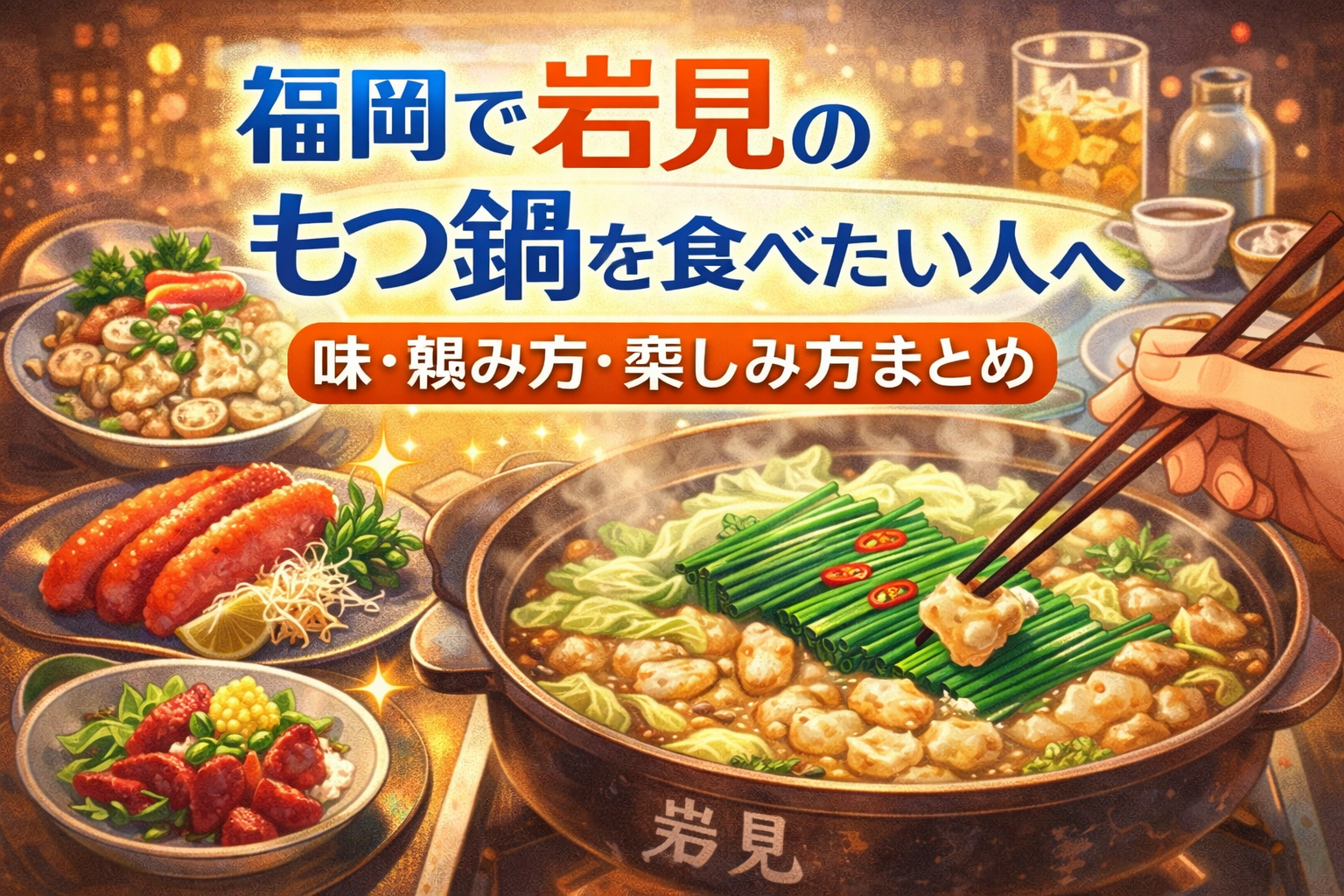
福岡グルメの代表格といえば、やっぱりもつ鍋。
しょうゆ、みそ、水炊き風…お店ごとに個性があり、同じ「もつ鍋」でも体験はまったく違います。そんな福岡のもつ鍋の中でも、「しっかりした旨み」「食べ終わったあとにまた行きたくなる」と名前が挙がりやすいのが、岩見(岩見屋)。初めての人にも、久しぶりに食べたい人にも、外さない一軒です。
この記事では、岩見(岩見屋)のもつ鍋を楽しむために、味の特徴・おすすめの頼み方・シメ・一緒に食べたいものまで、旅行者にも分かりやすくまとめます。
「福岡でもつ鍋、どこ行けばいい?」と迷っているなら、まず読んでから行くと満足度が上がります。
- 岩見(岩見屋)のもつ鍋ってどんな感じ?
- 初めてなら、まずはこの頼み方がおすすめ
- もつ鍋と一緒に頼みたいもの
- シメは何が正解?おすすめは「ちゃんぽん」→「雑炊」派もあり
- もつ鍋をより美味しくする“食べる順番”
- 飲み物は何が合う?(個人的おすすめ)
- こんな人に岩見(岩見屋)のもつ鍋は向いてる
- まとめ:福岡の夜は、もつ鍋で完成する
- What Is Iwami (Iwamiya) Motsunabe Like?
- The Best Way to Order (Especially for First-Timers)
- How to Eat It So It Stays Delicious to the End
- The Best “Shime” (Finish): Champon Noodles vs. Rice Porridge
- Drinks That Pair Well with Motsunabe
- Who Will Love Iwami (Iwamiya) Motsunabe?
- Summary: A Fukuoka Night Feels Complete with Motsunabe
岩見(岩見屋)のもつ鍋ってどんな感じ?
もつ鍋の魅力は、まずもつの質と、スープ(出汁)の方向性に出ます。岩見(岩見屋)は、派手さより「王道のうまさ」を大切にしている印象。脂の甘みがしっかり感じられるのに、食後が重すぎない。これが、福岡のもつ鍋を食べ慣れていない人にも受けやすい理由だと思います。
また、もつ鍋は「ニラ・キャベツ・にんにく」の香りが立つ料理ですが、岩見(岩見屋)はその香りのバランスが良く、野菜の甘さがちゃんと生きます。
もつ鍋にありがちな「最初だけ美味しい」ではなく、食べ進めるほどスープが馴染んで、最後まで飽きにくいタイプです。
初めてなら、まずはこの頼み方がおすすめ
もつ鍋は、鍋が来てからの食べ方でも満足度が変わります。初めてなら、次の流れが鉄板です。
1)最初の一口は“スープを確認”
具材が煮えてきたら、まずはスープを軽く味見。
「濃い・薄い」より、出汁の方向性をつかむのが大事。ここで味のイメージが決まるので、以後の食べ方も自然にハマります。
2)もつは“熱でとろける瞬間”が一番
もつは煮えすぎると脂が溶け出してしまい、口当たりが変わります。
「ぷるっとして、でも噛むと甘い」タイミングを逃さないのがコツ。
一気に全部食べるより、野菜→もつ→野菜→もつのリズムで食べると、ずっと美味しいまま楽しめます。
3)にんにく・唐辛子は“ちょい足し”が正解
もつ鍋は薬味で化ける料理ですが、入れすぎるとスープの輪郭がぼやけます。
最初はそのまま、途中から少しずつ味変。これが一番失敗しません。
もつ鍋と一緒に頼みたいもの
福岡のもつ鍋屋さんは、鍋だけじゃなく一品も強い。岩見(岩見屋)でも、「鍋が来るまでの時間」を楽しめるものを入れると満足度が上がります。
- 酢もつ:さっぱり系。脂の甘さを引き立てる“前菜役”
- 明太子系の一品:福岡らしさが一気に出る
- 馬刺し(あれば):鍋とは別軸の旨みで、食卓が豊かになる
ポイントは、鍋が主役なので一品は「軽め・さっぱりめ」。
この組み合わせだと、最後のシメまでちゃんと美味しいまま行けます。
シメは何が正解?おすすめは「ちゃんぽん」→「雑炊」派もあり
もつ鍋の楽しみは、最後のシメで完成します。岩見(岩見屋)のようにスープがしっかりしているタイプは、シメがめちゃくちゃ映えます。
ちゃんぽん麺
福岡のもつ鍋の王道。
スープを吸った麺が、甘み・旨み・にんにくの香りをまとって、別料理になります。初めてならまずこれ。
雑炊(ごはん)
やさしく締めたい人におすすめ。
「もつ鍋=重い」というイメージがある人ほど、雑炊で終えると印象が良くなります。卵が入ると、角が取れて“回復食”みたいになります。
※欲張り技:
人数やお腹に余裕があるなら、ちゃんぽんのあとに雑炊…も最高。ただし満腹度が跳ね上がるので、頼むならペース配分を。
もつ鍋をより美味しくする“食べる順番”
実はもつ鍋は、順番で体感が変わります。
- まず野菜(キャベツ中心)
- 次にもつ
- 途中で薬味を少し足す
- 飲み物で口をリセット
- 最後にシメ
この流れだと、脂の甘みが「重さ」にならず、「旨み」として残ります。
もつ鍋で“途中からしんどい”人は、だいたい最初からもつを飛ばし過ぎていることが多いです。
飲み物は何が合う?(個人的おすすめ)
- ハイボール:脂を切ってくれて、鍋が進む
- 焼酎:福岡らしい、食事に寄り添う
- ウーロン茶:胃腸が弱い人はこれが優勝
もつ鍋は「飲むほど進む」料理ですが、飲みすぎるとシメが入らないので注意。
シメまで食べたいなら、途中でソフトドリンクに切り替えるのもアリです。
こんな人に岩見(岩見屋)のもつ鍋は向いてる
- 福岡でもつ鍋を“ちゃんと美味しい店”で食べたい
- こってり過ぎるのは苦手だけど、旨みは欲しい
- 初めての福岡旅行で、失敗したくない
- 家族・友人・同僚など、複数人で行きたい
もつ鍋は、好みの差が出る料理ですが、「王道のバランス型」は誰と行っても安心です。初めての一軒にしやすいのは、こういうタイプだと思います。
まとめ:福岡の夜は、もつ鍋で完成する
福岡に来たら、やっぱり一度はもつ鍋を食べたい。
岩見(岩見屋)のもつ鍋は、派手さより“ちゃんと美味しい”が強いお店として、満足度が高い選択肢です。
- 最初はスープの方向性を確認
- もつは煮えすぎる前が最高
- 薬味はちょい足し
- シメはちゃんぽん(余裕があれば雑炊も)
この流れで食べれば、「福岡のもつ鍋ってこういうことか」と体感できます。
旅の夜でも、日常のご褒美でも。温かい鍋が、福岡の記憶を強くしてくれます。
How to Enjoy “Iwami” (Iwamiya) Motsunabe in Fukuoka | Flavor, What to Order, and the Best Finish (About 3,000 Japanese-character equivalent)
If you’re visiting Fukuoka, one local dish you shouldn’t miss is motsunabe—a hot pot made with tender beef or pork offal, heaps of cabbage and chives, and a deeply savory broth. Even within Fukuoka, motsunabe varies a lot by shop: soy-based, miso-based, lighter dashi styles, richer “punchy” broths, and everything in between.
Among the options often mentioned by locals and repeat visitors is “Iwami” (commonly referred to as Iwamiya). It’s the kind of place people recommend when they want a reliable, classic, satisfying motsunabe experience—flavorful and comforting without being overwhelmingly heavy.
In this article, I’ll walk you through how to enjoy Iwami/Iwamiya-style motsunabe: what it tastes like, how to order, how to eat it for maximum enjoyment, and which finishing noodles or rice to choose—so you can walk in confident and leave happy.
What Is Iwami (Iwamiya) Motsunabe Like?
The character of motsunabe comes down to two things:
- The quality of the offal (“motsu”)
- The direction of the broth (rich vs. clean, soy vs. miso, etc.)
Iwami/Iwamiya tends to lean into a “classic done right” style. The motsu is prized for that perfect texture: plump, slightly springy, and meltingly sweet with fat—but the overall experience doesn’t feel overly greasy when you’re done. That balance is exactly why it works well for first-time motsunabe eaters and also for people who’ve tried many different shops.
You’ll also notice the vegetables matter here. With motsunabe, cabbage sweetness and the aroma of chives and garlic can easily overpower the broth if the balance isn’t right. At Iwami/Iwamiya, the flavors usually feel harmonious—vegetables soften into the soup, the broth deepens, and the pot becomes more delicious as you eat, not less.
The Best Way to Order (Especially for First-Timers)
Motsunabe is simple, but the way you approach it can change your satisfaction level. If it’s your first time at Iwami/Iwamiya (or your first time with motsunabe in general), this ordering strategy rarely fails:
1) Start with the standard pot
If you’re unsure, begin with the shop’s “default” flavor and adjust later with condiments. Think of the first bowl as your baseline.
2) Add one light side dish while you wait
Motsunabe often takes a moment to get to its best “ready-to-eat” stage. Ordering one refreshing side dish keeps the table lively without spoiling your appetite.
Good choices (common in many Fukuoka motsunabe shops) include:
- Sumotsu (vinegared motsu): bright and refreshing, excellent before the rich pot
- Mentaiko-related small plates: adds that “Fukuoka signature”
- Basashi (horse sashimi) if available: clean umami that complements the hot pot nicely
The key is to keep sides light—because the pot is the star and the final noodles/rice are the grand finale.
How to Eat It So It Stays Delicious to the End
Here’s a simple routine that keeps the pot feeling satisfying rather than heavy:
Step 1: Taste the broth first
Once the ingredients soften, taste a small spoonful. Don’t judge only “salty vs. not salty”—focus on the broth’s personality (deep soy? gentle dashi? slightly sweet?).
Step 2: Catch the best “motsu moment”
Motsu is at its best when it’s hot, tender, and pleasantly bouncy, with fat that feels sweet rather than oily. If it overcooks, the fat can melt out too much and the texture changes.
Instead of eating all the motsu at once, rotate:
cabbage → motsu → cabbage → motsu
This rhythm keeps the balance and makes the pot feel lighter.
Step 3: Use garlic and chili as “small upgrades,” not the main flavor
Garlic and chili can transform motsunabe, but too much too soon can flatten the soup’s nuance.
Start pure → then add a little → adjust again. That’s the path to a perfect bowl.
The Best “Shime” (Finish): Champon Noodles vs. Rice Porridge
In Fukuoka, the ending matters. The “shime” is where motsunabe becomes unforgettable, because the broth now contains:
- melted vegetable sweetness
- rich motsu fat
- garlic/chive fragrance
- deep umami from everything simmered together
Option A: Champon noodles (the classic)
This is the standard finish for many motsunabe meals. The noodles drink up the broth and turn it into something like a new dish.
If you’re trying motsunabe for the first time, go with champon.
Option B: Zosui (rice porridge) for a gentler end
If you want a softer finish (or your stomach gets tired easily), rice porridge is excellent. Adding egg makes it even more comforting and smooth—almost like a recovery meal after a long day.
Pro move (only if you have room):
Champon first, then a small zosui—amazing, but very filling. Plan your pacing if you want to attempt both.
Drinks That Pair Well with Motsunabe
Motsunabe is rich, so the best drinks are those that refresh the palate:
- Highball (whisky soda): cuts through fat, keeps you wanting another bite
- Shochu: a very Fukuoka-friendly choice, great with savory dishes
- Oolong tea: surprisingly perfect if you want to stay light and still enjoy the pot fully
If you’re aiming to enjoy the shime properly, consider switching to a non-alcoholic drink midway so you don’t get too full too early.
Who Will Love Iwami (Iwamiya) Motsunabe?
This style is especially good for people who want:
- a safe, classic “can’t-go-wrong” motsunabe in Fukuoka
- rich flavor without feeling overly heavy afterward
- a place that works well for groups (friends, coworkers, family)
- a strong “Fukuoka food memory” without gambling on something too extreme
Motsunabe tastes can be divisive—some people love ultra-rich broths, others prefer clean dashi styles. A balanced, classic shop is often the best choice when you’re traveling with others or trying it for the first time.
Summary: A Fukuoka Night Feels Complete with Motsunabe
If you’re in Fukuoka and deciding where to eat, motsunabe is one of the most rewarding choices—warm, local, and deeply satisfying. Iwami/Iwamiya-style motsunabe is a strong pick if you want a classic experience with excellent balance.
To get the most out of it:
- Taste the broth early and learn its personality
- Eat motsu at the “perfect texture” moment (don’t overcook)
- Add garlic/chili gradually
- Finish with champon (and zosui if you still have room)
Whether it’s a travel highlight or a personal treat, a well-made motsunabe meal has a way of staying in your memory long after the trip ends.

コメント