


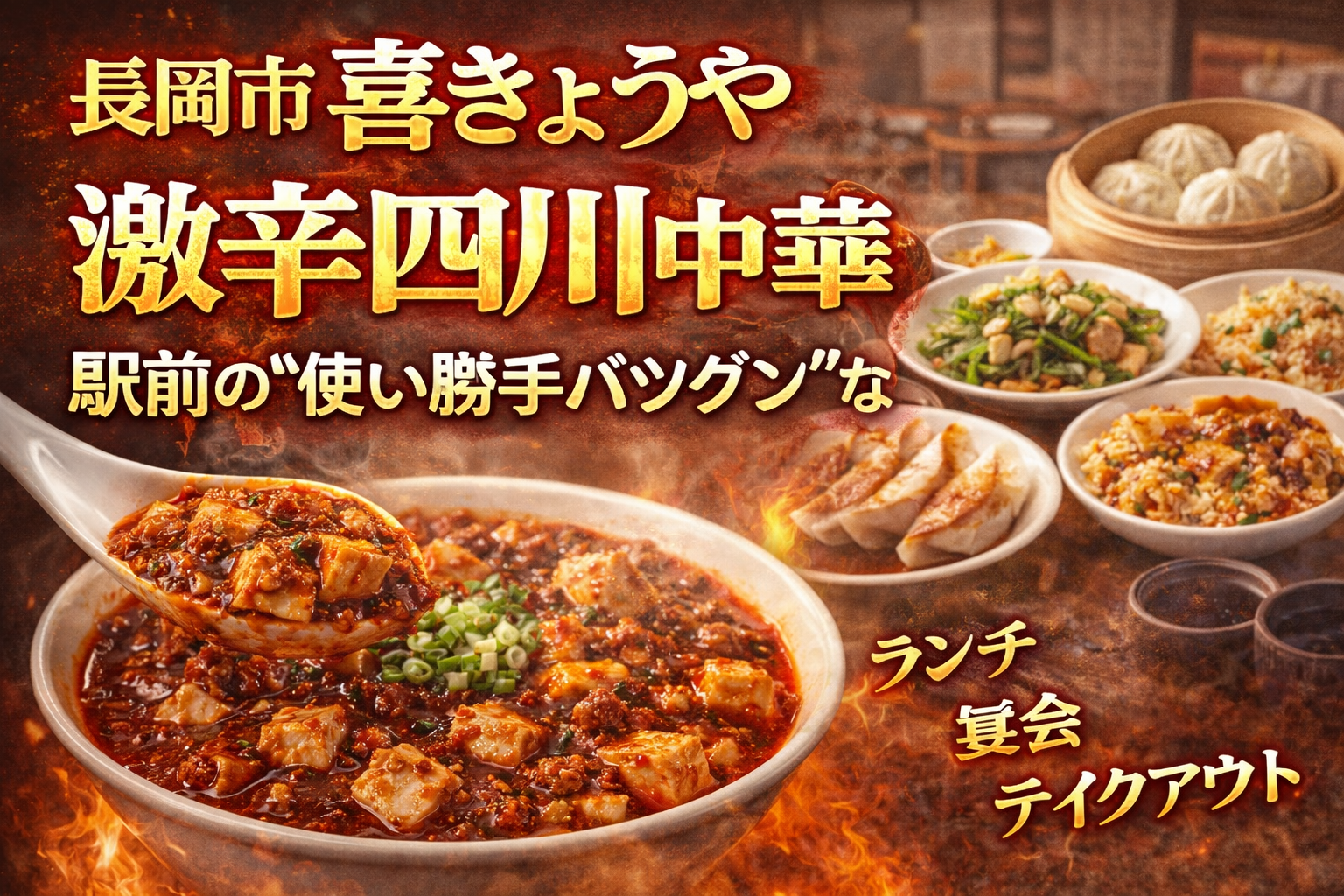
長岡駅前で「今日は中華にしよう」となったとき、真っ先に名前が挙がる店のひとつが 中国四川料理 喜京屋(ききょうや)。駅から歩いて行ける距離にありながら、料理は“町中華の安心感”より一段奥に踏み込んだ 四川の辛さと香りが核。しかもそれだけじゃなく、ランチ・一品料理・飲み・宴会・テイクアウトまで、選択肢が広い。
つまり喜京屋は「うまい中華」だけで終わらず、“長岡駅前で困ったときに強い”店として、地元の人にも遠征の人にも重宝されやすい存在です。
- 名物は「口から火を噴く麻婆豆腐」――辛いだけじゃない“香りの暴力”
- メニュー約100種類。「選べる」「迷える」こと自体が強み
- ランチがちょうどいい:日替わり1200円、選べるセットも
- 1階は普段使い、2階は宴会。最大62名まで入る“駅前の大箱”
- “名物”が麻婆だけじゃない:スーパーゴマ団子、変面ショーまで
- まず何を頼む?おすすめの組み立て(迷った人向け)
- 口コミの空気感:「落ち着く」「安定感がある」—長く続く店の特徴
- 店に行く前のメモ:駅前・通し営業寄り・テイクアウト強い
- まとめ:喜きょうやは「四川の芯」と「駅前の万能さ」で選ばれる
- Kikyouya (Kikyōya), Nagaoka City — A Chinese Restaurant Where “Real Sichuan” Meets Everyday Convenience (Approx. 3,000 Japanese-character equivalent)
名物は「口から火を噴く麻婆豆腐」――辛いだけじゃない“香りの暴力”
喜京屋を語るなら、まず外せないのが 名物・麻婆豆腐。公式の案内でも「陳さん直伝の口から火を噴く麻婆豆腐」と、かなり強気に推しています。
この言い方、盛ってるように見えるけど、四川系の麻婆が好きな人ほど分かるはず。麻婆豆腐は辛さそのものより、花椒(ホアジャオ)の痺れ、豆板醤の発酵香、油の香り、そして肉の旨みが合わさった“香りの層”で勝負する料理。ここが決まると、辛いのにレンゲが止まらない。
しかも喜京屋は四川料理を名乗りつつ、ただ尖らせるだけではなく、一品料理としての完成度で押してくるタイプ。初見でおすすめするなら、まず麻婆豆腐を軸に、炒め物か点心を足して「店の火力」を感じるのが正解です。
メニュー約100種類。「選べる」「迷える」こと自体が強み
喜京屋は“メニューが多い店”です。公式案内では 約100種類のメニューがあるとされ、さらに ほぼ全てのメニューが持ち帰り可能とも書かれています。
ここが地味に強い。中華って、気分が日によって変わりませんか?
- 今日は麻婆で攻めたい
- 今日は青菜炒めみたいな軽さがほしい
- 今日は餃子とビールでいい
- 今日は人数いるから大皿で回したい
その全部に対応できる“守備範囲の広さ”が、駅前の店として頼もしい。選択肢が多い店は「尖った一品」に目が行きがちだけど、実はこういう時に真価が出ます。
ランチがちょうどいい:日替わり1200円、選べるセットも
昼の喜京屋は「中華をちゃんと食べたい」人の味方。公式情報では 日替わりランチは1200円、さらに 好きな料理を6品選べるバリューセットも人気と紹介されています。
この“選べる”があることで、辛いのが得意じゃない人と一緒でも組み立てやすい。麻婆は単品で頼むとして、他は優しめの料理でバランスを取る、みたいな設計ができます。
あと、四川料理って当たり前に汗をかくので、昼に食べると午後がシャキッとする。特に冬の長岡は寒いぶん、辛い+熱いが沁みます。
1階は普段使い、2階は宴会。最大62名まで入る“駅前の大箱”
喜京屋は“普段使いの中華”でもあり、“宴会の受け皿”でもあります。公式案内では、
- 1階:おひとり様から利用しやすい
- 2階:6名〜62名までの個室
- 7000円の飲み放題付き中華コースが人気
といった情報が明記されています。
駅前でこのキャパは正直ありがたい。会社の集まり、同窓会、打ち上げ、家族の会食。人数が増えるほど「店がない問題」が出てくるけど、喜京屋はその穴を埋めてくれるタイプです。しかも中華は大皿で回せるから、宴会適性が高い。
“名物”が麻婆だけじゃない:スーパーゴマ団子、変面ショーまで
ここ、ちょっと面白いポイント。喜京屋は料理だけでなく、イベント性も持ってます。公式案内には 約30cmもある「スーパーゴマ団子」、さらに 中国変面ショーの記載まである。
「食べに行く」だけじゃなくて、誕生日や送別会など、“場を盛り上げたい夜”にも刺さりやすい。中華って、それ自体が華やかだけど、こういう“記憶に残る要素”がある店は強いんですよね。
まず何を頼む?おすすめの組み立て(迷った人向け)
メニューが多い店ほど最初は迷うので、失敗しにくい組み立てを置いておきます。
① 初回・王道(1〜2人)
- 麻婆豆腐(名物枠)
- 青菜炒め or 炒め物(火力チェック)
- 餃子 or 春巻き(つまみ枠)
② 飲み中心(軽くつまむ)
ホットペッパーには、餃子・棒々鶏・ザーサイ+生ビール or 地酒=1050円といった“飲み導線”の情報もあります。
まずこれでスタートして、気分で麻婆に行くのが気持ちいい。
③ グループ(3人以上)
- 前菜系をいくつか(棒々鶏、ザーサイなど)
- 辛い系(麻婆 or 辛味炒め)
- 優しい系(卵料理・青菜・スープ)
- 炒飯や麺で〆
四川を入れつつ、全体は“食べ疲れない”構成にすると満足度が上がります。
口コミの空気感:「落ち着く」「安定感がある」—長く続く店の特徴
食べログの口コミでは「変わらない落ち着いた店内」「定番が安定」「炒め物の火加減がちょうどいい」といったニュアンスが見られます。
派手なバズよりも、**“いつ行っても外さない”**が積み上がっているタイプ。こういう店は、旅先での一食にも強いし、地元での“困った時の選択肢”にもなる。
店に行く前のメモ:駅前・通し営業寄り・テイクアウト強い
公式情報では 長岡駅大手口から徒歩5分、さらに 営業時間 11:00〜21:20(L.O.20:50)、そして 持ち帰り対応も強調されています。
時間の使い方が読みやすいのもありがたいところ。新幹線の前後、飲み会の二次会、遅めのランチ…駅前中華の価値って、こういう“隙間を埋める力”だったりします。
まとめ:喜きょうやは「四川の芯」と「駅前の万能さ」で選ばれる
喜京屋(喜きょうや)は、
- 名物の麻婆豆腐という強烈な看板
- 約100種メニュー+テイクアウトの使いやすさ
- ランチ1200円+選べるセットの導線
- 宴会62名まで+飲み放題コースという大箱力
- さらに ゴマ団子や変面ショーの“場の強さ”
この全部を同時に持っているのが強い。
長岡で「中華食べたいな」となったら、味の満足だけじゃなく、“どういう使い方でも受け止めてくれる”安心感込みで、選ばれ続ける店だと思います。
Kikyouya (Kikyōya), Nagaoka City — A Chinese Restaurant Where “Real Sichuan” Meets Everyday Convenience (Approx. 3,000 Japanese-character equivalent)
When you’re around Nagaoka Station and someone says, “Let’s do Chinese,” one name that often comes up is Chinese Sichuan Cuisine Kikyouya (喜京屋/ききょうや). It’s close enough to the station to feel effortless, but the food isn’t just “safe, familiar town-Chinese.” The core of this place is Sichuan-style heat and aroma—that addictive mix of chili, fermented depth, and the numbing tingle of Sichuan pepper.
At the same time, Kikyouya is not a “hardcore niche” restaurant that only works for spice lovers. It’s also built for real life: lunch sets, small plates with drinks, group dinners, banquets, and even takeout. That combination—a strong Sichuan identity plus wide usability—is exactly why it stays on people’s short list.
1) The signature dish: “Fire-breathing” Mapo Tofu (and it’s not just about spiciness)
If you ask regulars what to order first, Mapo Tofu is the most common answer. Kikyouya describes it boldly—something like “a mouth-on-fire mapo tofu”—and it’s not hard to see why.
Great Sichuan-style mapo tofu isn’t simply “hot.” The real appeal is layered:
- Fermented chili-bean flavor (deep, savory, slightly funky in the best way)
- Sichuan pepper (that signature numbing “ma” sensation)
- Aromatic oil carrying the fragrance through the whole bowl
- Minced meat umami that makes the heat feel rich rather than empty
When the balance is right, you end up in that classic mapo loop: it’s spicy… but I want another bite immediately. Kikyouya’s mapo is the type that aims for impact and aroma—more “Sichuan punch” than “gentle comfort.”
If you’re new to the restaurant, ordering mapo tofu first is the fastest way to understand their style.
2) Around 100 menu items: “variety” is part of the restaurant’s strength
Kikyouya is a big-menu restaurant, and that’s not a drawback here—it’s a feature.
With Chinese food, the mood shifts day to day:
- Today I want spicy and aggressive.
- Today I want something light like stir-fried greens.
- Today I want dumplings and beer—nothing more.
- Today I’m with a group and we want shared plates.
A wide menu means the restaurant can absorb all those situations without forcing you into one vibe. And in a station-area location, that flexibility matters even more. It’s not only about “what’s the best dish?” but also “what works right now for the people and time we have?”
3) Lunch that feels just right: reliable, satisfying, and easy to customize
Kikyouya’s lunch is often described as a solid “I want to eat properly” option—especially when you don’t want fast food but you also don’t want something heavy and formal.
The appeal of Chinese lunch isn’t only volume. It’s also how heat and aroma wake you up. In winter, especially in Nagaoka, spicy Sichuan-style dishes feel extra satisfying—like you’re rebooting your body.
If you’re visiting with someone who can’t handle spice, lunch is also a good time to split the approach:
- one spicy main (mapo, spicy stir-fry)
- one mild dish (egg-based, greens, soup)
That kind of balance is easy at Kikyouya because the menu is broad.
4) Everyday dining downstairs, big groups upstairs: a “station-area powerhouse”
One reason Kikyouya is so useful is the layout: it’s not only for solo diners or couples. It also works for banquets and group gatherings—the kind of place you can rely on when numbers suddenly grow.
This matters more than people think. In many cities, you can find “great food” easily, but you can’t always find a place that can handle:
- company dinners
- reunions
- celebrations
- after-event gatherings
without turning into chaos.
Chinese cuisine is naturally group-friendly: shared plates, variety, steady pacing, easy pairing with drinks. Kikyouya fits that structure well.
5) It’s not only food—there’s an “event” side too
Here’s a fun part of Kikyouya’s identity: it leans into experiences that become memories. If you’re the type who wants a dinner to feel like an occasion—birthday, farewell party, “we’re in town so let’s do something special”—that extra touch helps.
A restaurant that offers food + a bit of spectacle tends to get chosen again for “important nights,” not just ordinary meals.
6) What to order: simple game plans (so you don’t get stuck staring at the menu)
Because the menu is large, it helps to have a “first-time strategy.”
A) First visit (1–2 people): the classic “Kikyouya check”
- Mapo tofu (signature)
- One stir-fry (to feel the kitchen’s heat and timing)
- Dumplings or spring rolls (easy, reliable side)
B) Drink-focused visit (light plates)
- Small cold dishes + dumplings + beer
Then decide if you want to go spicy afterward.
C) Group visit (3+ people): build balance
- cold starters
- one spicy main (mapo or spicy stir-fry)
- one mild dish (egg / greens / soup)
- fried rice or noodles to finish
Sichuan is most enjoyable when it’s not “spice-only.” A balanced table makes everyone happy—even the spice lovers.
7) The “steady comfort” factor: why people keep coming back
Restaurants that last aren’t always the ones that go viral. Often they’re the ones that deliver:
- familiar comfort
- stable quality
- a dining room where you can relax
Kikyouya’s reputation leans toward that: a place you can trust for “good Chinese near the station,” where the spice has personality but the overall experience still feels grounded.
That’s why it works both for locals (repeat visits) and visitors (safe choice that still feels like a “real find”).
Conclusion: Kikyouya is popular because it’s both “Sichuan-forward” and “station-area practical”
Kikyouya’s strength is the combination of two things that don’t always coexist:
- A clear Sichuan identity (especially through dishes like mapo tofu)
- Versatility (lunch, casual plates, drinks, groups, takeout)
So if you’re in Nagaoka and you want Chinese food that feels a step above the ordinary—without becoming complicated or inconvenient—Kikyouya is the kind of place that makes sense.

コメント