


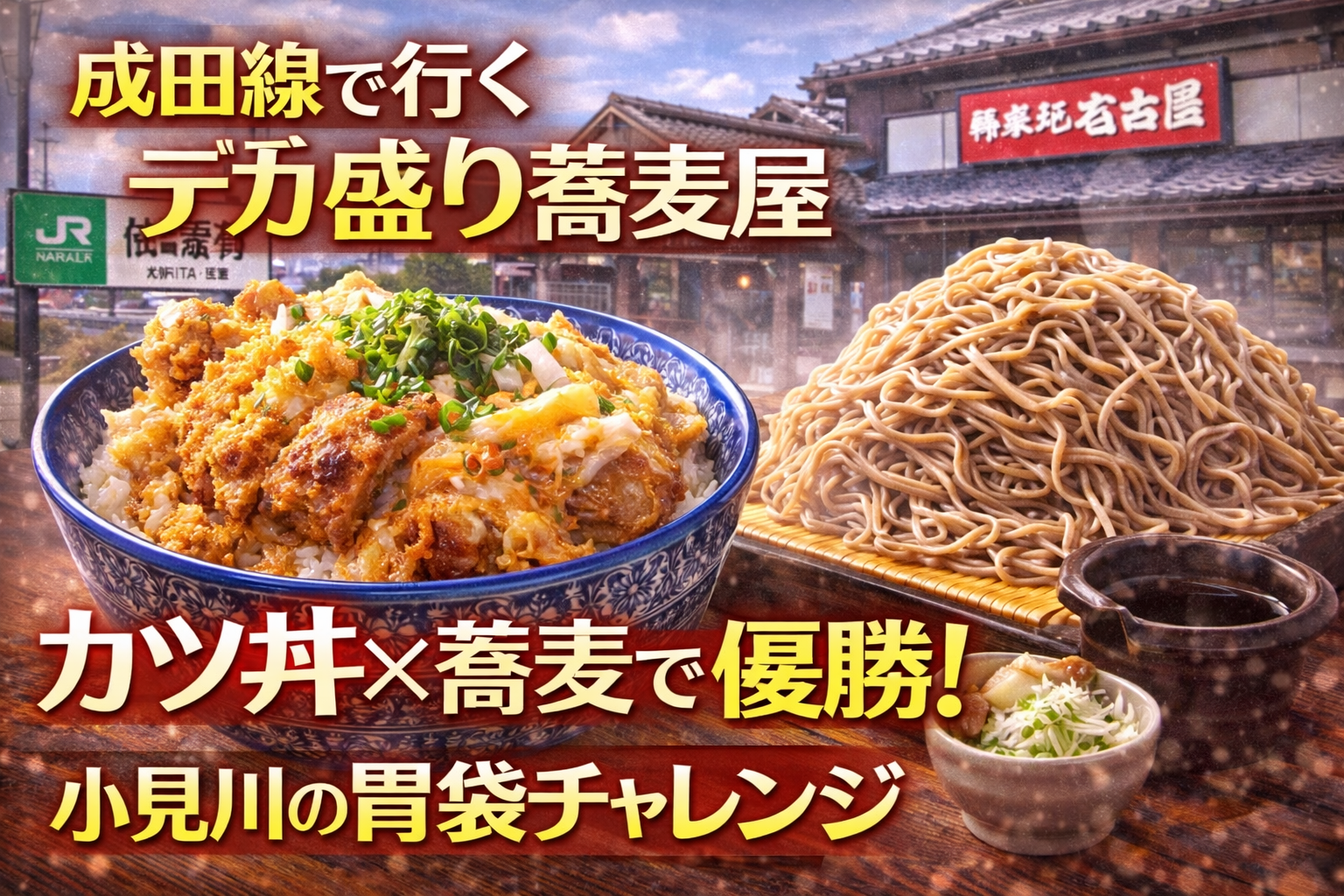
「蕎麦屋のカツ丼って、なぜあんなに正義なんだろう。」
甘めの出汁、ふわっと卵、揚げたてカツ(あるいはカツ系)、そして蕎麦。炭水化物×炭水化物なのに、なぜか“また食べたい”が勝つ。そんな背徳と幸福を、さらに上の次元で体験できるのが、千葉県香取市にある **「そば処 名古屋」**です。
ここはデカ盛り界隈ではかなり有名で、紹介記事でも「全国屈指のデカ大盛り蕎麦が食べられる」と言われる存在。さらにテレビ番組『オモウマい店』で取り上げられた、という言及もあります。
そして今回の主役は、あなたのキーワード通り——カツ丼(カツ系丼)。ただし「名古屋」の場合、平日限定の人気メニューとして **「鳥カツ丼ランチ」**が紹介されており、卵量もご飯量も“遠慮ゼロ”のボリュームで語られています。
- 成田線で行ける?最寄りは「JR成田線・小見川駅」
- そば処 名古屋の“デカ盛り”は、量だけじゃなく「構成」が強い
- 今回の本命:デカ盛り「カツ丼」なら、まず“鳥カツ丼ランチ”が熱い
- 食べ方のコツ:最初に「丼を急がない」
- 「食べきれない…」の保険もある
- 行く前の現実的ポイント:混む、早い、並ぶ
- まとめ:成田線で“デカ盛りカツ丼×蕎麦”を狙うなら、名古屋は旅の目的になる
- The Legendary Giant Katsudon-Style Lunch + Mountains of Soba (Approx. 1,600–1,900 words)
- Can you really go by train? Yes: JR Narita Line → Omigawa Station
- Why “Nagoya” is more than just “big”
- The katsudon angle: “Tori-katsudon Lunch” (a giant, weekday-only style)
- What makes it “dek盛り” in the real world
- How to survive the meal: the best eating strategy
- Worried you can’t finish? Don’t force the top size
- Before you go: expect crowds and plan early
- Why this place works as a “Narita Line food trip”
- Conclusion: If you want giant soba-shop katsudon energy in Chiba, this is the destination
成田線で行ける?最寄りは「JR成田線・小見川駅」
「デカ盛りって車で行く場所でしょ?」と思いがちですが、ここは一応“電車でも行ける”部類に入ります。紹介記事では、最寄り駅を **JR成田線『小見川駅』**として、徒歩約22分(約1.7km)と案内されています。
駅から歩けなくはない距離。食べる前のウォーミングアップとしては、むしろちょうどいい(ただし夏・真冬は気合いが必要)。
「成田線でデカ盛りカツ丼を狙う」という旅の筋が通る店、実はそんなに多くありません。だからこの店名が出てくるのは納得です。
そば処 名古屋の“デカ盛り”は、量だけじゃなく「構成」が強い
デカ盛り店で大事なのは、量そのものよりも“食べ続けられる設計”があるかどうか。名古屋はそこが強い。
そもそも蕎麦がちゃんとしている、という感想が複数の訪問記で語られていて、「量が多いだけでは食べられない」という前提がしっかり通っています。
そして蕎麦メニューには、平日ランチ限定で
- 特盛(1kg強・8人前ほど)
- 特盛もどき(1kg弱・6人前ほど)
といった“数字で殴ってくる”大盛り設定がある、と紹介されています。
ここまで来ると、店が言っているのは「無理して頼むな。頼むなら完走しろ。」というメッセージ。実際、紹介記事では シェア禁止の注意にも触れられています。
今回の本命:デカ盛り「カツ丼」なら、まず“鳥カツ丼ランチ”が熱い
あなたの指定は「蕎麦屋/カツ丼/デカ盛り」。ここに一番寄せやすいのが、紹介記事で取り上げられている **平日限定の「鳥カツ丼ランチ」**です。
このメニュー、何がすごいかというと——
- ご飯が圧倒的
- 鶏カツが分厚くボリューミー
- 卵の量も多い
- さらに蕎麦(つゆ・薬味・蕎麦湯)まで付く
という「一食で二食分」みたいな構造。
蕎麦屋の丼ものって、普通でも満足度が高いのに、それを“デカ盛り仕様”にしてくるから、もう勝ち確です。
食べ方のコツ:最初に「丼を急がない」
デカ盛りカツ丼系で失敗しがちなのが、熱さと勢いで前半に飛ばしすぎて、後半で味が単調になり、箸が止まるパターン。
名古屋は蕎麦も付くので、攻略はこう。
- まず蕎麦を数口(口と胃を整える)
- 丼は“卵のゾーン”を広げながら食べる(単調さ回避)
- 途中で蕎麦湯や温かいお茶でリセット
- 後半はペースを落として“完走モード”
丼→蕎麦→丼の往復ができるのは、蕎麦屋メシの強み。デカ盛りでも戦い方が作れます。
「食べきれない…」の保険もある
それでも胃袋に自信がない人は、無理に特盛へ行かず、まずは通常〜控えめで“店の空気”を掴むのがおすすめ。
紹介記事では、食べきれない場合の **「持ち帰りパック(10円)」**があるとも書かれています。
※ただし、ルールや運用は変わることがあるので、現地で確認が確実です。
行く前の現実的ポイント:混む、早い、並ぶ
Yahoo!マップの口コミ欄でも、朝早い時間に到着して名簿に記入した、というような“混雑前提”の体験談が見られます。
デカ盛り店は「提供数」や「仕込み」が絡むので、早め行動が正解になりがち。特に限定メニュー狙いなら、なおさらです。
まとめ:成田線で“デカ盛りカツ丼×蕎麦”を狙うなら、名古屋は旅の目的になる
「そば処 名古屋」は、デカ盛りの量で話題になりつつ、蕎麦と天ぷらの評価も高いと語られる店。
そしてカツ丼系なら、平日限定の 鳥カツ丼ランチが“デカ盛り+蕎麦屋の強み”を一気に体験できる入口になります。
成田線(小見川駅)から徒歩で行けるという情報もあるので、「電車×デカ盛り」旅の一本として成立するのが面白い。
腹ペコで挑んで、蕎麦で整えて、丼で殴られて、蕎麦湯で落ち着く。
この流れが作れたら、もう勝ちです。
Chiba “Soba-dokoro Nagoya” Near the Narita Line
The Legendary Giant Katsudon-Style Lunch + Mountains of Soba (Approx. 1,600–1,900 words)
There’s something unbeatable about a katsudon from a soba shop.
Sweet-savory dashi, fluffy egg, a big cutlet, and then a bowl of soba to reset your mouth and stomach. It’s comfort food with a little “double-carb” rebellion—and somehow that’s exactly why it works.
Now imagine that classic soba-shop katsudon experience… but turned up to “giant portion” levels.
That’s where Soba-dokoro Nagoya (蕎麦処 名古屋) in Katori City, Chiba comes in. In the Japanese “big portion” (dek盛り) world, this place is often talked about as a heavy hitter—famous not just for quantity, but for the kind of meal that becomes a destination in itself.
And the best part for train travelers?
It’s reachable via the JR Narita Line.
Can you really go by train? Yes: JR Narita Line → Omigawa Station
“Big-portion restaurants are for drivers” is usually true. But Soba-dokoro Nagoya is one of the rare “dek盛り” targets that can still work as a train-based food trip.
The nearest station people commonly reference is JR Narita Line – Omigawa Station (小見川駅). From there, it’s roughly a 20–25 minute walk depending on your route and pace. That’s not “next door,” but it’s also not impossible—and honestly, walking before a giant meal is not the worst idea.
If you’re doing a “Narita Line food adventure,” this shop is one of the few that makes the theme feel real:
train → walk → giant soba shop → recover.
Why “Nagoya” is more than just “big”
A lot of big-portion shops are basically a challenge: “Can you finish?”
But the places that stay famous are the ones that have something else underneath the volume—especially when the main dish is soba.
With soba, pure quantity isn’t enough. If the noodles aren’t satisfying, a giant bowl becomes punishment fast. The reason Nagoya gets so much attention is that many visitors describe it as a soba shop first—meaning the core dish is legit—and then the portions become the “wow factor” on top.
In other words:
It’s not only big. It’s constructed to be eaten.
That’s a huge difference.
The katsudon angle: “Tori-katsudon Lunch” (a giant, weekday-only style)
When people say “katsudon” here, it’s important to clarify one point:
At Nagoya, the famous “katsu-don style” lunch that gets highlighted in many write-ups is often a chicken cutlet version—commonly introduced as a weekday-only lunch item: Tori Katsudon Lunch (鳥カツ丼ランチ).
And it’s not subtle.
This kind of meal tends to be described like:
- a mountain of rice
- a thick, heavy chicken cutlet
- generous egg coverage
- and—because it’s a soba shop—soba included, plus typical soba-shop extras (sauce, condiments, and sometimes sobayu)
So the structure becomes:
giant donburi + soba = two full meals in one sitting.
If you’re searching for “Chiba soba shop giant katsudon near the Narita Line,” this is exactly the kind of menu that fits the keyword set.
What makes it “dek盛り” in the real world
Soba-dokoro Nagoya is also famous for its soba sizes—sometimes described in extreme tiers like “special large” portions approaching multiple servings. These sizes are often written about with numbers and serving counts (the type of menu that basically dares you to order it).
Just know this:
If you go in expecting “a big lunch,” you may be surprised at what “big” means here.
This is why many people treat Nagoya as a purpose trip, not a casual stop.
How to survive the meal: the best eating strategy
Giant donburi meals often defeat people not because of quantity alone, but because of heat and monotony. If you go too fast early on, your mouth gets tired and your appetite collapses mid-way.
Nagoya gives you a secret weapon: soba.
Here’s a smart pacing method:
1) Start with a few bites of soba
Not a full bowl—just enough to:
- calm your hunger
- reset your palate
- “prepare the stomach” for what’s coming
2) Move into the donburi gradually
Don’t attack the cutlet like it’s a race. Spread the egg layer and eat in a way that keeps every bite slightly different.
3) Alternate: donburi → soba → donburi
This is the soba-shop advantage. The soba keeps your mouth from getting stuck in one flavor track.
4) Use warm tea or sobayu as a reset
If you start feeling “heavy,” pause for 20 seconds and reset.
That tiny break often makes the difference between finishing comfortably and crashing.
5) Finish slowly, not heroically
A lot of people lose at the end because they try to “power through.”
At this stage, rhythm beats speed.
Worried you can’t finish? Don’t force the top size
If you’re not a confident big-portion eater, the smartest move is:
- don’t order the biggest size on your first visit
- learn the shop’s “scale” first
- then come back and level up if you want the challenge
Some write-ups mention the existence of a simple take-out container option if you can’t finish, but rules and handling can vary by day—so treat that as a “maybe,” and confirm locally.
Before you go: expect crowds and plan early
Big-portion famous shops often have two realities:
- they’re busy
- they run on a specific rhythm (prep, limited output, small staff, etc.)
So if you’re serious about the weekday lunch you want, go earlier than you think—especially if it’s a limited menu item.
A train-based trip makes this easier: pick a target arrival time, then build your Narita Line schedule around it.
Why this place works as a “Narita Line food trip”
A lot of “dek盛り” food travel ends up being car-only. That’s what makes Nagoya interesting: it sits in a zone where you can still do it with:
- JR Narita Line → Omigawa Station
- a walk (which honestly helps)
- a massive soba shop meal
- a slow recovery walk back
It becomes a one-day micro-adventure:
train trip + food challenge + local-town atmosphere.
Conclusion: If you want giant soba-shop katsudon energy in Chiba, this is the destination
Soba-dokoro Nagoya is the kind of place where:
- a soba shop becomes a “big-portion legend”
- the donburi isn’t just big—it’s designed as a full experience
- and the Narita Line access makes it possible to turn it into a real train-trip outing

コメント