

富山県氷見市の冬は、魚好きにとって特別です。日本海の荒波と冷たい海水が、脂をたっぷり蓄えたブリを育て、氷見漁港に上がる“冬の王者”が街の空気まで変えていく。そんな季節にこそ行きたいのが、地元の旬をまっすぐに出してくれる割烹料理店です。
割烹若竹は、氷見漁港から近い立地で、地魚や氷見牛、氷見うどんなど「氷見の旬」を楽しめる店として紹介されており、もともと老舗料理旅館から始まった背景を持つ——と、地元ポータルでも語られています。
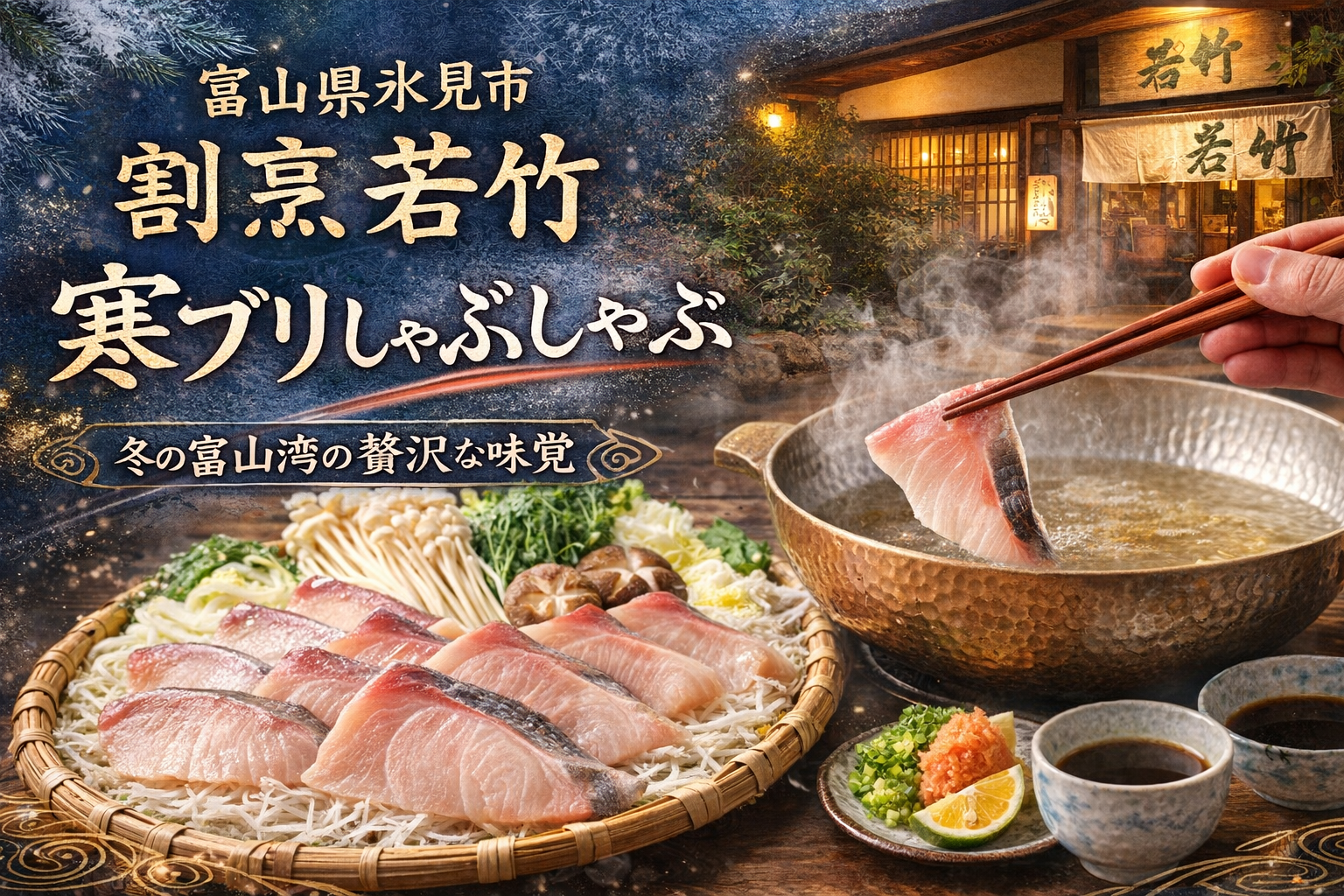
そして冬、狙い撃ちするならやはり 「寒ブリしゃぶしゃぶ」。刺身の濃厚さとも、煮付けの甘辛さとも違う、“脂の旨さを一度ほどいて、香りだけ残す”ような食べ方が、ぶりしゃぶの魅力です。
- 「ひみ寒ぶり」とは何か——旨さの理由が、最初から強い
- 割烹若竹は“肩肘張らずに割烹ができる”店
- 寒ブリしゃぶしゃぶの醍醐味——“火を入れすぎない勇気”が旨さになる
- 薬味・つけだれで変わる“後半戦”
- 行くならいつ?どう予約する?
- 店舗メモ(訪問前チェック)
- まとめ:氷見の冬は、鍋で完成する
- Kappo Wakatake (Himi, Toyama): Winter Luxury as “Kanburi Shabu-Shabu”
- What Makes Himi Kanburi So Special?
- Why Shabu-Shabu Is the Best Way to Enjoy Kanburi
- The True Skill: “Not Overcooking” in Just a Few Seconds
- Kappo Wakatake: A Local Kappo Experience Without Over-Formal Pressure
- The Second Half of the Meal: Ponzu, Citrus, and the Power of Condiments
- When to Go: Timing, Peak Season, and Why Reservations Matter
- Quick Practical Notes (Before You Visit)
- Why This Meal Feels Like “Winter in Toyama Bay”
「ひみ寒ぶり」とは何か——旨さの理由が、最初から強い
氷見の寒ブリが特別視されるのは、気分やイメージだけではありません。富山県の観光サイトでは、富山湾の定置網で獲れ、氷見漁港に水揚げされたブリのうち、重さ7kg以上で形・質が良好なものが「ひみ寒ぶり」ブランドとして流通すると説明されています。
さらに、定置網の漁場と氷見漁港の距離が近いことで、鮮度を保ったまま出荷されやすい点も“強み”として挙げられています。
旬の目安も押さえておきたいところで、同サイトでは一般に寒ブリの旬は11月〜2月頃とされること、また氷見でもその時期が主戦場になることが紹介されています。
加えて氷見のイベント情報(ひみぶりフェア)では、氷見沖の定置網漁に入り始めるのが11月ごろ、12月〜1月がピーク、水揚げ次第で2月頃まで安定する年もある一方、漁獲状況によって提供できない場合があるため事前問い合わせ・予約推奨と明記されています。
つまり、冬の氷見でぶりしゃぶを狙うなら「行けば必ず食べられる」とは限らない。だからこそ、食べられた日の満足度が跳ね上がります。
割烹若竹は“肩肘張らずに割烹ができる”店
割烹と聞くと、緊張感のあるカウンターを想像する人も多いはず。でも割烹若竹は、地元紹介ページで「リーズナブルに提供」と触れられ、季節の一品から予算に合わせたコースまで相談できる店として案内されています。
店内も、**足を下ろせる囲炉裏風の小部屋(予約制で10名程度)**や、**宴会場(予約制で30名程度)**があるとされ、使い方の幅が広い。
旅行者にとっては「地元の名店に行きたい、でも堅すぎるのは苦手」というラインをちょうどよく超えてくるタイプの一軒です。
寒ブリしゃぶしゃぶの醍醐味——“火を入れすぎない勇気”が旨さになる
ぶりしゃぶの勝負は、鍋の中ではなく「箸の上」で決まります。
薄切りの寒ブリを、出汁にさっとくぐらせる。脂がふわっとほどけ、身の色がうっすら変わったところで引き上げる。火を通しすぎると、せっかくの脂の甘さが重くなり、身も締まりすぎてしまう。逆に、短すぎると脂がまだ硬く、香りが開ききらない。
この“数秒の見極め”が、ぶりしゃぶをごちそうにします。
そして、氷見の寒ブリが強いのは、脂がのっているのに、しつこさだけで終わらないところ。富山県観光サイトでも、ぶりしゃぶは「余分な脂が落ちてさっぱりとした味わいになる」食べ方として紹介されています。
つまり、脂の良さを誇る寒ブリほど、しゃぶしゃぶで“ちょうどよく”なる。冬の最適解がここにあります。
薬味・つけだれで変わる“後半戦”
ぶりしゃぶは、前半は出汁と脂の香りで押してきますが、後半は薬味とつけだれで遊べます。
定番はポン酢系。柑橘の酸で脂がキュッと締まり、いくらでも食べられる感覚が出る。そこにネギ、もみじおろし、柚子皮などが入ると、同じ一切れでも印象が変わる。
「今日は脂の甘さを堪能したい」「少しキレよく食べたい」——その気分を、薬味が受け止めてくれます。
行くならいつ?どう予約する?
氷見の寒ブリのピークは12月〜1月と案内されており、混雑も強くなります。
ひみぶりフェアのページでは、漁獲状況によっては提供できないことがあるため、参加店へ問い合わせ・予約のうえ来店推奨、さらにブリシーズンは混み合うので早めの予約を、と明確に書かれています。
割烹若竹のように“旬の仕入れで勝負する”店ほど、この注意書きは現実的です。旅行日が決まったら、まず店へ連絡して、その日の寒ブリ提供可否やコース内容の相談をしておくのが安心です。
店舗メモ(訪問前チェック)
地元ポータルの掲載情報として、以下が案内されています。
- 店名:割烹 若竹
- 住所:富山県氷見市本町17-19
- 電話:0766-72-3000
- 営業時間:夜 17:00〜(L.O. 21:00)
- 定休日:日曜日(連休は最終日)
- 駐車場:あり
- カード:使用不可(と記載)
※営業時間・定休日・支払い方法は変更になる場合があるので、直近は念のため電話確認がおすすめです。
まとめ:氷見の冬は、鍋で完成する
刺身で圧倒され、寿司で驚かされ、煮付けで温まる——氷見の寒ブリにはいろいろな入口があります。でも、しゃぶしゃぶは“脂の良さ”をいちばん気持ちよく着地させる食べ方です。
割烹若竹のように、氷見の旬を日々の仕入れで出してくれる店で食べれば、旅の一食が「冬の富山湾」そのものになります。
Kappo Wakatake (Himi, Toyama): Winter Luxury as “Kanburi Shabu-Shabu”
Winter in Himi City, Toyama Prefecture is a special season for anyone who loves seafood. The Sea of Japan turns colder and rougher, and that harshness is exactly what creates one of Japan’s most celebrated winter delicacies: kanburi—yellowtail at its fattiest, sweetest peak.
Himi is known nationwide for its winter yellowtail, landed at Himi Fishing Port and prized for both freshness and rich flavor. And when you want to enjoy that fish in the most satisfying way—rich, yet surprisingly clean on the palate—there’s one dish that captures the essence of the season better than almost anything else:
kanburi shabu-shabu.
In Himi, one of the places often introduced as a reliable option for enjoying local seasonal ingredients is Kappo Wakatake (割烹 若竹). It’s the kind of Japanese restaurant that feels rooted in the community—focused on local seafood and regional specialties—yet approachable enough for travelers who want a memorable meal without the stiffness of a formal high-end counter experience.
This article is about that winter experience: why kanburi is so special in Himi, why shabu-shabu is arguably its best form, and how Kappo Wakatake fits into a perfect “Himi winter food trip.”
What Makes Himi Kanburi So Special?
Before talking about shabu-shabu, it helps to understand why Himi’s winter yellowtail carries such weight.
In Japan, “kanburi” refers to yellowtail that has reached its best fat content in the cold season. But in Himi, there’s an additional layer: brand selection and quality standards. The concept of “Himi Kanburi” is tied to fish landed at Himi port, typically with quality checks and criteria such as size and overall condition.
Another major advantage is geography. Himi’s fishing grounds and the port are close, which generally supports high freshness—a crucial factor when the star ingredient is a fish valued not only for flavor but for texture and aroma.
Seasonally, kanburi is most commonly associated with late autumn through winter—roughly November to February, with the peak often around December and January. That peak matters: it’s when the fish’s fat is at its most luxurious, and when “kanburi” stops being just a fish and becomes a seasonal event.
The key takeaway is simple: Himi’s winter yellowtail is not just “good yellowtail.” It is a seasonal product with strong local identity—something people plan trips around.
Why Shabu-Shabu Is the Best Way to Enjoy Kanburi
If sashimi is “pure richness,” and simmered dishes are “comfort,” shabu-shabu is the technique that finds the sweet spot between the two.
Kanburi is famous for its fat. But fat can be heavy if you eat it in one mode for too long. Shabu-shabu transforms that richness in a way that feels almost magical:
- A thin slice of yellowtail is dipped into hot broth for only a few seconds.
- The fat softens and loosens.
- Excess oil is gently released into the broth.
- The surface becomes silky, the aroma opens up, and the fish turns sweet rather than heavy.
This is the essence of kanburi shabu-shabu: you keep the good fat and let go of the burden.
It’s also why it feels so “winter-perfect.” The dish warms your body, carries the sea’s aroma, and still finishes clean—leaving you wanting another bite instead of feeling weighed down.
The True Skill: “Not Overcooking” in Just a Few Seconds
Great shabu-shabu isn’t about complicated technique. It’s about timing—and confidence.
With kanburi, the difference between “good” and “unforgettable” can be a few seconds:
- Too short, and the fat remains firm and closed.
- Too long, and the fish tightens, the texture turns dry, and the flavor becomes duller.
The ideal moment is when the color changes just slightly—when the slice looks “barely cooked.” That’s when the fish feels soft, fragrant, and sweet, and the fat tastes like elegance rather than weight.
In other words, kanburi shabu-shabu rewards a small act of bravery:
lift it early.
Kappo Wakatake: A Local Kappo Experience Without Over-Formal Pressure
“Kappo” (割烹) can sound intimidating—like a place you need to dress up for, speak carefully in, and worry about etiquette.
But Kappo Wakatake is commonly introduced as a place where you can enjoy Himi’s seasonal ingredients with flexibility: from single dishes to courses that can be discussed based on budget and preference. That kind of “we’ll work with you” style is valuable in a seasonal town where the day’s catch can define what’s best.
It’s also described as having different seating/room options, including spaces suitable for groups, which suggests it’s not only a quiet couple’s restaurant, but also a place used by locals for gatherings. For travelers, that’s often a good sign: it means the restaurant is integrated into community life, not just aimed at tourism.
Most importantly, a restaurant like this makes sense in Himi because the ingredient is the hero. In a true fishing town, the best meal isn’t necessarily the most decorated—it’s the one that understands the fish.
The Second Half of the Meal: Ponzu, Citrus, and the Power of Condiments
Kanburi shabu-shabu is a dish with a built-in “two-act structure.”
Act 1: Broth + fish + pure aroma
In the first bites, you want to taste the fish itself: the sweetness of the fat, the ocean scent, the soft texture, the warmth.
Act 2: Condiments shift the mood
As you continue, condiments and dipping sauces change the experience.
The classic direction is ponzu—a citrus-based sauce that cuts richness and keeps your appetite sharp. Additions like:
- green onion
- grated daikon
- chili or momiji-oroshi
- yuzu peel (if available)
…turn each bite into a slightly different flavor. This is where shabu-shabu becomes playful. You can move from “rich and sweet” to “bright and clean,” depending on your mood.
That flexibility is exactly why shabu-shabu works so well for fatty winter fish: it lets you enjoy the richness without getting stuck in it.
When to Go: Timing, Peak Season, and Why Reservations Matter
If you want the best chance of experiencing kanburi at its peak, December to January is usually the most reliable window.
But there’s a reality to remember: yellowtail is seasonal, and the catch can vary. In Himi, even during the season, availability can change based on weather and fishing conditions.
That means one practical rule matters more than anything:
Don’t assume. Ask. Reserve.
If your trip date is fixed, it’s smart to contact the restaurant in advance and confirm whether kanburi shabu-shabu will be available on your visit day, and what the course or set options look like.
This isn’t being overly cautious—it’s respecting the nature of seasonal seafood.
Quick Practical Notes (Before You Visit)
Kappo Wakatake is commonly listed with details such as:
- Evening service starting around 17:00 (last order around 21:00)
- Closed on Sundays (with variations around holiday weekends)
- Parking available
- Some listings note that credit cards may not be accepted (worth confirming)
Because operational details can change, especially in seasonal towns, it’s always wise to confirm hours and payment methods by phone close to your visit.
Why This Meal Feels Like “Winter in Toyama Bay”
Toyama Bay in winter is famous not only for yellowtail, but for the whole idea of seasonal abundance. Eating kanburi shabu-shabu in Himi isn’t just “having a good dinner.” It’s participating in a local rhythm: winter arrives, the fish changes, the town changes, and the menu becomes a reflection of that.
Shabu-shabu captures that story perfectly because it highlights:
- the fish’s richness
- the season’s cold
- the warmth of broth
- the balance of flavor that feels uniquely Japanese
And in a restaurant like Kappo Wakatake—where local ingredients are treated as the main character—the experience becomes even more direct.
If you’re traveling to Himi in winter and want one meal that truly feels like “this place, this season,” kanburi shabu-shabu is hard to beat.

コメント