


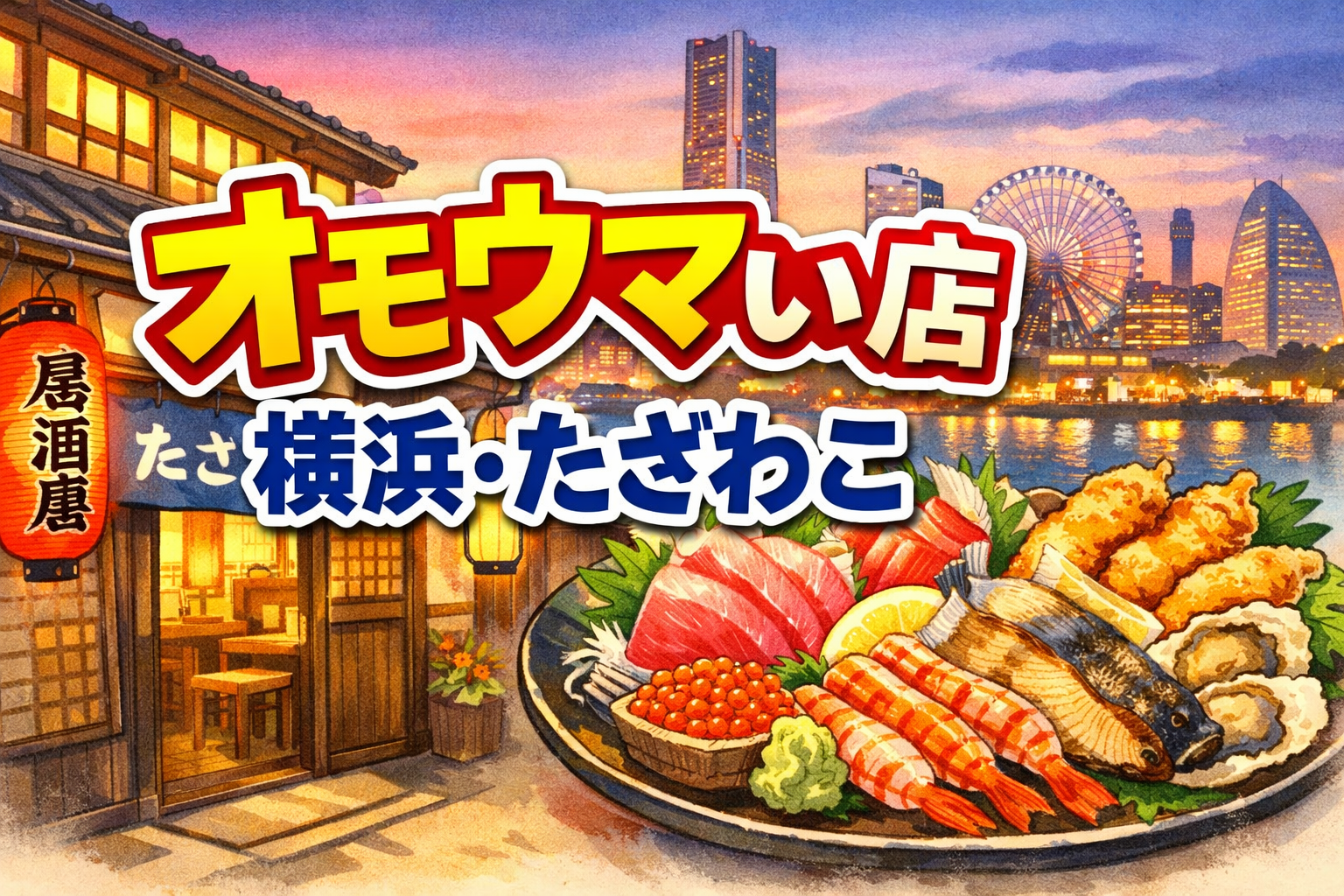
横浜・和田町で「オモウマい店」として話題になったのが、保土ケ谷区和田にある 「JAPANESE RESTAURANT 食楽(しょくらく)たざわこ」。最寄りの相鉄本線・和田町駅から徒歩数分という住宅街寄りの立地ながら、“海鮮が強い居酒屋”として地元の支持を集め、テレビでも「安すぎるのに本格的」と驚かれた一軒です。
- オモウマい店で注目された理由は「価格」と「人」
- 実際どんな店?雰囲気と使い方
- ランチの破壊力:定食で“オモウマい”を体感
- 夜は“海鮮×居酒屋”で選択肢が広がる
- 行く前に知っておくと得するポイント
- まとめ:横浜の“オモウマい”は、数字より体温でできている
- Tazawako Izakaya in Yokohama: The “Omo-uma” Spot Everyone Started Talking About
- Why the Show Loved It: “How Is This Price Even Possible?”
- The Other Ingredient: The Owner’s Personality
- What Kind of Place Is It, Really?
- Lunch Might Be the Best Way to Experience the “Omo-uma” Impact
- Dinner: Seafood Izakaya With Options
- Before You Go: Practical Tips
- Final Take: It’s Not Just About Cheap Food
オモウマい店で注目された理由は「価格」と「人」
番組で特にインパクトがあったのは、刺身や焼き魚、揚げ物といった“居酒屋の主役級”が、信じがたい値段で並ぶ点。紹介例として、ワラサ(ブリ系)のカマ焼き、真鯛のカブト煮、ブリ刺し身、海鮮かき揚げ、唐揚げ付きカキフライなどが一律385円として取り上げられています。
もちろん仕入れで変動はあるはずですが、「え、それがその値段で?」という驚きが、視聴者の“行ってみたい”に直結したのは間違いありません。
そしてもう一つが店主のキャラクター。コロナ禍で売上が落ちても値上げを極力せず、「周りも同じで大変だから」と踏ん張る姿が紹介され、さらに売上補填のためにウーバーイーツ配達で走り回る……という“人情と行動力”のストーリーが、お店の魅力を一段押し上げました。
実際どんな店?雰囲気と使い方
食べログの店舗情報では、和田町駅から徒歩3分ほどで、海鮮・寿司・揚げ物などを軸にした居酒屋として案内されています。
いわゆる「大箱でワイワイ」より、近所の常連さんがふらっと入って、うまい魚で一杯…が似合うタイプ。ランチも強く、口コミでは“選べるメイン+副菜”のような組み立てで、揚げ物も魚も満足度が高かったという記述が見られます。
一方で、人気の高まり後は混みやすいのも想像できます。時間に余裕がある日に狙う、もしくは予約可否を事前確認するのが無難です(予約可の記載あり)。
ランチの破壊力:定食で“オモウマい”を体感
「たざわこ」を語るなら、まずはランチ。紹介記事では、日替わりAランチ(定食)として、唐揚げや焼きサバ、カキフライなどが一皿にまとまった内容が取り上げられ、量と内容の割に安いという方向で強く推されています。
ホットペッパー側の説明でも、ランチの定食は“30種類以上”とうたわれており、昼飲みにも対応している旨が書かれています。
ここで面白いのは、「ただ安い」ではなく、魚の扱いがしっかりしている点。紹介記事では、店主が高級割烹や専門店で修行して魚料理を学んだ、という背景にも触れられています。
つまり、安さで釣っているのではなく、腕がある人が本気で値段を壊しに来ている。そりゃ番組向きです。
夜は“海鮮×居酒屋”で選択肢が広がる
夜の顔は、刺身・焼き・揚げ物といった定番に加えて、宴会向けのコースや、季節で産地を変える生牡蠣の案内など、居酒屋らしいラインナップが見えます。
「今日は刺身で勝負したい」「揚げ物で勢いをつけたい」「牡蠣で日本酒をやりたい」みたいに、気分に合わせて寄せられるのが強み。価格のインパクトだけでなく、“ちゃんと飲める店”としての骨格があるから、リピートが生まれるんだと思います。
行く前に知っておくと得するポイント
- 駅近:和田町から徒歩圏でアクセスしやすい。
- 混雑注意:テレビ露出後は特に。時間をずらす・予約可否を確認が安心。
- メニューは日替わり要素が強い:刺身や牡蠣などは仕入れで内容が動く前提で、“今日の当たり”を楽しむのが吉。
- 「安い=軽い」ではない:修行背景が紹介されており、魚の実力で勝負しているタイプ。
まとめ:横浜の“オモウマい”は、数字より体温でできている
「食楽たざわこ」の魅力は、値段のインパクトが入口になりつつ、最後に残るのが“人”と“店の体温”なところ。無理のある安さを掲げるだけなら続きませんが、料理の腕と、周りを思う姿勢がセットだからこそ、番組でも街でも愛される。
横浜で「面白くて、うまくて、腹いっぱいになる店」を探しているなら、ここは一度“体験”として行く価値があるはずです。
Tazawako Izakaya in Yokohama: The “Omo-uma” Spot Everyone Started Talking About
A small neighborhood izakaya in Yokohama suddenly became a must-visit destination after being featured on the TV show Omo-uma i Mise (roughly, “crazy good-value restaurants”). The place is “JAPANESE RESTAURANT Shokuraku Tazawako”, located near Wadamachi Station on the Sotetsu Line—close enough to walk, but far enough from the big city-center nightlife areas that you might miss it if you weren’t looking.
And that’s what makes the story fun: this isn’t some flashy, tourist-oriented spot. It’s a local restaurant with a loyal community vibe—one that suddenly found itself in the national spotlight because viewers couldn’t believe what they were seeing on screen.
Why the Show Loved It: “How Is This Price Even Possible?”
The reason Omo-uma picked up “Tazawako” is simple: the value looks unreal.
On the program and in related coverage, seafood items that would normally be priced as “specials” or “premium” were introduced at a uniform low price—with examples including things like:
- Grilled yellowtail/amberjack collar
- Simmered red sea bream head
- Thick slices of buri (yellowtail) sashimi
- Seafood kakiage (mixed seafood tempura fritter)
- Oyster fry sets that even came with extras like fried chicken
The point wasn’t just that it was cheap—it was the mismatch between quality and price. The food being shown is the kind of seafood you expect to order when you want to treat yourself. Seeing it offered as everyday, accessible izakaya fare is exactly the kind of “wait, what?” moment that makes the show work.
Of course, seafood depends on the market and what’s available, so the exact lineup can change. But the restaurant’s identity is clear: fresh fish done properly, in portions that feel generous, at prices that surprise people.
The Other Ingredient: The Owner’s Personality
If the menu is the hook, the human story is what makes people root for the place.
Part of what resonated with viewers is the sense that the owner isn’t “playing the value game” as a gimmick. The story shared around the feature emphasizes how, even when business became difficult during the pandemic, he tried not to raise prices unnecessarily—thinking about how hard things were for everyone.
There’s also the image of him working relentlessly—doing food delivery on top of running the restaurant—to keep things afloat. That kind of “I’ll do whatever it takes” energy isn’t something you can manufacture for TV. It reads as real, and it adds emotional weight to what would otherwise just be a “cheap and big” story.
What Kind of Place Is It, Really?
Despite the TV buzz, the atmosphere is closer to a neighborhood favorite than a trendy hotspot. Think: regulars dropping in after work, people who come because they trust the kitchen, and a menu that feels built around what the owner genuinely likes to serve—especially seafood.
It’s the kind of izakaya where you can do it two ways:
- Simple mode: a couple of seafood dishes + beer = instant happiness
- Full mode: sashimi + grilled fish + fried items + rice or soup = “I’m not leaving hungry”
Rather than being a one-note “viral restaurant,” it works as a real local dining spot, which is exactly why it survives beyond the initial hype.
Lunch Might Be the Best Way to Experience the “Omo-uma” Impact
If you want the easiest entry point—especially if you’re not sure about crowds at night—lunch is a strong move.
Coverage and listings describe a wide variety of set meals (teishoku-style), often centered around fish and classic fried items. You’ll see combinations like grilled mackerel, fried oysters, karaage, and other comfort-food staples arranged in a way that feels more like “this is what you’d want to eat” than “this is the cheapest thing we can make.”
The key detail: it’s not just quantity. What makes people talk is that the seafood is handled with confidence—suggesting a kitchen that knows what it’s doing. In other words, it’s value that comes from skill and sourcing, not from cutting corners.
Dinner: Seafood Izakaya With Options
At night, the restaurant leans fully into its identity: seafood + izakaya classics.
That means the menu style naturally supports different moods:
- “I want sashimi and sake.”
- “I want grilled fish and a highball.”
- “I want fried oysters and beer.”
- “I want a fun, affordable spread with friends.”
Some listings also mention course options for groups and seasonal items like oysters, which fits the idea that this is a place that can handle both casual drop-ins and small get-togethers.
Before You Go: Practical Tips
Because TV exposure changes a restaurant’s rhythm, it’s smart to keep a few things in mind:
- Expect variation: seafood dishes shift with the day’s catch and market conditions.
- Crowds are possible: especially after media attention—go earlier, go later, or check whether reservations are possible.
- Go with an “I’ll follow the specials” mindset: the best experiences at places like this often come from letting the kitchen guide you.
Final Take: It’s Not Just About Cheap Food
The reason “Shokuraku Tazawako” fits the Omo-uma label isn’t only the numbers on the menu. Plenty of places try to be “cheap.” Very few combine:
- seafood that looks genuinely satisfying,
- a menu that feels confident rather than gimmicky, and
- an owner story that makes people want to support the place.
That combination—value plus sincerity—is what turns a local izakaya into a nationwide talking point.
If you’re in Yokohama and want a meal that feels like both a “good find” and a real community spot, this is the kind of place worth visiting at least once—preferably hungry.

コメント